

Long-term Bitcoin holders slow selloff while Ether whales build positions
After months of heavy distribution, long-term Bitcoin holders have markedly reduced their selling activity for the first time since mid-2025, while large Ether addresses continue to increase their accumulation. The shift in on-chain behavior could influence liquidity and sentiment in an otherwise cautious crypto market.
Long-term Bitcoin holders curb sales
On-chain data shows wallets that have held Bitcoin (BTC $87,961) for at least 155 days shrank their combined balance from roughly 14.8 million BTC in July to about 14.3 million BTC in December. That decline has tapered more recently, signaling that long-term hodlers are pausing what had been a months-long selloff. Crypto entrepreneur Ted Pillows highlighted this development on X, noting the stoppage of selling as a bullish signal for a potential relief rally.
Large holders and whales typically act as market movers — their buying or selling can alter liquidity, drive volatility, and shape trader psychology. A slowdown in long-term holder distributions decreases available sell-side pressure and can help stabilize price floors, particularly during bearish market phases.

Ether whales ramp up accumulation
Meanwhile, Ether (ETH $2,979) has seen significant inflows to whale addresses. CryptoQuant metrics cited by analysts at the Milk Road newsletter indicate that addresses holding at least 1,000 ETH added roughly 120,000 ETH since Dec. 26. These large addresses now control about 70% of ETH supply, a share that has been increasing since late 2024.
As the concentration of supply among smart-money holders grows, market dynamics can change: reduced circulating supply combined with strategic accumulation by whales may leave retail pricing out of sync with where institutional actors expect Ethereum’s fundamentals to head next. If accumulation continues, it could tighten liquidity and heighten sensitivity to macro moves or network events.
Market context: traders remain cautious
Despite these on-chain shifts, broader market sentiment remains muted. Bitcoin traded in a roughly $86,744 to $90,064 range over the prior seven days. Analysts at Santiment observed a notable spike in fear, uncertainty and doubt (FUD) around the Christmas period — a time when prices briefly pushed higher before retracing below $87K. Historically, such sentiment extremes often accompany counterintuitive price moves, and the post-holiday volatility has kept traders on edge.
US selling and sector rotation
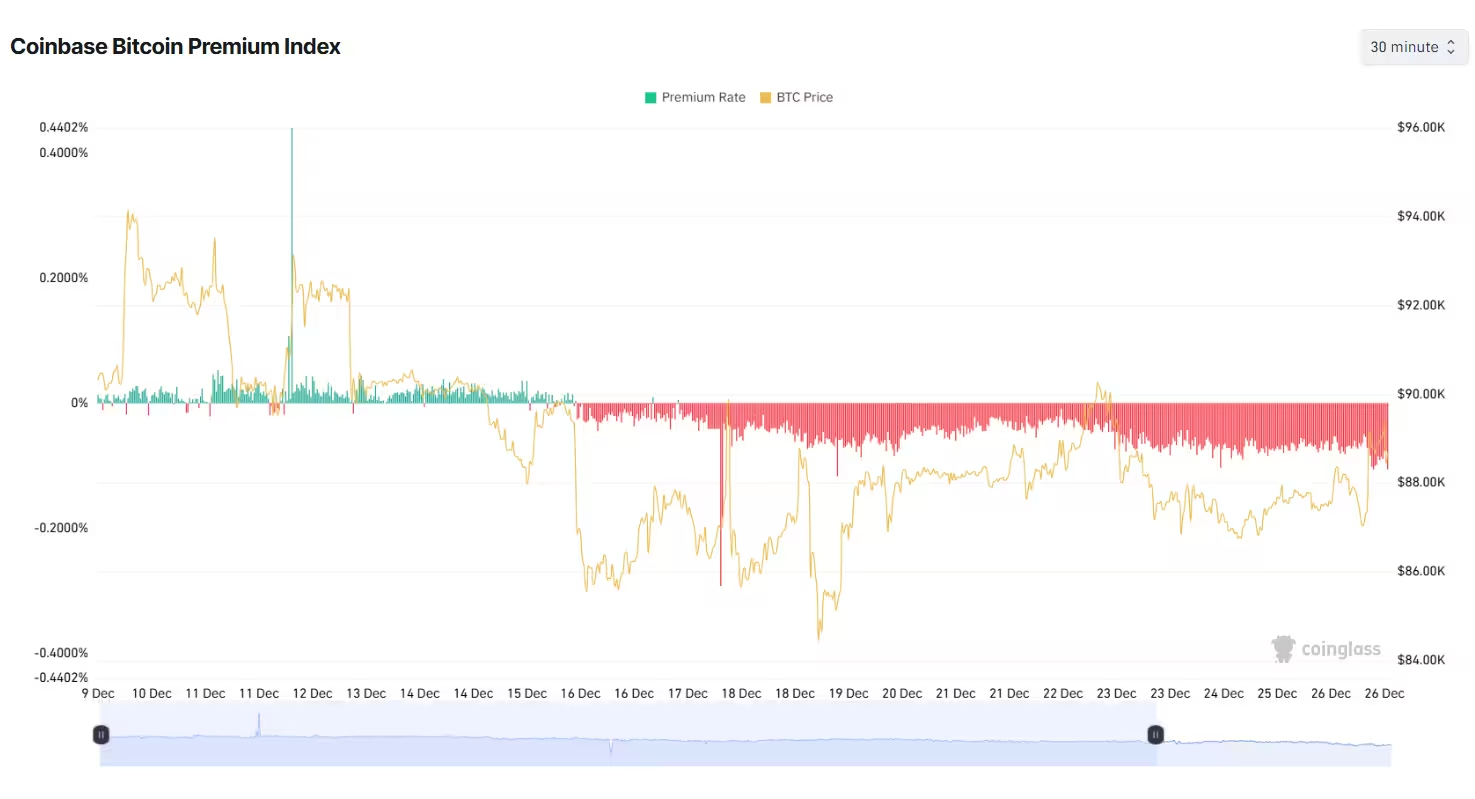
Some of the selling pressure can be traced to US-based market flows. CoinGlass’s Coinbase Bitcoin Premium Index has stayed negative, indicating relative selling pressure on Coinbase versus global averages. Negative premiums often reflect risk aversion among US investors and can signal temporary capital outflows or portfolio rebalancing away from crypto.
At the same time, ex-crypto assets such as silver, palladium and platinum enjoyed strength, and some commentators — like Garrett Jin, former CEO of BitForex — expect capital that rotated into precious metals to begin returning to crypto markets. If metals cool off, inflows into Bitcoin and Ethereum could accelerate, particularly given the recent pause in long-term Bitcoin sales and continued whale accumulation of ETH.
For traders and investors, monitoring on-chain metrics like long-term holder supply, whale concentration, and exchange premiums remains essential for interpreting near-term price risk and upside potential in Bitcoin and Ethereum.

Discussion
Leave a Comment