

Jack Dorsey’s decentralized peer-to-peer messaging app Bitchat has seen a rapid increase in interest and installations in Uganda as the country approaches its pivotal 2026 general election. The app — built to operate without central servers by using Bluetooth mesh networks — is being promoted by opposition figures as a tool to maintain communications if authorities impose an internet shutdown. This surge highlights growing attention to decentralized, censorship-resistant communication tools across regions facing political uncertainty.
Search Spike and Public Interest
Google Trends data shows a marked uptick in searches for “Bitchat” in Uganda over the past several days, with related queries such as “bitchat apk,” “bitchat mesh,” “what is bitchat,” and “how to use bitchat” flagged as breakout topics. The increased search volume reflects both curiosity and urgent demand for alternative, offline-capable messaging in a climate where connectivity can be restricted during elections.

Bitchat search interest
What Is Bitchat?
Bitchat is a decentralized messaging application that creates encrypted, peer-to-peer communication channels using Bluetooth mesh networking. Rather than routing messages through centralized servers, each phone in the mesh acts as a relay node. Messages are stored locally on devices and can hop between phones to reach their destination, enabling communication without a SIM card, phone number, email address, or internet access. This architecture makes the app particularly useful for on-the-ground coordination where conventional internet access may be cut.
Key technical features
- Bluetooth mesh networking for offline message propagation
- End-to-end encryption to protect message content
- No requirement for phone numbers or centralized accounts
- Local storage of messages instead of server-hosted archives
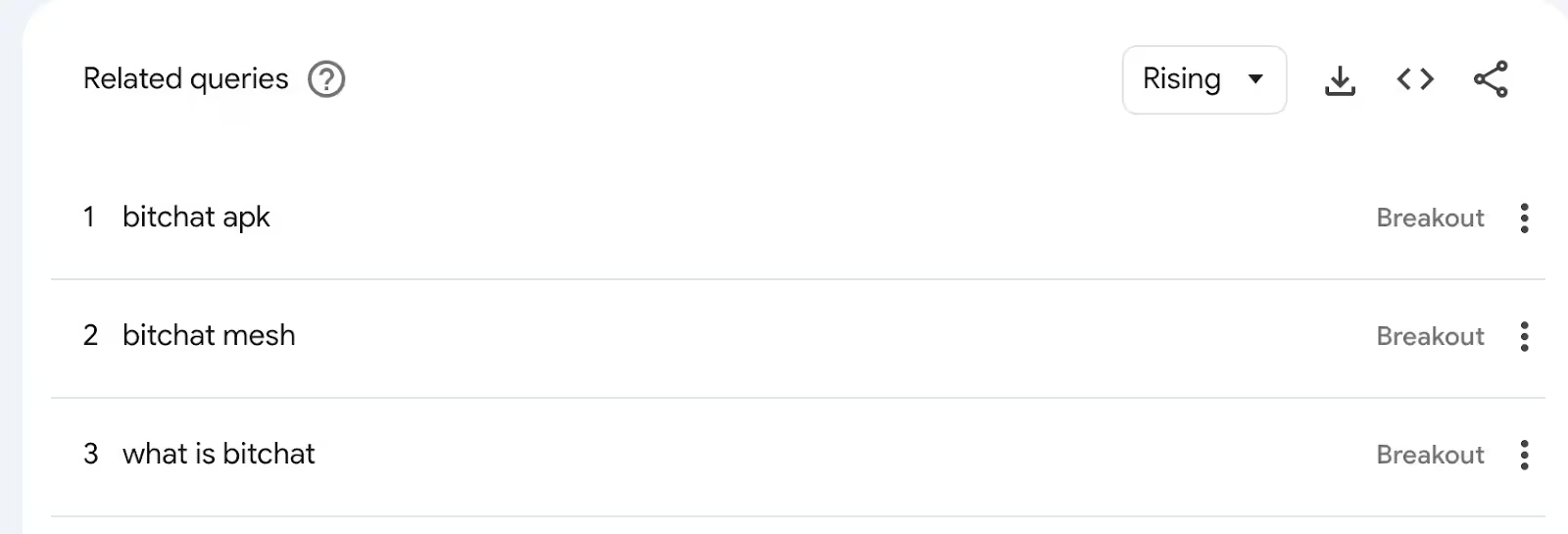
Related queries
Why the Surge in Uganda?
The spike in downloads and searches follows public endorsements by opposition leader Bobi Wine, who urged citizens to install Bitchat to circumvent potential internet cuts planned around election day. Wine warned that previous elections saw multi-day shutdowns aimed at disrupting organization and the transmission of polling results. In a Dec. 30 post, he framed the app as a means for supporters to share Declaration of Results Forms (DR Forms) and other critical updates even if mainstream connectivity is restricted.
Where else has Bitchat been used?
Before Uganda, Bitchat saw adoption in countries experiencing unrest or heavy online censorship, including Nepal, Madagascar, and Indonesia. Protesters and civic groups in these jurisdictions used the app to exchange information during connectivity blackouts and to avoid surveillance on mainstream social platforms.
Downloads and Metrics
Usage metrics reflect the growing momentum: Chrome-Stats reports more than 32,000 new Bitchat installations in the past week, including 4,252 downloads within a 24-hour window. Those figures indicate both widespread curiosity and active deployment on the ground as campaign season intensifies.
Implications for Elections and Digital Rights
The rising adoption of decentralized, mesh-based apps like Bitchat underscores a broader trend in the crypto and Web3 communities: designing resilient, censorship-resistant communication tools that do not rely on centralized infrastructure. While Bitchat is not a blockchain-based messaging platform, its decentralized model and encrypted, peer-to-peer operation resonate with crypto users and digital-rights advocates who prioritize privacy, resilience, and freedom of expression.
What to Watch
Observers should monitor how governments respond to increased use of offline mesh messaging during the election, whether by attempting to block app distribution channels or by pursuing other regulatory measures. For voters and civil-society groups, apps like Bitchat offer a supplementary channel for sharing information and protecting transparency in environments where internet access is not guaranteed.
As Uganda moves toward the 2026 vote, the uptake of decentralized messaging apps will remain a key indicator of how citizens and political actors adapt to challenges posed by connectivity restrictions and censorship.

Discussion
Leave a Comment