
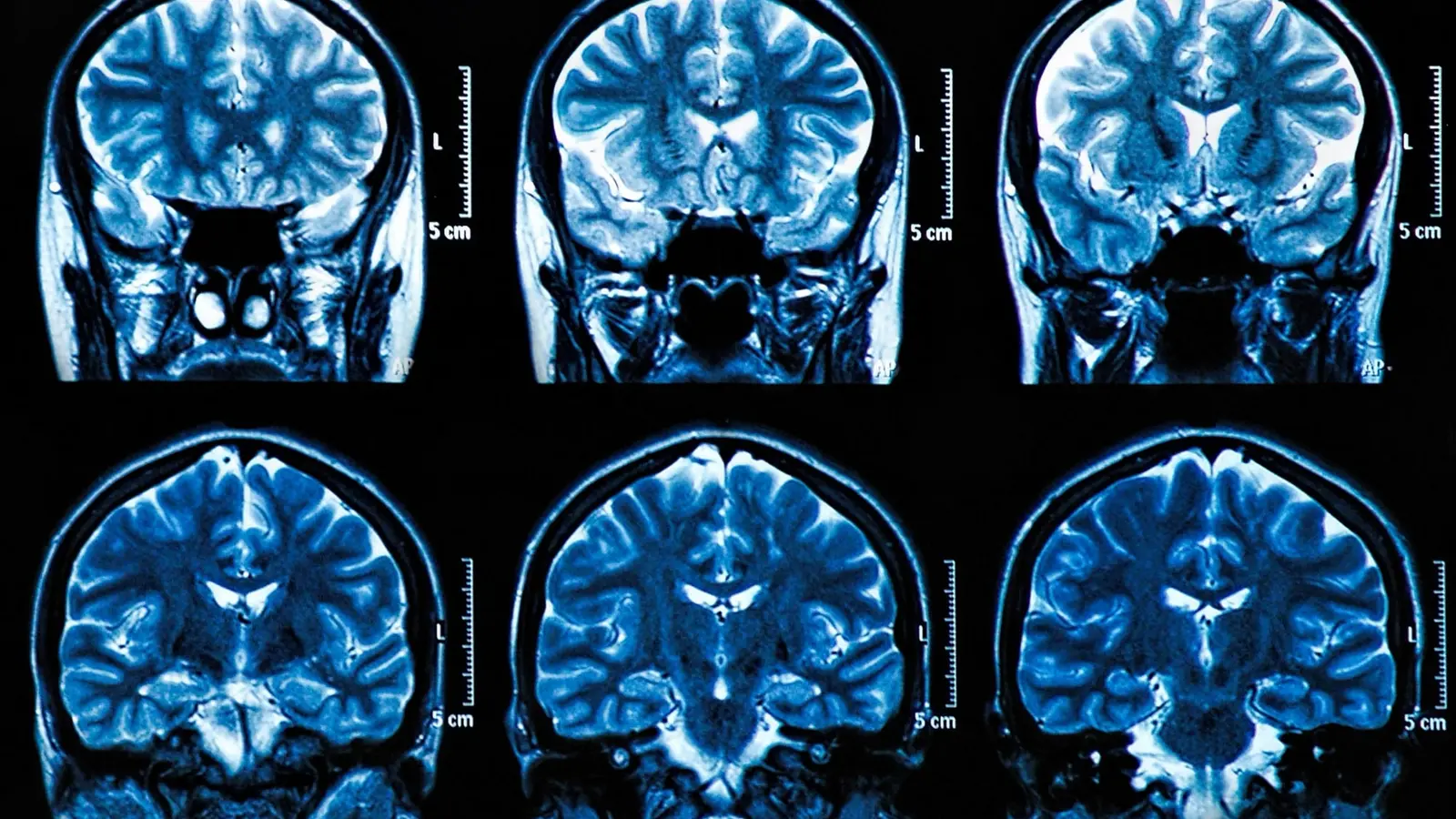
Researchers have identified subtle changes in the brain's electrical rhythms that appear years before an Alzheimer’s diagnosis, offering a new avenue for earlier and more direct monitoring of disease progression. Using magnetoencephalography (MEG) and a novel analytical toolkit, scientists can isolate brief neural events in the beta frequency band that distinguish people whose mild cognitive impairment later evolves into Alzheimer’s disease.
How brain rhythms reveal early signs of Alzheimer’s
Traditional measures of brain electrical activity tend to average signals over time, which can mask short-lived phenomena generated by small networks of neurons. The team at Brown University, working with collaborators in Madrid, applied an alternative approach that breaks continuous MEG recordings into discrete 'spectral events' — brief bursts of oscillatory activity that carry information about timing, duration, and strength of rhythmic brain activity.
Focusing on the beta band (roughly 13–30 Hz), a frequency range implicated in attention and memory processes, the investigators compared MEG recordings from 85 people diagnosed with mild cognitive impairment. Participants were followed for several years to see whose symptoms progressed to Alzheimer’s disease and whose condition remained stable.

Patterns emerged: individuals who later received an Alzheimer’s diagnosis produced fewer beta events, and those events were shorter and weaker in power than in participants whose impairment did not worsen. These differences were detectable on average more than two years before clinical diagnosis, suggesting the events act as an early neural marker of disease progression.
Method innovation: the Spectral Events Toolbox
At the heart of this discovery is a computational method called the Spectral Events Toolbox, developed by researchers at Brown. Instead of smoothing or merging oscillatory features, the toolbox isolates single events and quantifies four dimensions: when they occur, how often they occur, how long they last, and how strong they are. That event-level resolution makes it possible to detect subtle disruptions in neuronal signaling that conventional analyses can miss.
The toolbox has already gained traction across neuroscience, cited in hundreds of publications, and here it enabled the first systematic look at beta event features in relation to Alzheimer’s disease progression.
Why a brain-based biomarker matters
Current biomarker tests for Alzheimer’s typically rely on measurements of amyloid and tau proteins in cerebrospinal fluid or blood. Those biochemical markers indicate the presence of pathological proteins that are associated with Alzheimer’s, but they do not directly measure how neurons are functioning in real time. Electrophysiological biomarkers derived from MEG or EEG offer a complementary and more immediate window into neuronal response to pathology.
As David Zhou, a postdoctoral researcher on the team, explains, a brain-signal biomarker could provide a more direct readout of how neurons are coping with toxic protein buildup. That could help clinicians monitor disease activity, evaluate the effect of interventions, and potentially shorten the time to detect whether a therapy is influencing brain function.
Study details and clinical implications
The study analyzed resting-state MEG, collected while participants rested with their eyes closed, rather than during a cognitive task. This passive recording makes the technique more practical for older adults and clinical settings. Across the cohort, lower beta event rate, shorter duration, and reduced power were correlated with progression to Alzheimer’s within about two and a half years.
Stephanie Jones, co-leader of the research at the Carney Institute for Brain Science, framed the result as a promising step toward noninvasive early detection. She noted that, after independent replication, clinicians could use event-based analyses to identify at-risk patients earlier and to track whether treatments are restoring normal neural dynamics.
Importantly, the research team plans to move beyond observation. With funding from an internal innovation award, they will combine computational neural modeling with MEG data to probe the circuit-level mechanisms that give rise to altered beta events. Recreating the abnormal event features in models would make it possible to test targeted interventions, from drugs to neuromodulation strategies, in silico before clinical trials.
Expert Insight
Dr. Maria Reynolds, a neurologist and clinical researcher not involved in the study, commented: 'This work highlights the value of looking at the brain in finer temporal detail. Detecting changes in event frequency and duration could complement molecular biomarkers and give us a dynamic picture of neural health. If replicated, it could become a useful tool for early-stage clinical trials and patient monitoring.'
Future prospects and next steps
Several critical steps remain before spectral-event features are used in routine care. First, the findings must be validated in larger and more diverse cohorts to verify robustness across imaging systems and populations. Second, researchers need to determine how event-based measures relate to established biomarkers such as amyloid and tau, and whether combining modalities improves prediction accuracy.
Finally, translating MEG-based markers into clinical practice poses practical challenges: MEG is less widely available than EEG and requires specialized equipment and expertise. However, because the underlying phenomenon is electrophysiological, similar event-based analyses might be adapted to high-density EEG or other scalable brain-recording approaches, broadening clinical applicability.
Implications for patients and research
For patients with mild cognitive impairment, an earlier and more direct indicator of neuronal dysfunction could mean earlier enrollment in trials, closer monitoring, and more timely therapeutic decisions. For researchers, the spectral event perspective opens a route to link microscopic circuit dysfunction with macroscopic biomarkers and to test hypotheses about how Alzheimer’s pathology disrupts neural communication.
Conclusion
Detecting transient beta events and characterizing their rate, duration, and power offers a promising brain-based biomarker that precedes clinical Alzheimer’s diagnosis by years. With further validation and technological translation, spectral-event analysis could become an important tool for early detection, therapeutic monitoring, and mechanistic research into how Alzheimer’s disease alters neural networks.

“The cosmos has always fascinated me. I write about space missions, astronomy, and the technologies pushing humanity beyond Earth.”

Discussion
Leave a Comment