
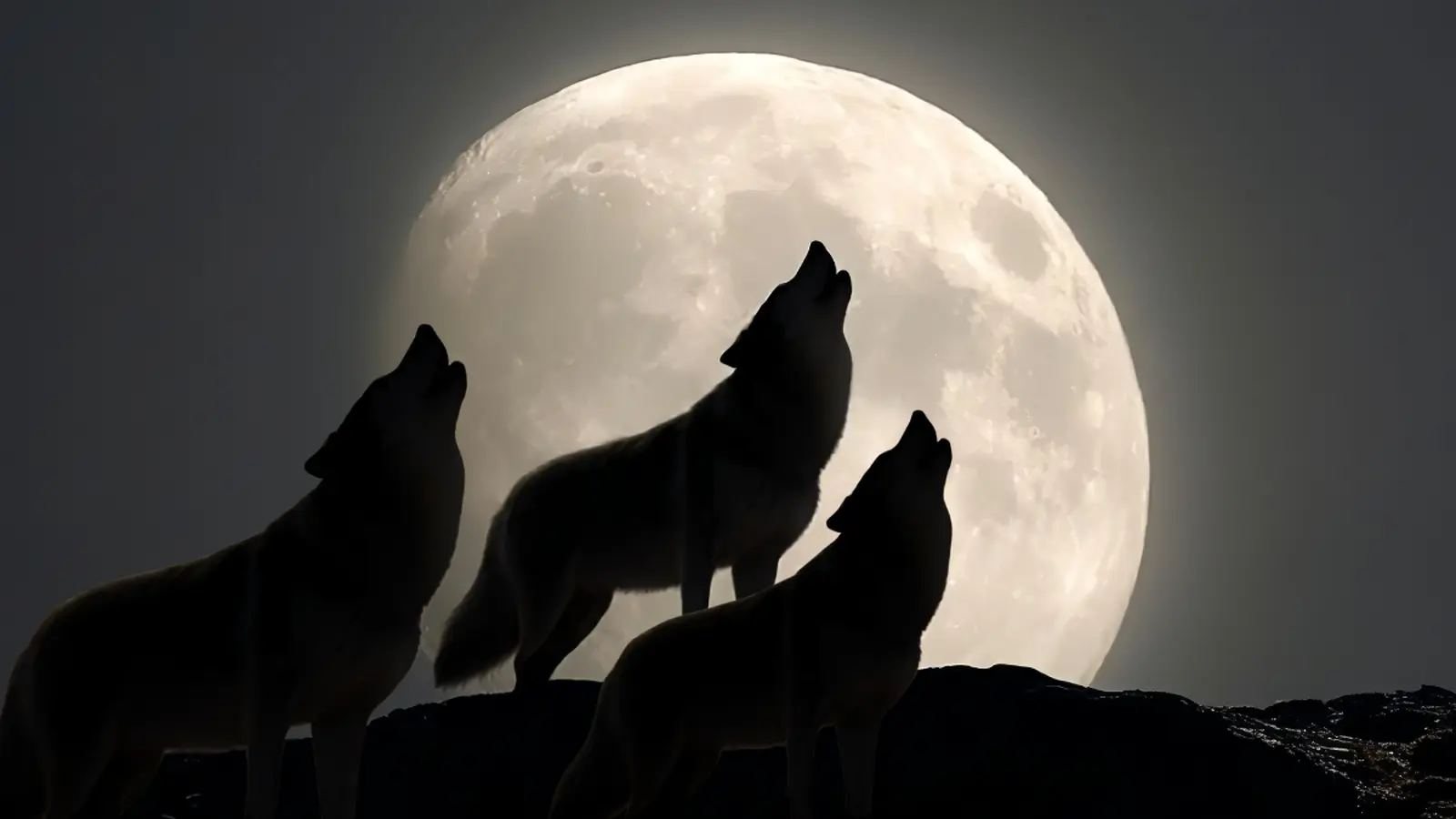
The full Wolf Supermoon on 3 January 2026 promises one of the brightest lunar displays possible — a rare alignment of three separate factors that will amplify the Moon's size and glow. Skywatchers across the Northern Hemisphere should keep an eye out: clear, cold nights could make this an especially memorable sight without optical aids.
Why this supermoon is unusually bright
A "supermoon" occurs when the full Moon coincides with perigee, the point in the Moon's elliptical orbit when it is closest to Earth. For this event, the Moon will be roughly 362,312 kilometers (225,130 miles) away, nearer than its average orbital distance of about 384,400 kilometers. That closer approach increases the Moon's apparent diameter by roughly 14% and its brightness by about 30% compared with its most distant orbital point.
But January 3 brings a second boost: Earth will be near perihelion, the closest point in its orbit to the Sun. In early January the planet is about 3.4% closer to the Sun than at aphelion. That proximity increases the solar irradiance falling on the Earth–Moon system and contributes a further brightness increase of roughly 6.5% compared to the dimmest point in Earth's orbit.
Combine those effects and — weather permitting — observers will see a Moon that is both visibly larger and subtly more luminous than most full moons. Because cold winter air typically holds less water vapor than warm air, atmospheric transparency often improves in January, making sharp, high-contrast views more likely in many northern locations.

Orbital mechanics in plain terms
The Moon’s path around Earth isn’t a perfect circle but an ellipse. That means its distance from Earth varies across each orbit. The closest point is perigee; the farthest is apogee. There are roughly a dozen or so perigees each year, but only when a perigee lines up with a full (or new) Moon do we call it a supermoon. Timing matters: the lunar orbit slowly precesses, so perigees shift relative to lunar phases over long timescales.
Perigee distances themselves change due to gravitational interactions with the Sun and long-term dynamical variations in the Earth–Moon system. Meanwhile, Earth’s perihelion occurs every year in early January because our orbit is also slightly elliptical. When perihelion and a full-Moon perigee coincide within hours of each other — as they do on 3 January — the visual effect stacks, producing a noticeably brighter full Moon.
What to expect and how to watch
No telescope is required to enjoy this event. On a clear night find a dark spot with an unobstructed horizon and a comfortable vantage point — a blanket, warm clothing, and a thermos are recommended. With the Moon slightly larger and brighter, low-power binoculars or a standard camera will capture dramatic close-ups of familiar highland and mare features.
- Timing: The exact instant of full Moon and the closest approach will be listed in local astronomical almanacs and planetarium apps; check those for your time zone.
- Visual difference: The size increase is noticeable when compared to a recent full moon near apogee or when photographed with the same focal length; the naked-eye change is more about increased brightness than dramatic enlargement.
- Photography tip: Use a tripod and expose for the bright lunar surface rather than the surrounding landscape — the Moon is surprisingly bright at full phase.
This year's Wolf Moon — so called for the traditional January name — has the added novelty of falling close enough to perihelion that some have dubbed it a "Three Wolf Moon": perigee, full phase, and Earth at perihelion all contributing to the spectacle. It’s also the last full supermoon we’ll see until 24 November 2026, so amateur astronomers and casual stargazers alike may want to take advantage of the opportunity.
Expert Insight
"When several orbital cycles line up like this, the result is a small but measurable enhancement in lunar brightness and apparent size," says Dr. Maya Chen, an astrophysicist at the Center for Planetary Observations. "It’s a great reminder that celestial mechanics is a layering of subtle effects. For photographers and public outreach events, the Wolf Supermoon is a low-barrier way to connect people with orbital dynamics and seasonal sky variation."
Beyond the visual spectacle, supermoons have educational value: they provide a real-world demonstration of elliptical orbits, gravitational perturbations, and the seasonal geometry of Earth’s motion around the Sun. Observing and photographing the event can be a springboard for discussions about tides, orbital precession, and the long-term evolution of the Earth–Moon system.
Whether you go out specifically for lunar observation or simply enjoy the fuller glow during a winter walk, the 3 January 2026 Wolf Supermoon is a timely reminder of how predictable, elegant motions in our solar system can produce striking night-sky displays.

“My work centers on sustainability, energy, and environmental science — examining how innovation can lead to a greener future.”

Discussion
Leave a Comment