
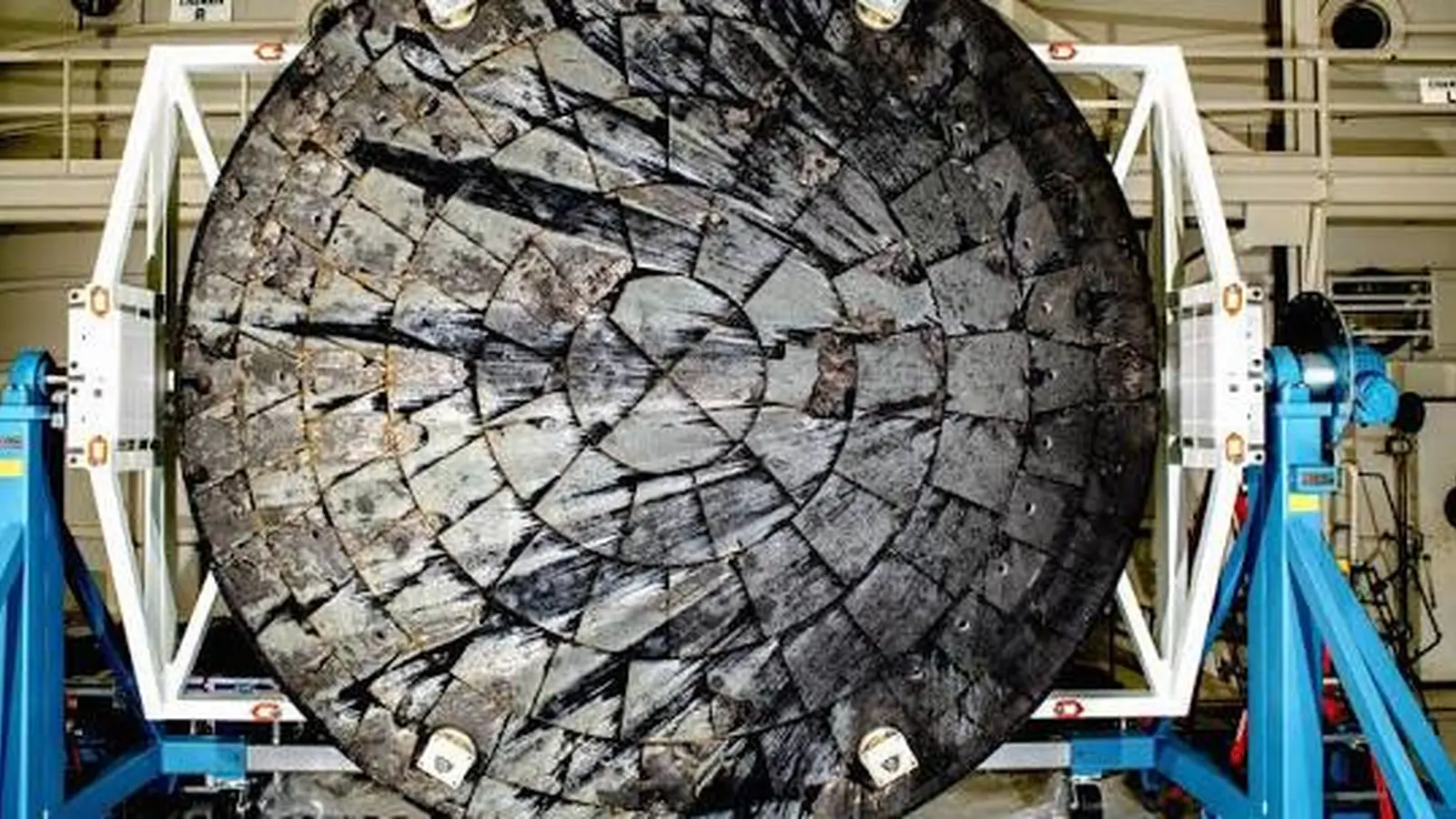
Researchers have discovered that ground-based seismic networks—normally used to listen to earthquakes—can also pick up the sonic signature of uncontrolled space debris as it tears through the atmosphere. By analysing those acoustic signals, scientists can reconstruct the speed, altitude, fragmentation and likely fall zone of reentering objects, offering a new tool for space situational awareness.

Observer photograph of the Shenzhou-15 reentry taken from Ventura in the US.
How seismic networks caught Shenzhou‑15's fall
On 2 April 2024 the discarded Shenzhou‑15 orbital module reentered over southern California. At roughly 2.2 meters across and about 1.5 metric tons, the module was large enough to pose a hazard to aircraft and, potentially, to people or infrastructure on the ground—making it an ideal case study for alternative tracking methods.
Planetary scientist Benjamin Fernando (Johns Hopkins University) and engineer Constantinos Charalambous (Imperial College London) tested a hypothesis: seismic stations can record the acoustic Mach cone created by objects travelling faster than sound. They accessed public records from the Southern California Seismic Network and the Nevada Seismic Network and found seismoacoustic signals that matched the expected sonic wake of the module.

An illustration of the falling object's sonic wake.
When an object enters the atmosphere at supersonic or hypersonic speeds it generates a broad cone of compressed pressure waves rather than a single isolated “boom.” Ground instruments sensitive to air-to-ground coupling—in this case, seismometers—can detect the pressure impulse where the cone intersects the surface. By timing those arrivals across multiple stations, the team was able to reconstruct a precise track of the module’s descent.
According to the seismic analysis, Shenzhou‑15 was travelling at about Mach 25–30 during reentry—consistent with its pre-entry orbital velocity of ~7.8 km/s (≈4.8 miles/s). Early in the fall the seismic record showed a single, large shock; later the signal decayed into a series of smaller booms. That signature matches eyewitness reports and telemetry indicating the module fragmented as it heated and disintegrated.
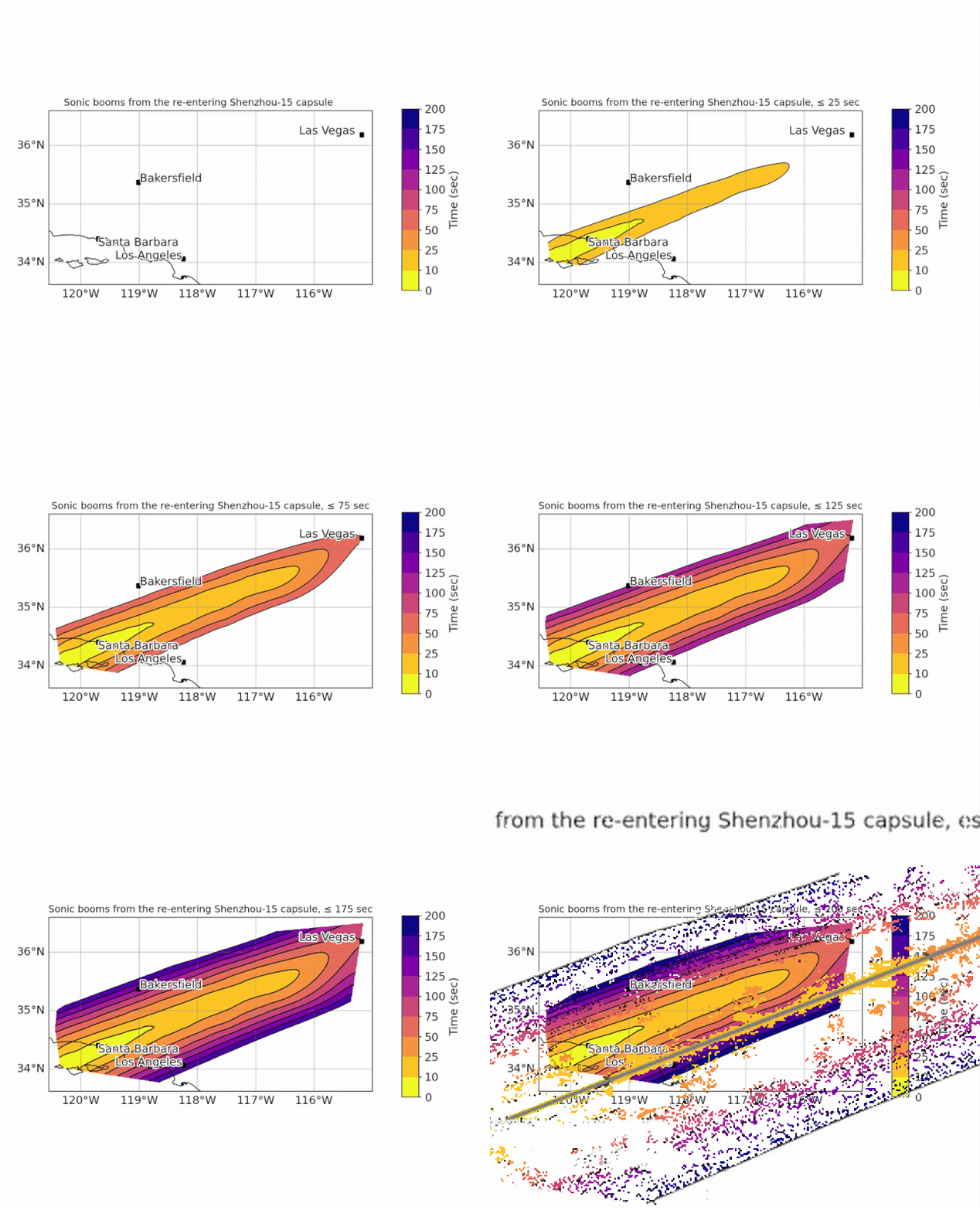
An animation showing how the shock waves were recorded at different locations over time.
Why seismoacoustic tracking matters
Space debris is an accelerating problem. The European Space Agency estimated in April 2025 that roughly 1.2 million objects large enough to cause damage are now catalogued in Earth orbit, and the total will only grow as more satellites reach end-of-life. Uncontrolled reentries are especially challenging: a dead spacecraft cannot be steered or commanded, and its final descent can unfold unpredictably.
Seismic networks are expansive, continuously recording and often publicly accessible. Using them to detect the Mach cone of a reentering object delivers several advantages: accurate timing of fragmentation events, measurements of descent angle and altitude brackets, and refined speed estimates. That information improves models of where surviving fragments—or aerosolized particulates—are likely to land or disperse, helping emergency planners and aviation authorities respond faster and with better precision.
The researchers note that for very large fragments that reach the ground, impact will occur before the associated sonic booms are registered at distant stations. Still, seismoacoustic detections can localize and narrow search areas more rapidly than many existing methods, offering a complementary capability alongside radar, optical tracking, and reentry models.
Scientific and operational implications
Beyond immediate hazard mitigation, the approach yields data about fragmentation dynamics—how objects break up under extreme aerodynamic and thermal stress. That knowledge feeds into improved reentry simulations, better risk assessments for populated regions beneath common orbital decay corridors, and more effective plans for disposing of end-of-life spacecraft.
Detecting aerosol-sized particulates released during breakup is another potential benefit. These fine particles could have local environmental or health implications depending on composition and altitude of release; coupling seismoacoustic detections with atmospheric dispersion models could map likely exposure zones.
Fernando and Charalambous’ work demonstrates that existing infrastructure—seismic arrays originally installed for geology and earthquake monitoring—can be repurposed with modest additional analysis to serve space situational awareness. That reuse is especially valuable for low-cost, globally distributed sensing of uncontrolled reentries where traditional space surveillance coverage may be limited.
Expert Insight
"This technique doesn’t replace radar or optical tracking, but it provides a powerful, independent data stream," says Dr. Elisa Moreno, a hypothetical astrophysicist and reentry specialist. "Seismic networks can fill gaps, confirm fragmentation timing, and help locate probable debris fields when reentry windows are uncertain. For countries without dense space surveillance assets, seismoacoustic methods could be game-changing."
Analysts caution that seismoacoustic detection works best for sufficiently large, dense fragments that produce clear pressure signatures. Smaller pieces may generate signals below the noise floor, and coupling between air pressure and ground motion depends on local geology and station sensitivity. Still, as the Shenzhou‑15 case shows, the method can deliver quantitative results—velocity estimates, altitude ranges and fragmentation timing—that align with orbital predictions.
Conclusion
Uncontrolled reentries will continue as long as debris populates near-Earth space, but the toolkit to monitor them is growing. By listening for sonic wakes with seismic arrays, researchers can extract new, actionable details about how objects break apart and where fragments might fall. That fusion of geophysics and space science adds a low-cost, widely available capability for tracking space junk and reducing reentry uncertainty.

“My work centers on sustainability, energy, and environmental science — examining how innovation can lead to a greener future.”

Discussion
Leave a Comment