
Researchers have identified a subtle, age-related change in the cells that line the intestine — a shift in DNA markings that can steadily silence tumor-suppressing genes and expand across the gut long before tumors form. New experiments implicate inflammation, altered cell signals and iron imbalance as drivers of this process, which helps explain why colorectal cancer risk climbs with age.
How aging rewrites gene control in the gut
Scientists call the phenomenon Aging and Colon Cancer-Associated (ACCA) drift: a pattern of DNA methylation changes that switch genes off without altering the genetic code itself. DNA methylation is an epigenetic mark — a chemical tag that tells a cell whether a gene should be active. Over decades these tags can move, accumulate or be lost, producing an "older" epigenetic profile in tissue.
By comparing healthy colon tissue from people of different ages with colorectal tumors, the international team found overlapping methylation patterns. That similarity suggests the same epigenetic shift that appears with normal aging also shows up in cancerous tissue, indicating a shared pathway from age-linked molecular change to cancer risk.
Where the drift begins — and how it spreads
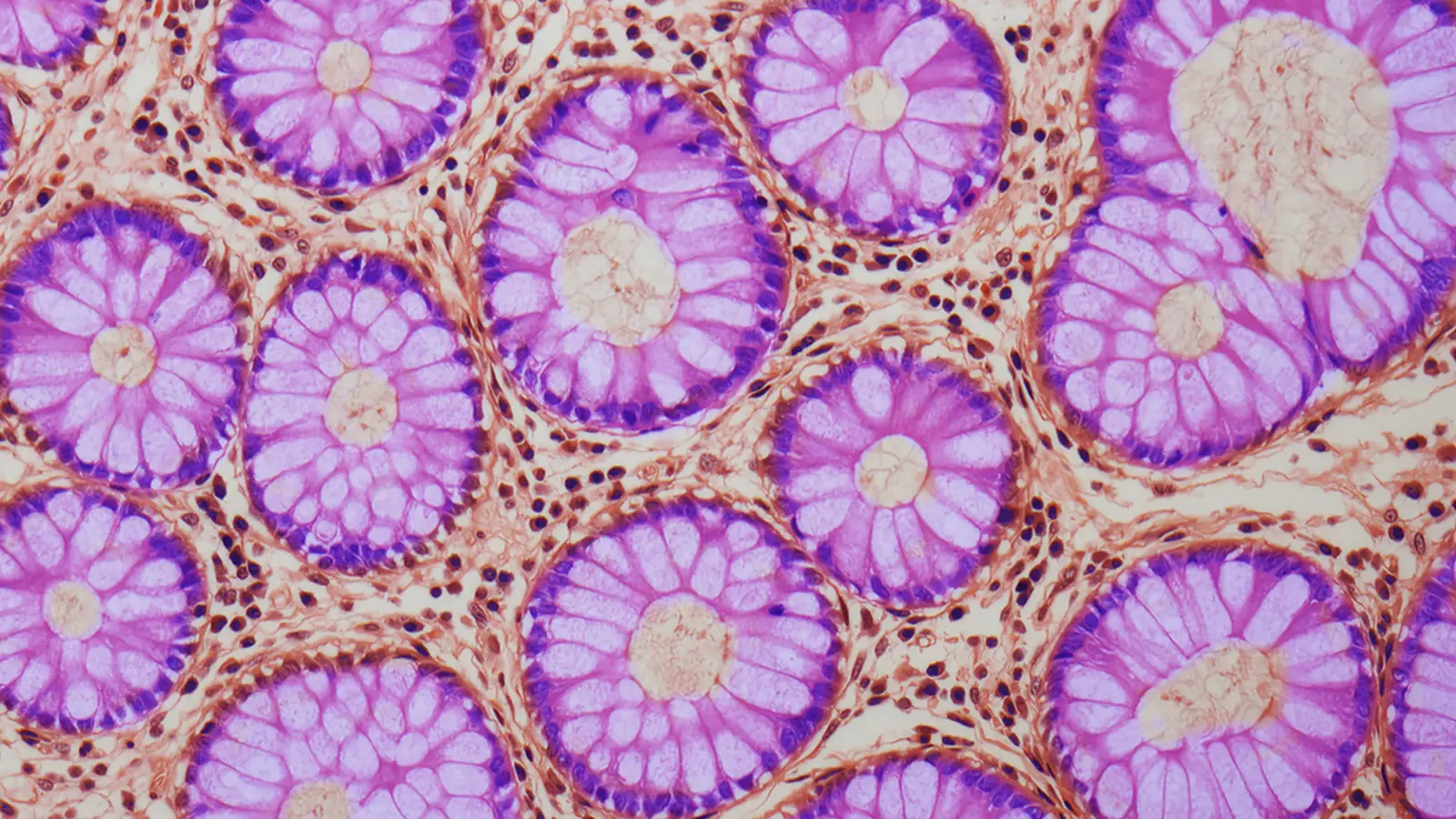
The effect originates in intestinal crypts, tiny pockets in the gut lining that house stem cells responsible for constant renewal of the epithelium. Using human samples, mouse models and lab-grown organoids (mini-gut systems), researchers traced ACCA drift to changes within crypt stem cells. As those stem-cell-driven crypts divide and replace neighboring tissue, regions with an older, cancer-prone epigenetic profile gradually expand.

The researchers identified how crypt stem cells changed and spread.
Multiple factors converge to disrupt the normal maintenance of methylation marks: chronic inflammation in the gut, weakened growth-factor signaling and reduced intracellular iron. When iron-dependent repair systems falter, incorrect methylation marks persist and genes that normally suppress tumors can be switched off over time.
Why inflammation and iron matter
- Inflammation releases signals that stress stem cells and disturb epigenetic maintenance.
- Lower growth signaling reduces the cell’s ability to correct or replace faulty epigenetic patterns.
- Insufficient intracellular iron impairs enzymes that remove aberrant methylation, allowing harmful marks to accumulate.
"We observe an epigenetic pattern that becomes increasingly apparent with age," said Francesco Neri of the University of Turin, underlining the link between gradual methylation drift and later cancer susceptibility. Anna Krepelova, also from Turin, added that crypt division acts like a slow-growing patchwork: "Through the natural process of crypt division, these regions continuously enlarge and can continue to grow over many years."
Importantly, experiments in organoids showed the drift is not necessarily permanent. Restoring iron uptake or re-establishing particular growth signals slowed — and in some cases partially reversed — the epigenetic aging seen in crypt stem cells. That reversibility offers a hopeful sign that molecular processes underlying aging and cancer risk may be modifiable.
Implications for prevention and future research
The study reframes colorectal cancer risk as not only a consequence of accumulated DNA mutations but also of progressive, cell-wide epigenetic changes that expand across the gut surface. This raises the prospect of new preventive strategies that target inflammation, iron metabolism and cell signaling in the intestinal stem-cell niche. Screening efforts that detect epigenetic "danger zones" could one day complement existing approaches for early detection.
While danger zones and the pace of ACCA drift will vary between individuals, understanding the drivers gives researchers specific molecular targets to test in preclinical and clinical settings. Published in Nature Aging, the work points to a new layer of aging biology — one that may be slowed or tweaked to reduce lifetime colorectal cancer risk.

“The cosmos has always fascinated me. I write about space missions, astronomy, and the technologies pushing humanity beyond Earth.”

Discussion
Leave a Comment