
3 Minutes
Samsung has held the crown as the world’s biggest TV brand for two decades, but that long run is showing signs of strain. Recent market data reveal a tightening race led by Chinese challengers TCL and Hisense, while TV software and panel technologies are reshaping how buyers choose screens.
How the market stacks up right now
Counterpoint Research’s latest snapshot shows Samsung still shipping the most sets, but its global share has slipped to about 17 percent as of November 2025. TCL is breathing down its neck with roughly 16 percent, followed by Hisense at 10 percent and LG after that. Walmart-owned Onn (selling under the Vizio name) holds around 5 percent.
- Samsung: ~17% market share
- TCL: ~16% market share
- Hisense: ~10% market share
- LG: fourth place
- Onn/Vizio: ~5% market share
Despite the narrowing gap, analysts at Counterpoint still expect Samsung to likely retain the top spot through 2026. But the trend is clear: the brand’s dominance is no longer guaranteed.

The software and OS shake-up
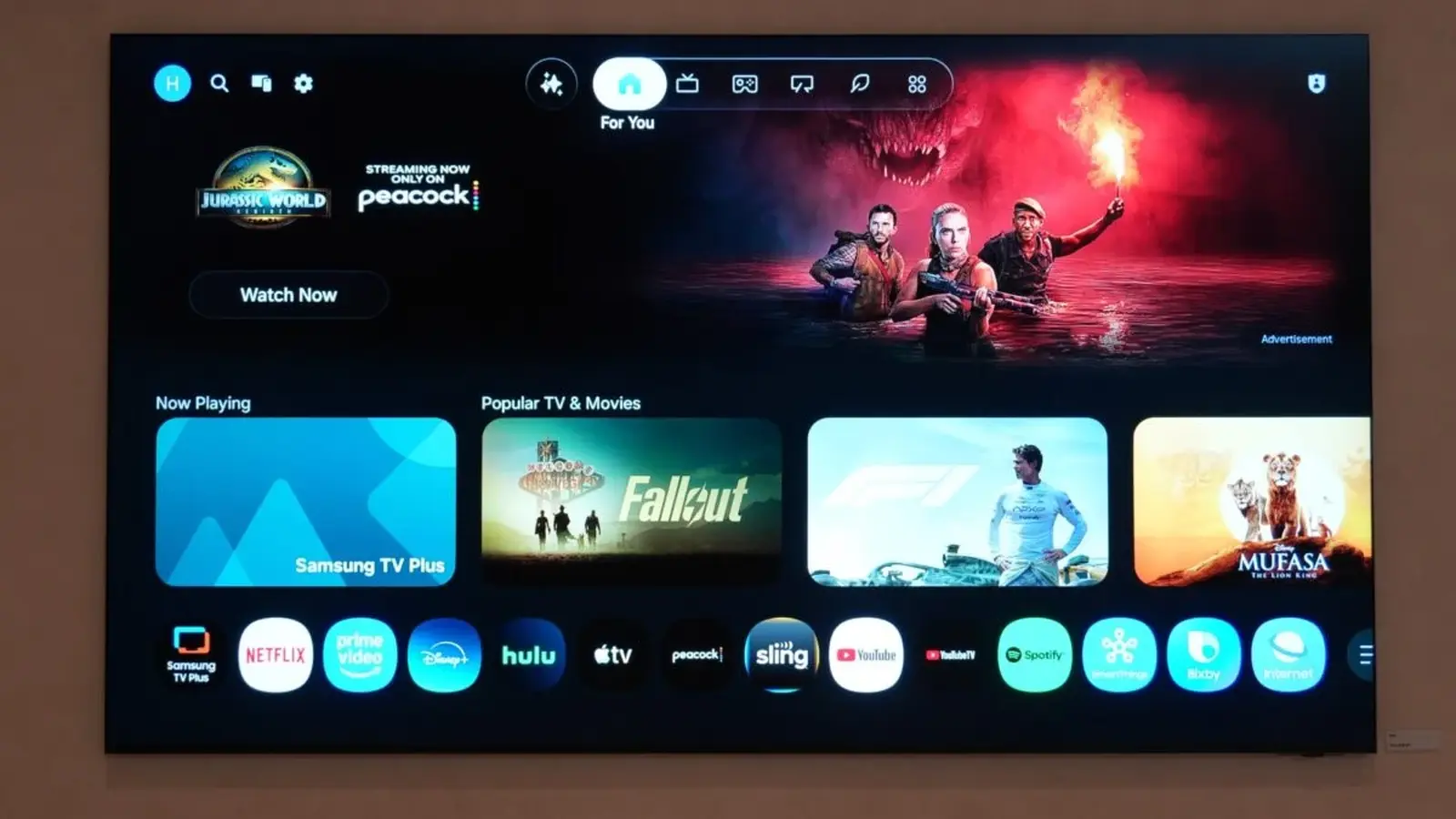
It isn’t just hardware. Samsung’s Tizen OS is losing ground too. Where Tizen once accounted for nearly 34 percent of TV software usage in 2020, it has fallen to about 23 percent—forecasted to reach roughly 20 percent by 2029. Meanwhile, Google TV now commands the software lead with about 40 percent of the market. LG’s webOS sits near 15 percent today, with projections suggesting a slight dip by the end of the decade.
For consumers, that means more TVs running the Google ecosystem and a wider mix of app stores and voice integrations. The platform battle will continue to influence buyer choices almost as much as price and picture quality.
The tech race: Mini-LED, Micro RGB and OLED
Over ten years ago Samsung held well over 26 percent of global TV sales, competing mainly with LG. Now the field has broadened. Chinese brands have aggressively pushed lower-price LCD models—often using Mini-LED backlights—to deliver improved contrast and brightness without the premium cost of OLED.
At the same time, a newer approach called Micro RGB (micro-LED backlight arrays integrated with LCD panels) is gaining attention. Micro RGB uses micrometer-sized RGB LEDs behind an LCD matrix to boost color and local dimming precision—positioned as a middle ground between Mini-LED LCDs and true OLED panels. Samsung, Hisense, and TCL are investing in Micro RGB as a way to offer higher-end picture quality while avoiding some OLED costs. For now, Samsung and LG remain the main brands selling OLED at scale.
The takeaway: cheaper, capable LCD variants from TCL and Hisense, plus the rising appeal of Micro RGB, are compressing the premium-to-midrange market where Samsung has long reigned. Expect pricing pressure, more model choices, and a continuing tussle over which display tech wins mainstream adoption.
Source: sammobile


Comments
Reza
Looks fishy, Counterpoint data ok but how accurate are those shipment numbers? Chinese brands grow fast but is this panel tech hype or real change?
mechbyte
wow, TCL almost catching Samsung? didnt see that coming, Micro RGB sounds wild. Prices gonna drop, confused but kinda excited..

Leave a Comment