
Deep Time, Detailed Discovery
A remarkable fossil site in Hunan province, South China, has given scientists a rare, high-resolution glimpse of life recovering after one of Earth's early mass extinctions. The newly described Huayuan biota — a Burgess Shale-type Lagerstätte — preserves more than 8,600 specimens representing 153 species across 16 major animal groups. Dated to roughly 512–513 million years ago, this collection sits just after the Sinsk extinction and reveals how marine ecosystems rebounded with surprising speed and complexity.
Why this site matters
Exceptional fossil preservation is a bit like finding a vintage car with its original paint, interior and engine still intact: most sites give us just the chassis. The Huayuan deposits instead routinely capture soft tissues, internal organs and even cellular textures — features rarely fossilized. That quality elevates the site into the elite category of BST (Burgess Shale-type) Lagerstätten, the fossil equivalent of a limited-run, flagship model in automotive terms.

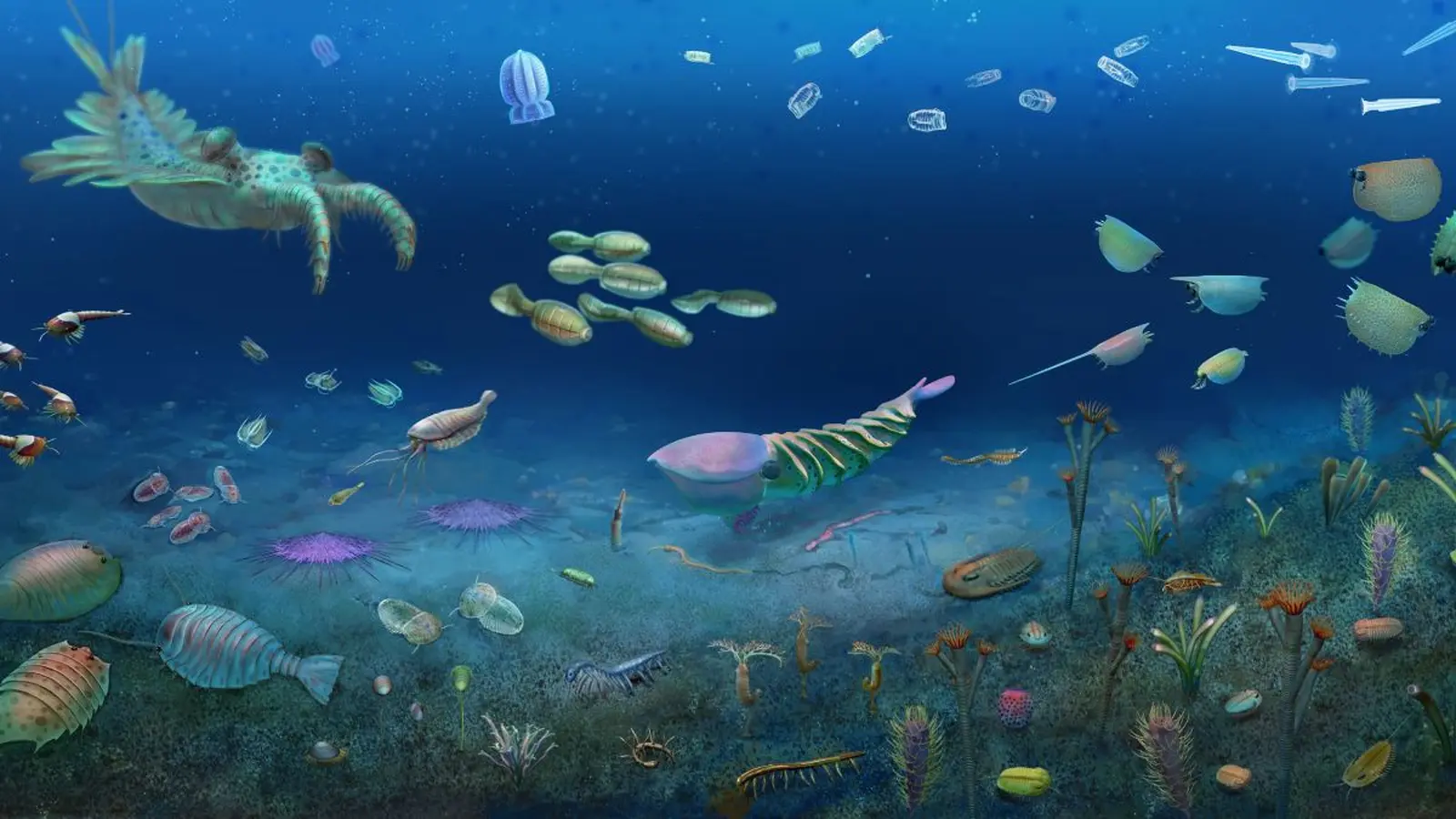
Nearly 60% of the species recovered at Huayuan are new to science. The assemblage includes arthropods (trilobites and radiodont apex predators), sponges, cnidarians, comb jellies, sea anemones and the oldest known pelagic tunicate — a free-swimming filter feeder crucial to modern ocean carbon cycles. Many specimens appear preserved in life position, allowing direct behavioral inferences: schooling vetulicolians, resting anemones and predators poised amid prey.
Rebound, refuge, and resilience
The Cambrian Period (about 540–485 million years ago) was when animal life rapidly diversified in what we call the Cambrian explosion. The Sinsk extinction, around 513.5 million years ago, trimmed that burgeoning tree of life — especially in shallow water communities. Huayuan, dated to about 512–513 million years, is therefore a rare window into the immediate aftermath.

Researchers conclude that deep-water settings likely acted as refuges during the Sinsk event. While shallow-water biotas were more severely impacted, the outer shelf and deeper habitats preserved ecosystems that were able to repopulate and seed recovery. The Huayuan fauna shows that, within a few million years, diverse and ecologically complex marine communities had reassembled — complete with predators, grazers and suspension feeders operating in recognizable ecological roles.
What the fossils reveal
- Soft-bodied preservation: nervous tissues, optic neuropils, and gut diverticula in some specimens.
- Complex behavior: grouped vetulicolians indicate shoaling; life-position preservation suggests minimal transport.
- Unexpected modernity: free-swimming tunicates suggest early development of pelagic filter-feeding networks similar to today’s oceans.
- Phylogenetic overlap: several taxa once thought unique to the Burgess Shale (Helmetia, Surusicaris) also appear at Huayuan, implying broader geographic and temporal distributions.
These details will keep paleontologists busy for decades. With internal anatomy so well recorded, scientists can refine evolutionary trees and re-evaluate how early animals functioned — their feeding strategies, sensory systems and ecological roles.

From fossils to the showroom: an automotive analogy
Car enthusiasts will recognize a familiar theme: preservation, documentation and provenance determine historical value. In the automotive world, a well-documented, original-condition classic commands a premium. In paleontology, BST Lagerstätten like Huayuan are the museum-worthy, showroom-fresh exhibits that rewrite our understanding of form and function.
Thinking like a vehicle spec sheet helps make the scientific value feel tangible:
- Preservation: Soft tissues, organs and even cellular structures.
- Age: ~512 million years (immediate post-Sinsk interval).
- Diversity: 153 species, 16 major groups; 8,681 specimens.
- Significance: Evidence of deep-water refuges and early pelagic food webs.
Just as manufacturers learn from flagship models to improve durability and performance across their lineup, paleontology uses exceptional fossil finds to inform broader theories: how ecosystems resist collapse, which environments act as refuges, and how recovery unfolds. For the automotive industry, resilience and design-for-recovery are practical lessons; for Earth science, Huayuan is a case study in biological comeback.

Comparisons and cultural impact
Huayuan’s combination of diversity and preservation rivals that of Canada’s Burgess Shale and complements other Chinese Lagerstätten such as Chengjiang and Qingjiang. Finding taxa at Huayuan that are similar to those in distant deposits suggests greater connectivity in Cambrian seas than previously thought. For museums and science communicators, this has strong appeal — a discovery likely to inspire exhibits, documentaries and cross-disciplinary storytelling that links deep time to modern concerns like biodiversity and climate resilience.
“The extraordinary biodiversity of the Huayuan biota provides a unique window into the Sinsk event by revealing the post-extinction recovery or radiation in the outer shelf environment,” the authors write in Nature.
Why car and science audiences should care
Car readers value craftsmanship, longevity and the stories behind rare machines. Huayuan speaks to those same interests: preservation that tells a story, the resilience of complex systems, and the detective work that connects fragments into narratives. The discovery may even influence outreach strategies at automotive museums that present natural history alongside industrial design — both celebrate engineering solutions and the persistence of form through time.
In short, Huayuan is not just a fossil site — it’s a benchmark. It documents a turning point in Earth’s early biosphere and provides a dataset that will inform evolutionary biology, paleoecology and public engagement for years to come. For anyone who appreciates how finely tuned systems endure and adapt — whether a V8 engine or a Cambrian reef — the Huayuan biota offers a richly detailed lesson in recovery and resilience.
Research published in Nature; lead team from the Chinese Academy of Sciences.

“The cosmos has always fascinated me. I write about space missions, astronomy, and the technologies pushing humanity beyond Earth.”

Discussion
Leave a Comment