

Night-shift habits tied to long-term heart risk
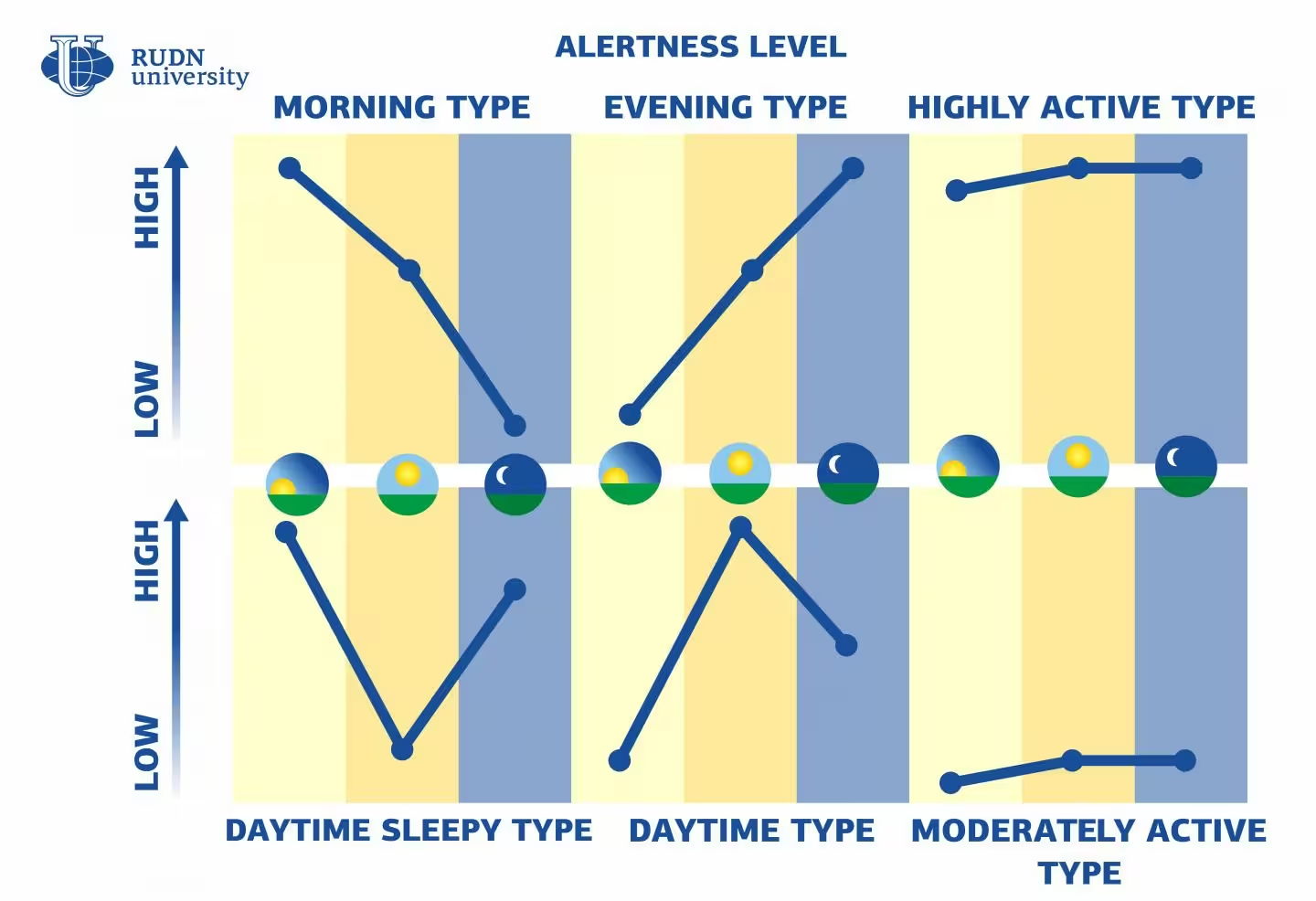
A large new study suggests people who are most active late in the evening — the classic night owls — face a higher chance of experiencing a first heart attack or stroke compared with those who follow more conventional sleep-wake schedules. The research tracked hundreds of thousands of adults and highlights how circadian rhythms, lifestyle and modern work patterns collide to affect cardiovascular health.
The headline numbers
Researchers analyzing UK Biobank data followed more than 300,000 middle-aged and older participants for roughly 14 years. About 8 percent identified as evening-types, while roughly a quarter were early birds and the remainder fell in-between. Over the study period, evening-types had about a 16 percent higher risk of a first heart attack or stroke than the average participant.
Why your internal clock matters
Our circadian rhythm is a master biological clock that regulates sleep, hormones, blood pressure, heart rate and metabolism across a roughly 24-hour cycle. When your daily schedule is out of sync with that internal clock — for example, when a natural night person has to wake early for work — it becomes harder to maintain heart-healthy habits.
Researchers point to three main drivers linking late-evening activity with worse cardiovascular profiles:
- Unhealthy behaviors such as higher smoking rates and poorer diets.
- Shorter or irregular sleep, even if total hours are sometimes adequate.
- Metabolic mismatches, for instance eating high-calorie meals during biological night when insulin response is less effective.
What the experts say
Sina Kianersi of Brigham and Women's Hospital and Harvard Medical School, who led the study, stresses the finding is not a sentence for night owls. Instead, he frames the problem as a mismatch between internal timing and social schedules. Kristen Knutson of Northwestern University, who advised the American Heart Association on circadian guidance, adds that lifestyle adjustments can help reduce risk.
Relevance for drivers, fleets and the automotive world
The study has particular resonance for the automotive industry and anyone who spends long hours behind the wheel. Night-shift drivers — long-haul truckers, delivery couriers and ride-hailing drivers — commonly adopt late activity patterns. Fatigue and metabolic stress linked to circadian disruption can degrade attention and reaction time, increasing crash risk and reducing on-the-road safety.
Fleet managers and OEMs are increasingly aware that scheduling and vehicle ergonomics influence safety and operational efficiency. Consider these points:
- Shift planning that respects circadian patterns can lower accident rates and maintenance costs.
- Electric vehicle operators can optimize overnight charging around driver sleep schedules to improve battery availability without disrupting biological rest.
- Driver-assist features, drowsiness detection and cabin comfort (temperature, seating, lighting) help mitigate risks for night workers.
Market insight
Manufacturers and fleet operators that integrate circadian-aware scheduling and human-centered design can gain a competitive edge. Safer, healthier drivers translate to fewer claims, lower downtime, and better fuel efficiency or energy use — all critical metrics for modern mobility and commercial transport.
Practical steps night owls can take
Researchers and clinicians offer actionable advice that applies to drivers and non-drivers alike:
- Prioritize quitting smoking — a top modifiable risk factor.
- Aim for consistent sleep-wake times, even if achieving seven hours nightly is challenging.
- Time big meals to daylight hours when possible; avoid heavy breakfasts very early for late chronotypes.
- Use workplace scheduling, light exposure and meal planning to shift circadian timing gradually if required by job demands.
Quick highlights
- Evening-types showed a 16% higher first heart attack or stroke risk over 14 years.
- Smoking, insufficient sleep and poor diet explain much of the increased risk.
- Implications extend to driver safety, fleet management and EV charging strategies.
In short, being a night owl doesn't mean you are doomed, but it does mean being mindful. For drivers and those in the automotive and logistics sectors, aligning schedules with human biology, improving vehicle safety systems and encouraging healthy habits are practical ways to reduce risk and protect both health and performance on the road.
As one researcher put it: focus on the basics, not perfection. That is advice that matters whether you are maintaining a fleet, designing the next generation of in-car wellness features, or simply trying to get home safely after a late shift.

“The cosmos has always fascinated me. I write about space missions, astronomy, and the technologies pushing humanity beyond Earth.”

Discussion
Leave a Comment