
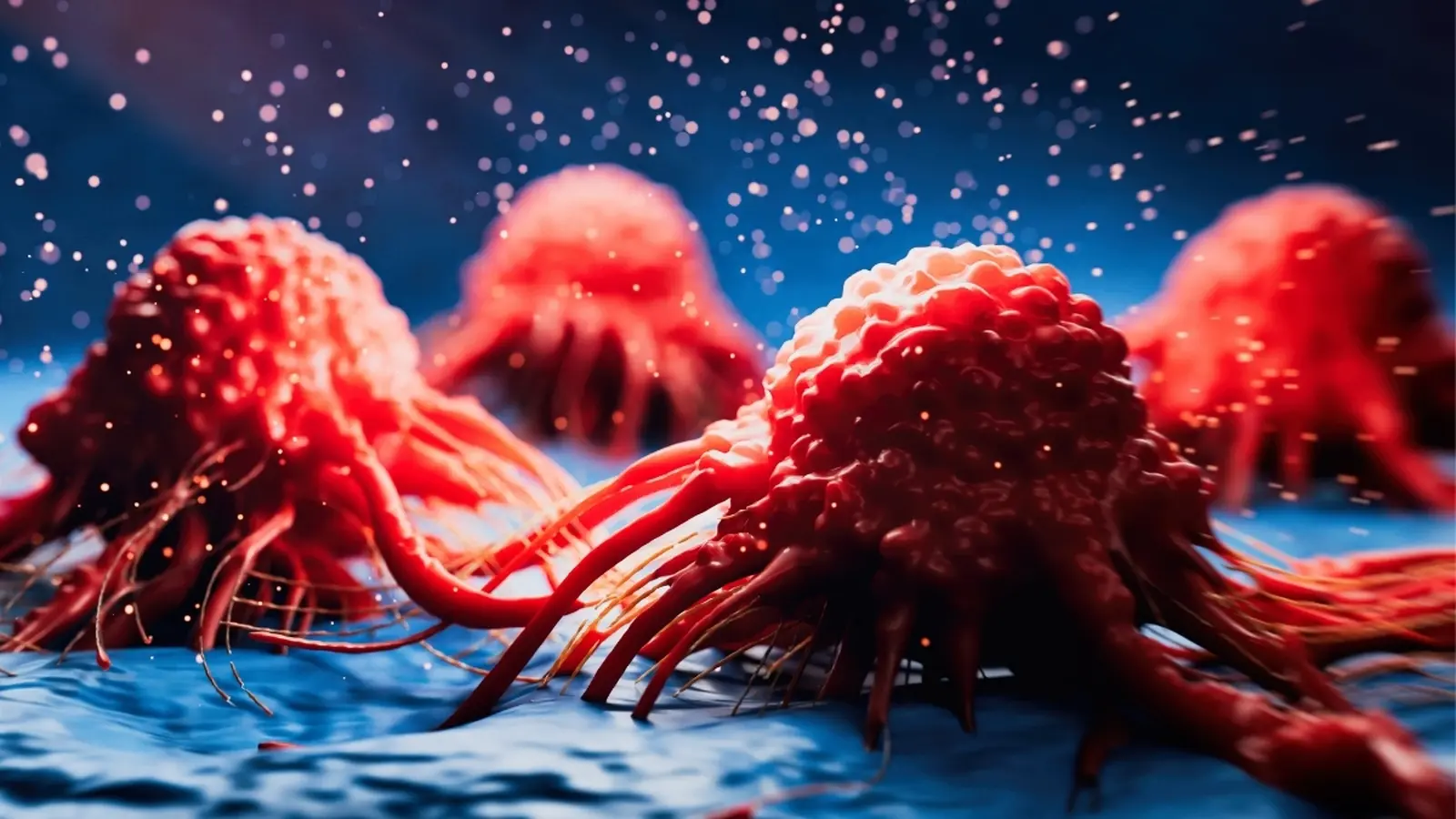
It sounds like a paradox: a disease that destroys lives could carry molecules that slow another devastating illness. Yet recent laboratory work with mice points to exactly that possibility, and the reason lies in a small protein and the brain's clean-up crew.
The unexpected pattern between two grim diagnoses
Clinicians and epidemiologists have long noticed an odd pattern: people diagnosed with cancer are, on average, less likely to be later diagnosed with Alzheimer's disease, and those with Alzheimer's appear less likely to develop cancer. Correlation is not causation. Still, when a pattern persists across large population studies it deserves a mechanistic explanation.
Alzheimer's disease is classically associated with amyloid beta, a protein that misfolds and aggregates into sticky plaques between neurons. These plaques interrupt neural signaling, provoke chronic inflammation, and contribute to progressive cognitive decline. In healthy brains, immune cells called microglia patrol tissue and remove debris, but in Alzheimer's these cells often fail to clear misfolded proteins efficiently, allowing plaques to accumulate.
What the mouse experiments revealed
Researchers implanted human tumour tissue—taken from lung, prostate and colon cancers—under the skin of genetically modified mice that normally develop dense amyloid beta plaques as they age. The result was striking. Tumour-bearing mice showed far less plaque accumulation in the brain than their tumour-free counterparts. In several tests the mice that carried tumours also performed better on memory tasks, suggesting the change had functional consequences, not just a microscopic signature.
Tracking the signal led the team to cystatin-C, a small, secreted protein abundant in tumour blood samples. Evidence from the experiments suggests that tumour-produced cystatin-C enters the circulation, crosses the blood–brain barrier—the selective endothelial boundary that normally restricts many blood-borne molecules—and reaches the brain parenchyma.
Once inside the brain, cystatin-C appears to bind to nascent amyloid beta aggregates and act as a tag. That tag seems to engage microglia through a receptor known as Trem2, switching these immune cells into a more active, plaque-clearing phenotype. In short: tumours exported a molecule that helped microglia do their job.

Clumps of amyloid beta trigger inflammation and damage in brain tissue.
Biology of trade-offs
At first glance the idea that cancer could confer a protective effect on the brain feels counterintuitive. But evolutionary and molecular biology are full of trade-offs: pathways that favour cell survival and growth in one context can be harmful in another. A tumour’s metabolism and secretome—its mix of secreted proteins—reflects its drive to grow and evade local controls. Sometimes those secreted factors have off-target effects elsewhere in the body, for better or worse.
Here, cystatin-C looks like a by-product of tumour biology that happens to help microglia recognize and remove amyloid seeds. That does not mean cancer is desirable. The harms of malignancy far outweigh any incidental benefits. But identifying the protein and its mechanism creates an opportunity: could we mimic cystatin-C’s beneficial action without unleashing a tumour?
Implications and therapeutic possibilities
There are several plausible translational paths. One would be to design engineered forms of cystatin-C that bind amyloid beta more tightly or persist longer in the brain. Another would be to develop small molecules or biologics that selectively activate Trem2 and push microglia toward a plaque-clearing state. Gene therapy approaches might also be imagined, though they carry higher regulatory and safety hurdles.
Each route requires careful balancing. Microglial activation can be a double-edged sword: too little activation and plaques persist; too much and the resulting inflammation can harm neurons. Any therapy would need to nudge the immune response into a productive, not destructive, program.
The key caveat is that these findings come from mice, not people. Mouse models reproduce aspects of Alzheimer's—especially amyloid deposition—but they do not capture the full clinical and pathological landscape of human dementia. It remains unclear whether human tumours produce sufficient cystatin-C, or whether human blood–brain barrier dynamics permit the same transfer seen in mice. Large-scale human studies and carefully designed clinical trials would be necessary before any cystatin-C–based therapy could be considered.

The new discovery opens intriguing possibilities for Alzheimer's treatments.
Expert Insight
"This work gives us a tangible molecular link between two diseases that have long been observed to oppose one another in population data," says Dr. Maria Langford, a neuroimmunologist at the Albion Institute for Brain Research. "That link—cystatin‑C engaging microglial Trem2—provides a realistic target. The challenge now is to translate a tumour-driven phenomenon into a safe, controlled therapeutic that enhances clearance without triggering harmful inflammation."
Dr. Langford emphasizes caution. "Mouse models are indispensable for mechanism, but human biology is messier. We need biomarkers that tell us when microglia are doing helpful clearing versus when they're causing collateral damage. That precision will determine whether the approach is feasible."
Broader context and next steps
The study dovetails with a growing recognition that systemic health influences neurodegeneration. The bloodstream is not merely a conduit for nutrients and hormones; it carries signals from the immune system, the gut microbiome, metabolic organs and, as this work suggests, tumours. Therapeutics that manipulate systemic factors—whether proteins, lipids or immune modulators—may offer complementary approaches to strategies that target amyloid directly.
Researchers must now answer several questions: Do people with specific tumour types show measurable changes in cerebrospinal fluid cystatin‑C? Can engineered cystatin‑C cross the human blood–brain barrier safely? What dosing window avoids overstimulating microglia? These are tractable questions, but they require careful, stepwise study in clinical settings.
For patients and caregivers today the result is not a treatment, but a reminder that biology can hide surprising connections. A protein that helps a tumour survive might also help the brain clear toxic protein. Scientists are learning to read those cross-talk signals and, with luck, to repurpose them without importing disease.
Whether cystatin‑C will become a drug target, a biomarker, or a conceptual lever for new immunotherapies, the study steers research toward a richer map of how organs talk to one another—and how understanding those conversations could protect the ageing brain.

“My work centers on sustainability, energy, and environmental science — examining how innovation can lead to a greener future.”

Discussion
Leave a Comment