
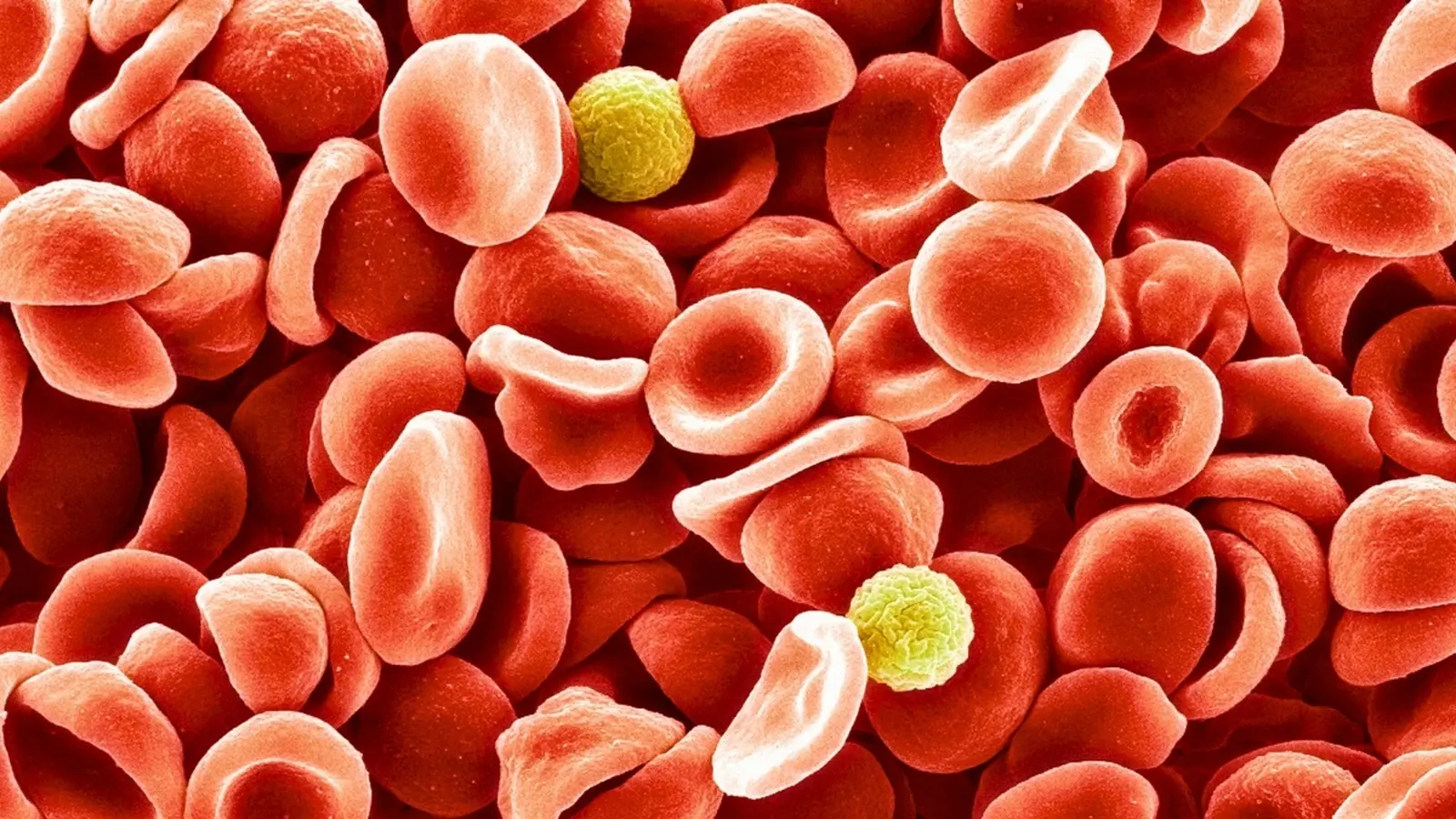
In 1972, a routine blood sample from a pregnant woman returned a surprising absence: a surface molecule that every other tested red blood cell displayed. The anomaly was odd enough to be archived and then largely forgotten—until decades of curiosity, new genetic tools and international collaboration turned that single omission into the discovery of a previously unrecognized human blood group.
How the missing molecule led scientists to MAL
Most people know blood types from ABO letters and the Rh plus-or-minus sign. But the surface of every red blood cell carries scores of proteins and sugars that act as identity tags for the immune system. When those markers do not match during a transfusion, the results can be dangerous. So when researchers found that more than 99.9 percent of people carry a particular antigen called AnWj, the lone 1972 outlier became a scientific breadcrumb.
Working across teams in the UK and Israel, hematologists and cell biologists pieced the story together. The missing antigen sits on a protein involved in myelin and lymphocyte biology. Because of that association, scientists named the new blood group MAL. The work, published in the journal Blood in 2024, confirmed that when someone inherits two mutated copies of the MAL gene, their red cells lack the AnWj antigen. Simple in concept. Difficult to prove. The rarity of these genetic cases made the investigation painstaking and patient.

"It represents a huge achievement," said Louise Tilley of the UK National Health Service, who has pursued this question for nearly 20 years. "To finally establish this new blood group system and be able to offer the best care to rare, but important, patients." Her comment underscores a practical truth: identifying a blood group is not an academic exercise. It directly affects transfusion safety.
Proving cause, not just correlation
To move beyond association, the team used functional genetics. They took blood cells that lacked AnWj and introduced a normal MAL gene. The result was decisive: the AnWj antigen appeared on the modified cells. That experiment tied the antigen to the MAL protein and closed a loop that decades of serology and observation had left open.
Why this protein mattered
MAL is a small membrane protein with roles in maintaining membrane stability and in cellular transport. Intriguingly, AnWj is typically absent at birth and emerges in early life, indicating a developmental regulation that scientists are only beginning to understand. In the study cohort, all AnWj-negative individuals shared the same MAL mutation, yet none displayed other clear cellular defects or linked diseases so far.
The team also found three patients who lacked AnWj without carrying the MAL mutation, suggesting that for some people the antigen can be suppressed by other blood disorders rather than inherited. That distinction is more than semantics: inherited absence and suppression imply different clinical pathways and different follow-up testing.
Clinical implications and future testing
Why does this matter for patients? Because transfusion reactions are not hypothetical. When antigens do not match, the immune system can attack transfused blood. For people with extremely rare antigen profiles—like AnWj-negative individuals—finding compatible blood can be challenging and risky. Now that the genetic basis of the MAL system is known, diagnostic tests can determine whether a negative profile is inherited or the result of an acquired suppression, which may point to an underlying condition needing attention.

Rare blood groups are not all clinically catastrophic. Some are silent quirks. Others can cause severe hemolytic reactions in pregnancy or after transfusion. The discovery of MAL follows other recent identifications of tiny, highly specific blood systems, such as the Er system described in 2022. Each addition to the catalog improves patient care and reduces uncertainty for clinicians managing complex cases.
Expert Insight
"Finding a new blood group is like discovering a dialect in a language you thought you already spoke fluently," says Dr. Mira Patel, a transfusion medicine specialist. "It reminds clinicians that biological diversity is vast and that tailored testing saves lives. For rare antigen-negative patients, knowing the mechanism—genetic or acquired—can change management and alert families to inherited risks."
The MAL discovery is a reminder that small anomalies can point to fundamental biology. One lab result from 1972 became a decades-long detective story, one that ultimately strengthens transfusion safety and expands our map of human immunological identity. The next time a routine test looks wrong, scientists will be better equipped to ask why—and to find out what that quirk can teach us about health and disease.

“The cosmos has always fascinated me. I write about space missions, astronomy, and the technologies pushing humanity beyond Earth.”

Discussion
Leave a Comment