
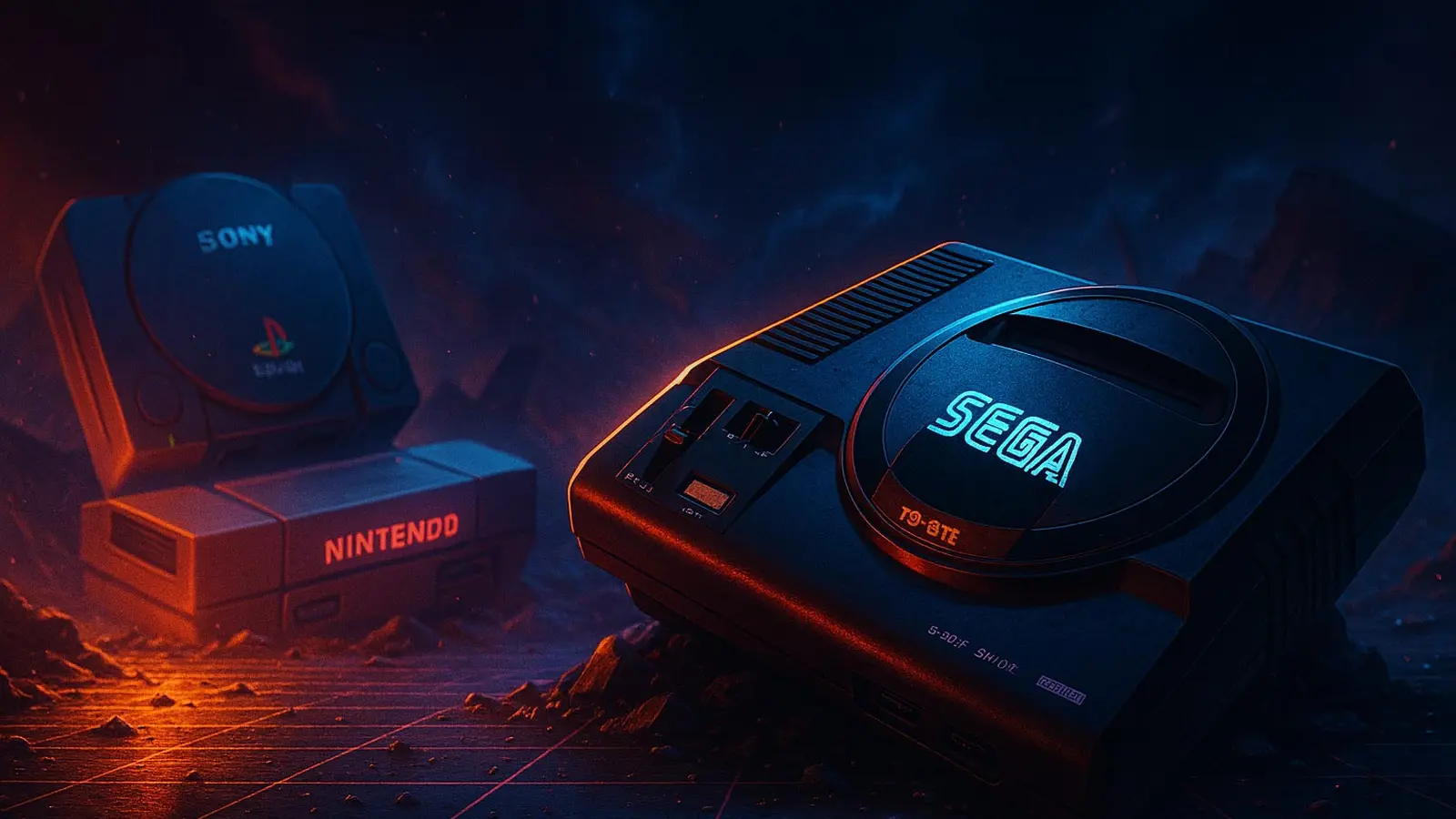
The downfall of Sega isn’t just a story about a failed console — it’s a tale of pride, internal conflict, and missed opportunities.
During the early 1990s, Sega was a gaming powerhouse that boldly rewrote the rules of the industry. Its success was anchored by the 16-bit Sega Genesis (Mega Drive), which—with a charismatic mascot like Sonic the Hedgehog and aggressive U.S. marketing—snatched a significant share of the market from longtime rival Nintendo.
But that era of dominance also sowed the seeds of Sega’s decline. Flush with confidence, Sega’s leadership squandered valuable time and resources on confusing side projects like the Sega CD and 32X instead of focusing on building a flawless next-generation console. These add-ons fragmented the market, irritated developers, and diluted Sega’s brand. Meanwhile, the door quietly opened for a fresh challenger — Sony.
A Strategic Split: Sega of Japan vs. Sega of America
One of the core reasons behind Sega’s collapse was the strategic disunity between its Japanese and American divisions. Sega of America had achieved remarkable success with bold moves — like rebranding Sonic to better appeal to Western audiences — while Sega of Japan remained fixated on its domestic market, where the Genesis hadn’t performed as well.
Sega of America wanted to double down on the Genesis’s U.S. momentum, but Sega of Japan pushed aggressively toward a next-generation system. The result was a company split by conflicting visions, leading to inconsistent decisions that prioritized internal politics over global strategy.
The Saturn Debacle: A Powerful but Problematic Console
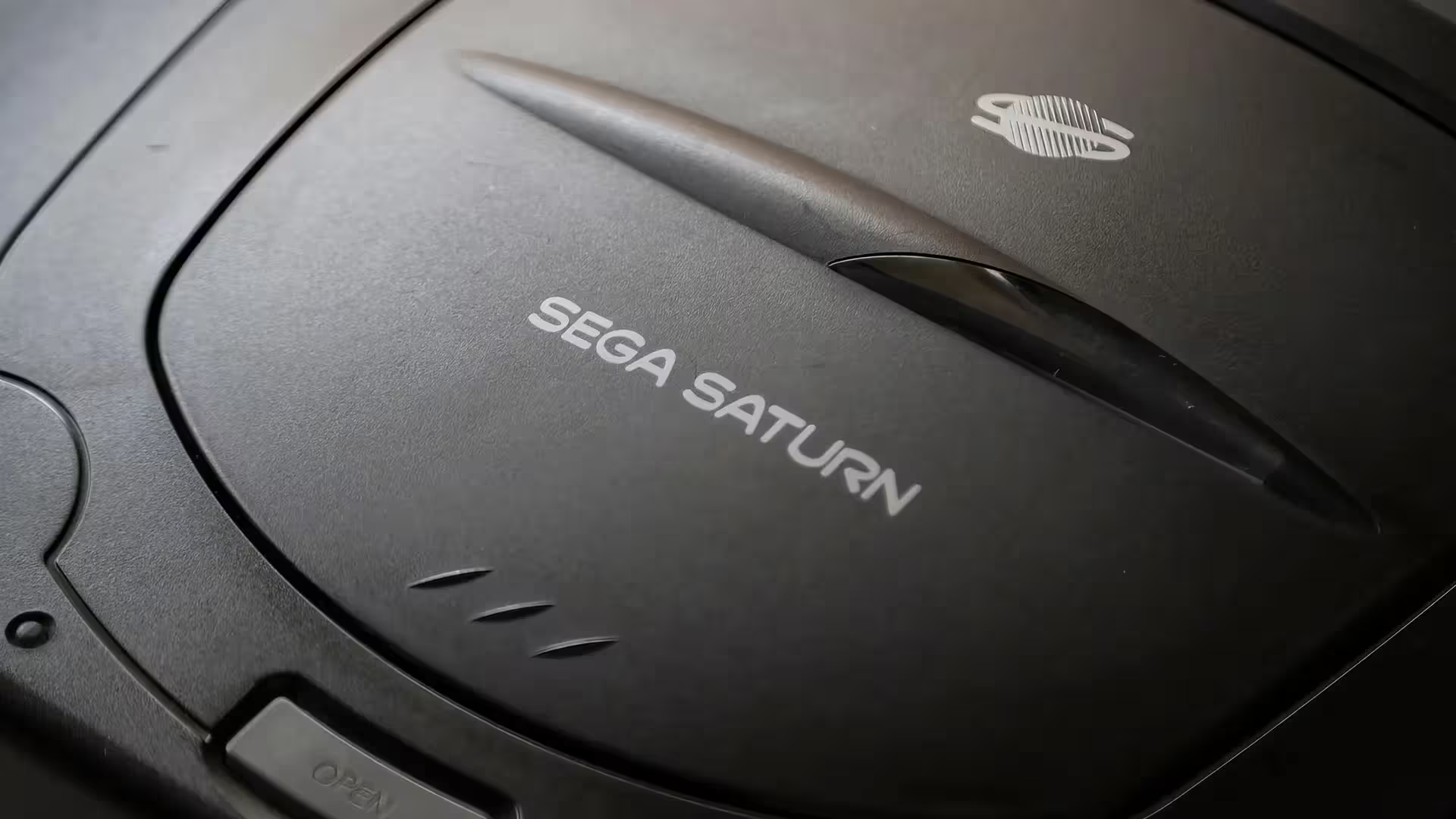
These management rifts manifested most clearly in the Sega Saturn project. Initially designed as a 2D powerhouse, the Saturn’s development took a sharp turn when Sony unveiled the PlayStation, emphasizing 3D graphics. In a panic, Sega of Japan rushed to redesign the hardware, adding multiple processors (like dual SH-2 chips) to compete.
The outcome was a technically impressive yet notoriously complex architecture that became a nightmare for developers. Without unified leadership or a coherent vision, Sega’s hardware ended up powerful on paper but difficult to work with in practice.
Developer Alienation
While Sony courted third-party developers with strong tools, documentation, and lucrative contracts, Sega left its partners stranded. Its dev kits were clunky, support was minimal, and many studios simply gave up.
The PlayStation, meanwhile, became the platform of choice thanks to its developer-friendly design and rich game library. Saturn, by contrast, suffered from a limited lineup — a fatal flaw in a market driven by software, not specs.
Marketing Missteps: The E3 1995 Disaster
Sega compounded its technical problems with one of the most infamous marketing blunders in gaming history. At E3 1995, Sega abruptly announced that the Saturn would launch immediately — months earlier than planned — at a price of $399.
Retailers were blindsided, unable to stock sufficient units. And Sony’s response was brutal in its simplicity: their executive took the stage, said “$299”, and walked off. That $100 price gap shifted the entire market’s momentum toward the PlayStation.
Saturn never recovered. The rushed launch strained relationships with retailers and developers alike, eroding trust and draining Sega’s finances.
Dreamcast: Innovation Without a Winning Proposition
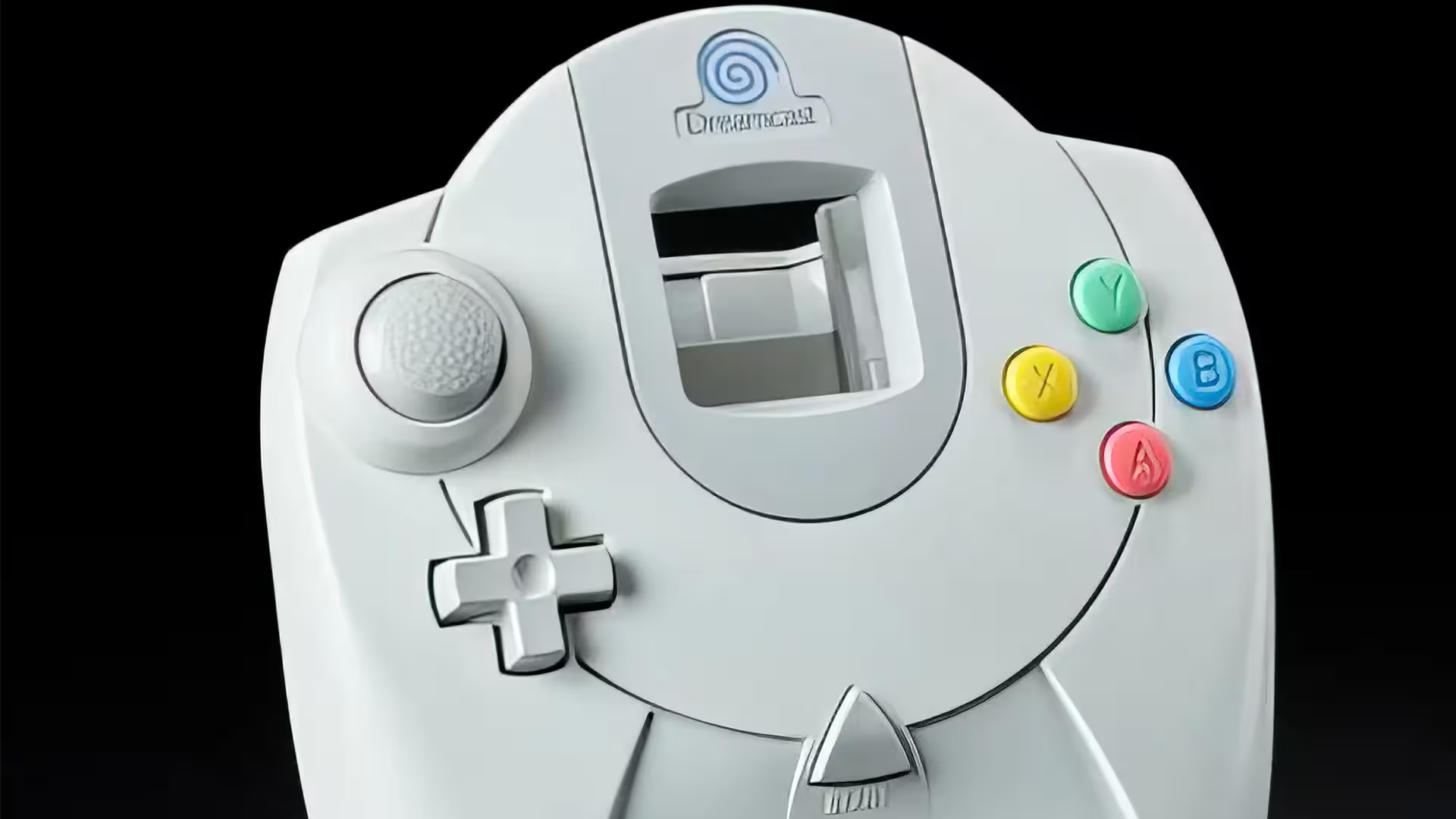
After Saturn’s failure, Sega made one last attempt to reclaim the hardware market with the Dreamcast. Technically ahead of its time, the Dreamcast offered online play, advanced graphics, and creative titles. But past mistakes haunted the company.
The biggest strategic misstep? Choosing the GD-ROM format instead of the DVD-ROM used by Sony’s upcoming PlayStation 2. While Sega marketed the Dreamcast as a gaming machine, Sony positioned the PS2 as a complete entertainment center.
In the early 2000s, DVD players were still expensive; the PS2’s ability to double as a DVD player made it a must-have household device — even for non-gamers. Consumers spoke with their wallets: the PS2 went on to become one of the best-selling consoles of all time.
Piracy and Financial Strain
The GD-ROM not only lacked capacity but was also vulnerable to piracy. Illegal copies flooded the market, slashing profits for Sega and its partners. Combined with the company’s already fragile finances post-Saturn, this proved unsustainable.
Despite the Dreamcast’s innovation, Sega simply couldn’t afford another loss.
Why Sega Gave Up the Fight
Sega’s withdrawal from the hardware race wasn’t triggered by a single failure, but by a pattern of strategic missteps:
Lack of unified direction: Internal divisions led to reactive, short-sighted decisions.
Developer neglect: Complex hardware and weak support alienated third-party studios.
Misreading consumer priorities: Sega prioritized raw power while Sony focused on user experience and added value.
Financial exhaustion: After two failed consoles, Sega no longer had the capital to compete.
Ultimately, Sega recognized that retreating from hardware was the only way to survive. By pivoting to software, it preserved its legacy — continuing to develop beloved franchises like Sonic the Hedgehog.
The Legacy
Sega’s fall is a cautionary tale about how early success can breed overconfidence, how internal politics can sabotage innovation, and how understanding consumer needs matters more than specs.
In the end, Sega’s story reminds us that in the console wars, power alone doesn’t win — clarity, unity, and strategy do.

“I love exploring gadgets, apps, and trends that redefine how we connect, work, and play in a digital world.”

Discussion
Leave a Comment
Comments (6)
i still play sonic and feel nostalgic, but sega's choices lost them the war, sad lol
wish sega had stuck to one vision, too many add ons and confusion, big missed opps
they panicked at playstation reveal, rushed saturn killed their reputation and partners
sega hubris turned genius into mess, shoulda focused on dev tools and trust
i loved dreamcast vibe but sega burned too many bridges, that hurts my gamer heart
sad to see sega self sabotage, brilliant ideas ruined by pride and bad calls