
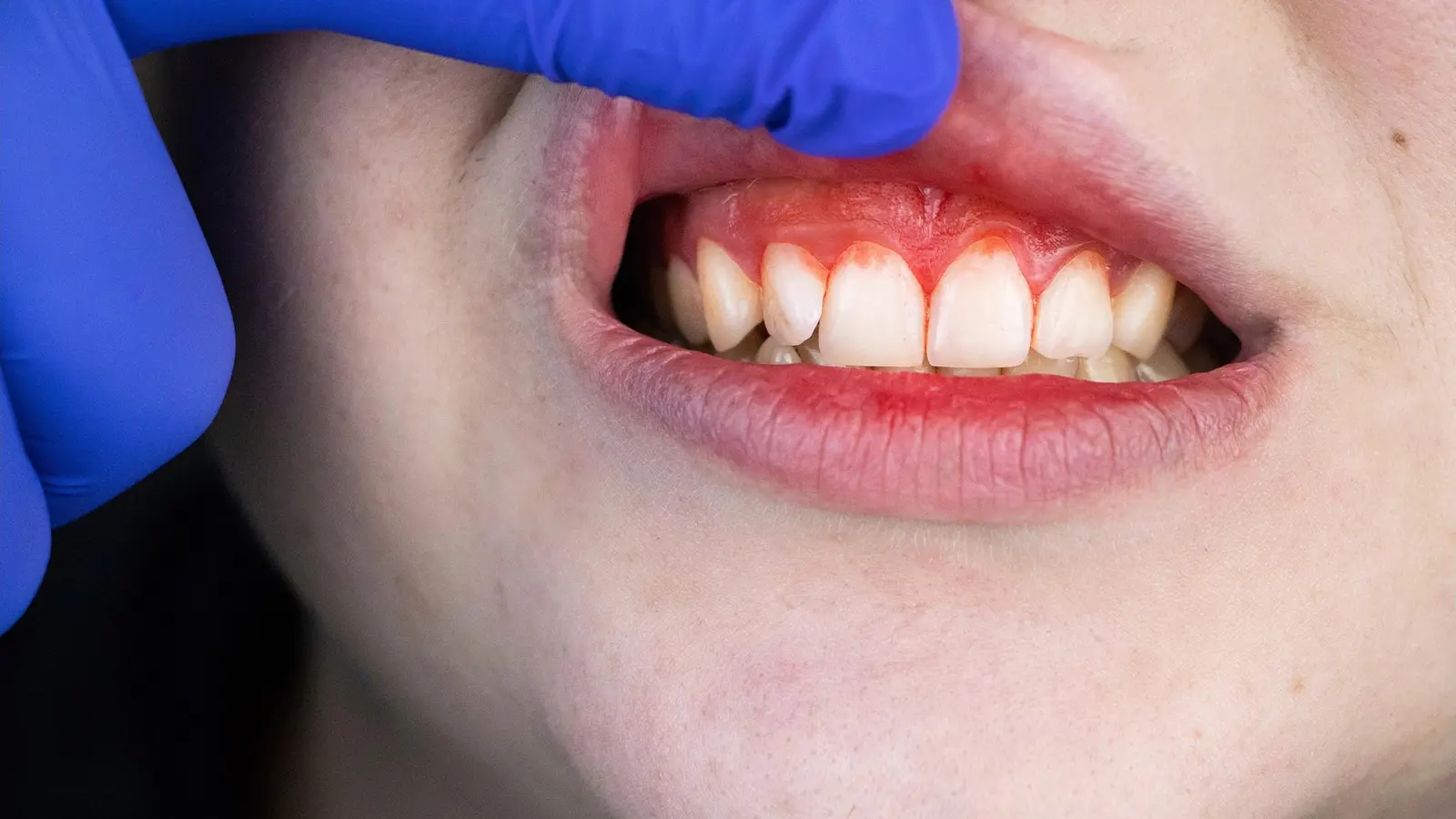
Picture a bacterium you meet daily — in conversations, coffee, kisses — and imagine it slipping into your bloodstream, taking a dark turn from the mouth to distant breast tissue. That leap, once theoretical, now has experimental evidence pointing to a surprising collaborator in cancer biology: Fusobacterium nucleatum.
Researchers at Johns Hopkins report that this familiar periodontal microbe can travel from the oral cavity to the breast, provoke inflammation, and trigger cellular events that favor tumor emergence and spread. The bacterium is already known in oncology circles for its ties to colorectal malignancies; the new work expands its suspected reach and raises practical questions about oral health, heredity, and cancer prevention.
Why does this matter? Because the actions of a tiny organism can tip cells from orderly behavior into chaotic growth. When scientists introduced F. nucleatum into models that mimic the human breast environment, they saw early tissue changes — noncancerous but abnormal lesions — alongside markers of DNA damage and heightened cell proliferation. Those are the kinds of shifts clinicians watch for as precursors to cancer.
The experiments combined mouse models and human breast cell lines. Introducing the bacterium directly into the mammary duct provoked metaplasia and hyperplasia: cells changing identity or multiplying beyond their normal bounds. When F. nucleatum entered the circulation, it homed to established tumors and accelerated both growth and dissemination to the lungs in animal models. In short, the microbe behaved like an environmental catalyst, amplifying tumor-promoting conditions.

The team led by Dipali Sharma, Ph.D., explored the molecular interplay and found a signature mechanism. Exposure to the bacterium induced DNA lesions and engaged repair systems that are fast but error-prone, notably nonhomologous end joining. That pathway reconnects broken DNA ends quickly, sometimes introducing mistakes that can seed cancerous mutations. Cells also increased expression of PKcs, a protein linked with migration, invasion, stem-like properties, and chemotherapy resistance — all traits associated with aggressive tumors.
These findings do not imply that the bacterium alone causes breast cancer. Rather, it appears to act as a cooperator, nudging vulnerable tissues toward malignancy. That vulnerability seems especially acute in cells carrying BRCA1 mutations. The study shows BRCA1-mutant epithelial cells display elevated Gal-GalNAc on their surface, a sugar motif that helps bacteria attach and enter. Those cells took up F. nucleatum more readily and retained it across generations, compounding DNA damage and tumor-promoting behavior.
"The data suggest a coordinated action between genetics and environment," says a senior researcher on the project, describing how inherited BRCA1 defects and this oral microbe could work in tandem. "Nothing occurs in isolation — a microbe can be one piece of a much larger puzzle."
How might clinicians and the public use this information? The immediate implications are cautious: more human studies are required before altering screening or treatment strategies. But the findings do place oral health in a new light. If an oral pathogen can seed distant tissue and influence tumor biology, then periodontal disease may be more than a local problem. It could be an environmental modifier of cancer risk, especially among genetically predisposed individuals.
Study context and methods
The Johns Hopkins team combined in vivo and in vitro approaches to build a layered case. In mice, they introduced Fusobacterium nucleatum into the mammary ductal system and, in separate experiments, into the bloodstream. They monitored tissue architecture, inflammatory markers, and tumor progression. Parallel tests in cultured human breast cells — including lines engineered to carry BRCA1 mutations — allowed interrogation of cellular uptake, DNA damage assays, and expression of proteins linked with metastasis and drug resistance.
Microscopy captured bacteria within epithelial cells, and molecular assays revealed activation of DNA-repair pathways skewed toward error-prone mechanisms. Short exposures yielded lasting changes: increased PKcs expression and greater migratory and invasive capacity in tumor cells. Those are measurable hallmarks of cells more likely to seed metastases and withstand chemotherapy.
It’s worth noting that similar associations between periodontal disease and breast cancer risk have surfaced in epidemiological studies, but those studies could not establish causality. The current experimental work is a step toward mechanistic understanding — showing not only correlation but plausible biological pathways by which an oral microbe could influence breast tissue.
Breast cancer is multifactorial. Hormonal influences, genetic mutations, immune state, lifestyle factors, and apparently the microbiome all interact. This study adds the oral microbiome to that list and suggests a route for targeted research: can reducing oral pathogen load lower breast cancer risk or slow tumor progression in susceptible patients?
Expert Insight
"This research reminds us that the body is an ecosystem," says Dr. Maria Alvarez, a fictional but realistically portrayed cancer microbiome specialist. "Bacteria are not passive passengers. Under certain genetic or physiological conditions, they can become active contributors to disease. Translating these findings will require clinical trials, but the message is clear: oral health may matter far beyond the mouth."
Follow-up work will need to determine whether standard dental interventions, targeted antibiotics, or vaccines could reduce breast colonization by F. nucleatum — and whether such reductions change cancer outcomes. Until then, the study underscores a practical, low-risk action: prioritize oral hygiene. A mouth kept healthy may protect much more than your smile.

“The cosmos has always fascinated me. I write about space missions, astronomy, and the technologies pushing humanity beyond Earth.”

Discussion
Leave a Comment