
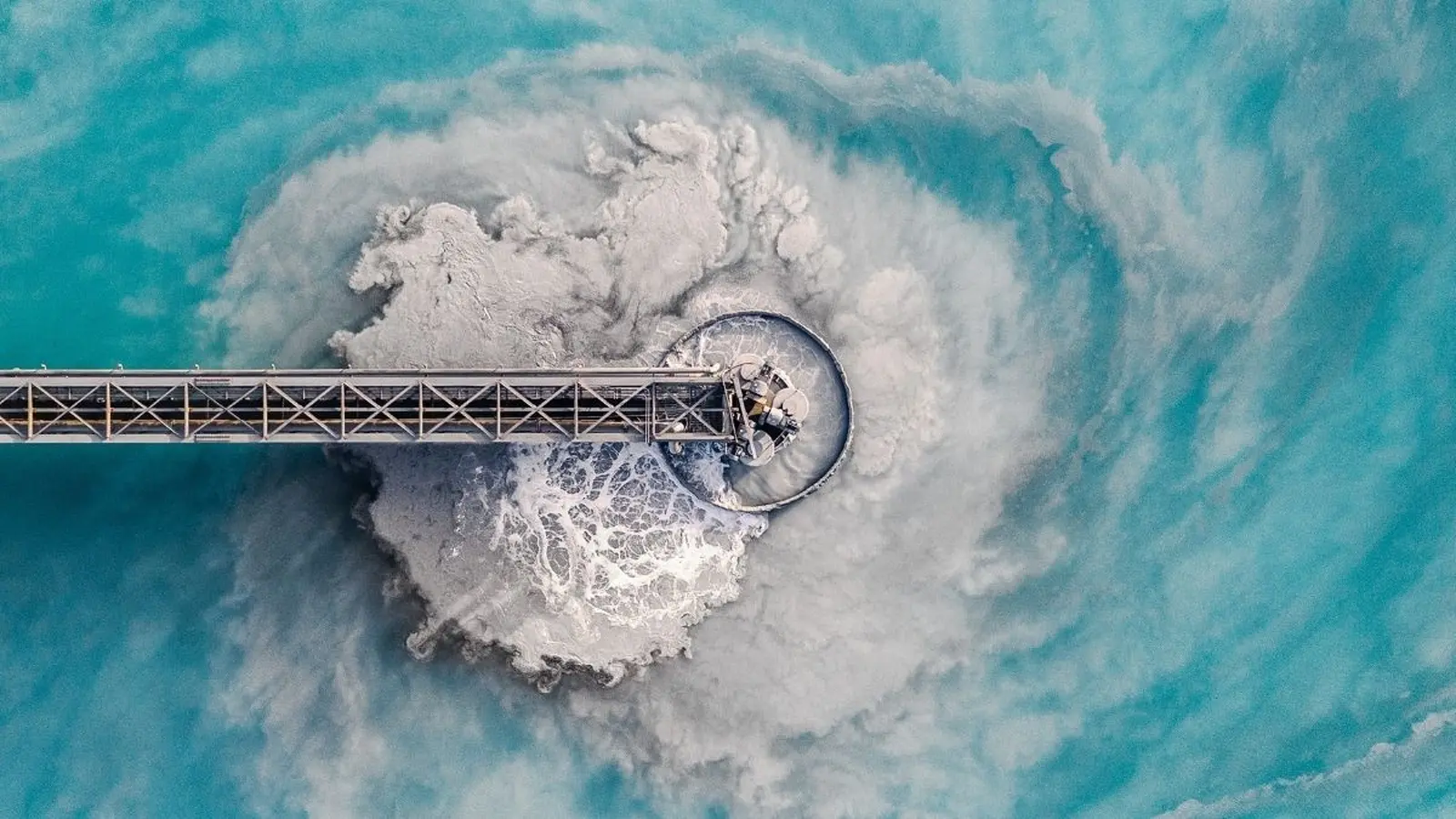
Imagine a sponge that can strip decades-old industrial pollutants from water in minutes. That is the claim an international team brings to the table after developing a new filtration material that targets PFAS—those stubborn, so-called "forever chemicals" that linger in groundwater, tap supplies, and soils.
How the filter works and why it matters
PFAS (per- and polyfluoroalkyl substances) have been prized by industry for nearly a century for their resistance to water, grease and fire. That same resistance makes them persistent pollutants: the carbon–fluorine bond is one of the strongest in chemistry, and many PFAS molecules take centuries or longer to break down. Some—PFOA and PFOS—are linked to cancer, cardiovascular problems, and reproductive harms. But there are thousands more variants whose health impacts remain poorly characterized.
The team, led by engineer Youngkun Chung at Rice University, created a layered double hydroxide (LDH) composed of copper and aluminum combined with nitrate. In lab trials the material adsorbed large quantities of PFAS at remarkable speed—roughly 100 times faster than conventional activated-carbon filters, and orders of magnitude better in capture efficiency compared with other tested adsorbents.
Why so fast? The LDH forms stacked sheets with a slight charge imbalance. That imbalance creates active sites that attract and hold PFAS molecules tightly. Short sentence. The result: contaminated samples from rivers, taps, and wastewater facilities cleared of measurable PFOA in minutes rather than hours or days.
An illustration of the 'filter' material.
Regeneration and destruction — not just capture
Many existing approaches trade one problem for another: carbon filters hoard PFAS but then generate contaminated waste that is difficult to destroy. This LDH system takes a different route. Once the adsorption sites are saturated, researchers heat the material and add calcium carbonate. That combination regenerates the LDH so it can be reused and simultaneously strips the fluorinated chains from the captured molecules, breaking down PFOA’s backbone rather than merely sequestering it.
What remains after that chemical treatment is a fluorine–calcium residue. Rice engineer Michael Wong told The Guardian that this residue can be disposed of safely in landfill, reducing the risk of secondary contamination compared with spent carbon media.
Is this ready for real-world treatment plants? Not yet. The experiments so far have been performed at lab scale, though results against real water samples are encouraging. Scaling brings questions about cost, long-term stability, the full lifecycle footprint of the LDH material, and how the method performs across the thousands of PFAS variants in use today.
Still, the potential is clear: a faster, regenerable filter that also enables chemical destruction could cut both treatment time and hazardous waste. That would be a rare win in the race to remediate contaminated sites and protect drinking water.
Policymakers, utilities and researchers will need to collaborate to validate performance at larger scale, run pilot programs, and settle regulations for disposal of the treatment byproducts. For communities grappling with PFAS in their water, waiting decades for safer solutions is no longer acceptable; innovation like this demands prompt, careful testing and, if it holds up, rapid deployment.

“The cosmos has always fascinated me. I write about space missions, astronomy, and the technologies pushing humanity beyond Earth.”

Discussion
Leave a Comment