
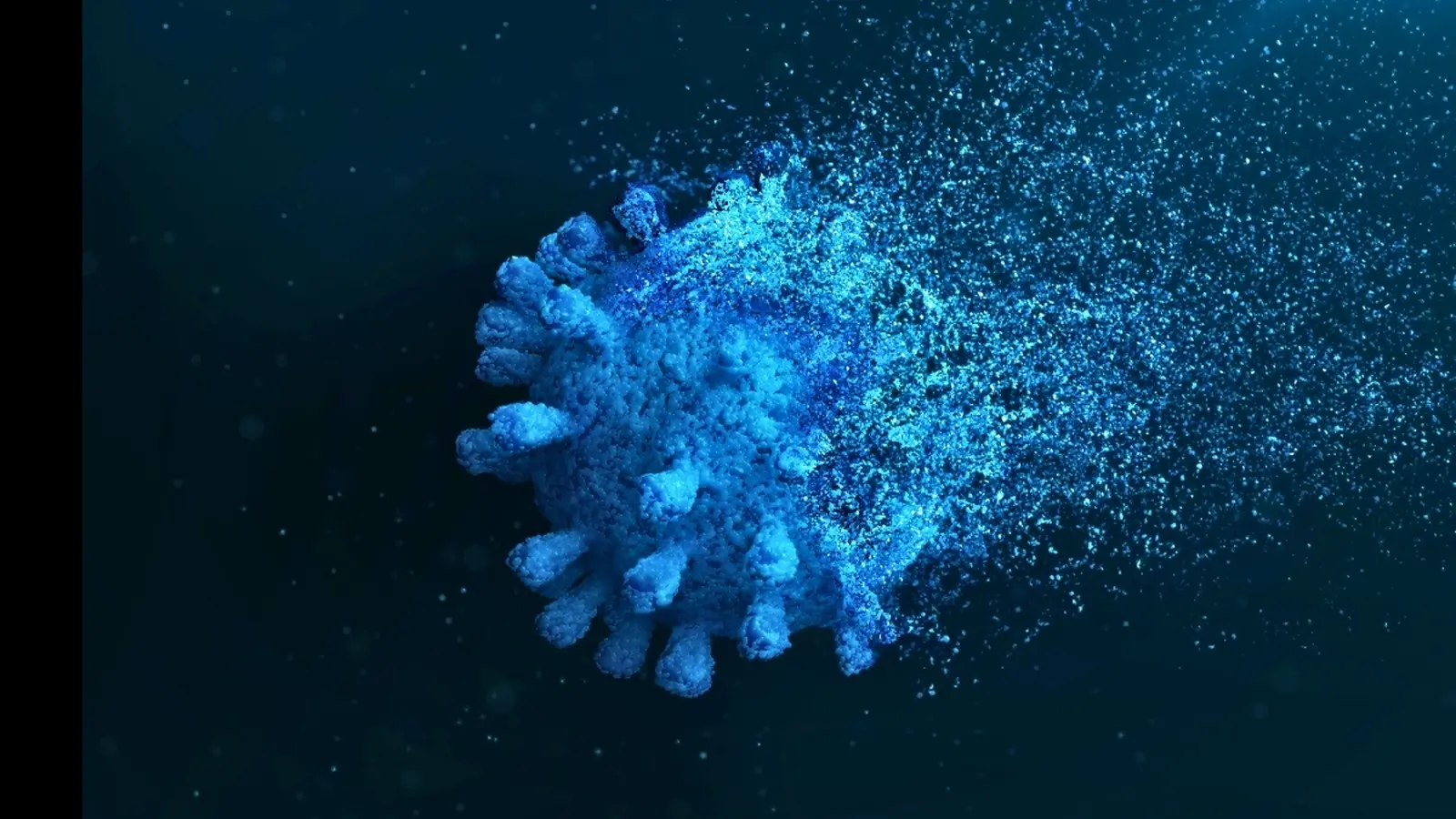
They are the leftovers nobody expected: tiny protein shards from SARS-CoV-2 that continue to hunt inside our bodies long after the virus itself has been neutralized. These fragments do not behave like inert debris. They latch on, provoke inflammation, and—worse—preferentially disable the very immune cells that should be sounding the alarm.
An international team of more than 30 researchers working with data published in PNAS has mapped how these viral remnants interact with human cells. The surprising mechanism is physical rather than purely biochemical: certain spike-derived fragments seek out and bind to membranes with pronounced curvature. In plain terms, cells that look spiky, branched, or tentacled tend to attract and be harmed by these pieces.
Why does this matter? Because the vulnerable population includes early-warning dendritic cells, and both CD8+ and CD4+ T lymphocytes—cells central to detecting infection and killing infected host cells. When those sentinels are blunted or depleted, the immune system's coordination frays. Clinicians have already observed persistent T cell loss in some people after COVID-19; this study offers a physical explanation for that pattern and suggests new diagnostic possibilities.
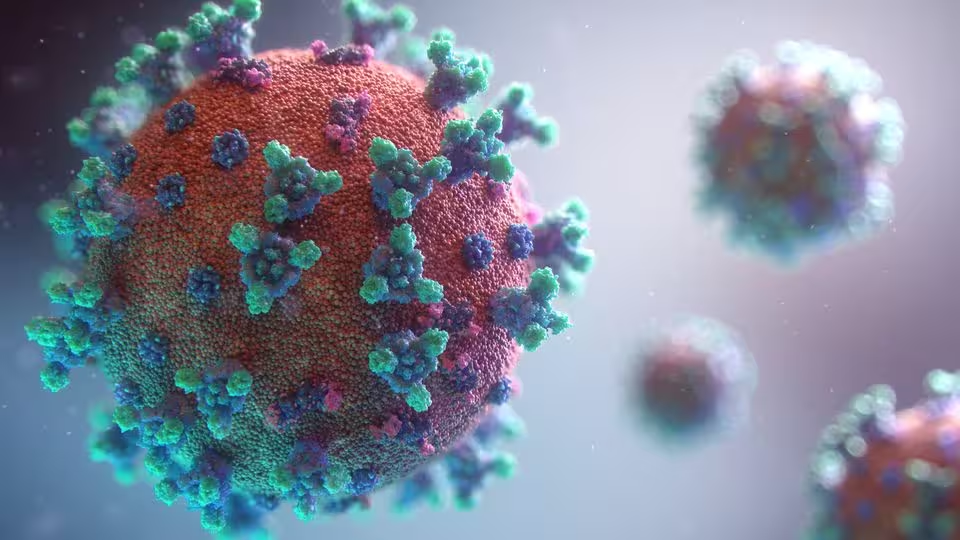
How the study reached its findings
The authors combined cell biology, biophysics and clinical observation. Using engineered protein fragments derived from viral spike proteins and a variety of cultured immune cells, they showed that fragments produced during viral disassembly can adhere to and destabilize membranes with specific curvature. Laboratory assays and cell-imaging techniques revealed which immune subsets are most susceptible. Parallel analyses comparing different SARS-CoV-2 variants indicated that not all fragments are equally damaging.
One practical upshot concerns the Omicron lineage. Although Omicron replicated rapidly, it broke down into a greater variety of fragments in infected tissue. Many of those pieces were less able to kill key immune cells, which could help explain why infections were often less severe despite high transmissibility. The team’s bioengineers noted that structural differences in spike fragments translate into real differences in how likely a patient's immune repertoire is to be depleted.
There are public-health implications as well as molecular ones. COVID-19 remains a cause of substantial mortality and disability: roughly 100,000 US deaths per year and millions living with long COVID, by recent estimates. Risk of long COVID appears to rise with repeated infections in both children and adults. Preventing infection, therefore, reduces opportunities for harmful viral fragments to accumulate or recur.
Stopping infection is not just about avoiding acute illness; it also reduces the chance that destructive viral remnants will erode immune defenses over time.
For patients and physicians, the message is pragmatic. Vaccination and measures that lower infection rates still matter — not only to prevent severe disease but to limit the lingering molecular fallout that may drive chronic symptoms. Researchers say this line of inquiry opens new avenues: from diagnostics that detect fragment-induced immune signatures to therapies that block fragment binding to vulnerable membranes. The science is far from settled, but the idea that viral detritus can behave like a microscopic predator is now a hypothesis we ignore at our peril.

“My work centers on sustainability, energy, and environmental science — examining how innovation can lead to a greener future.”

Discussion
Leave a Comment