
3 Minutes
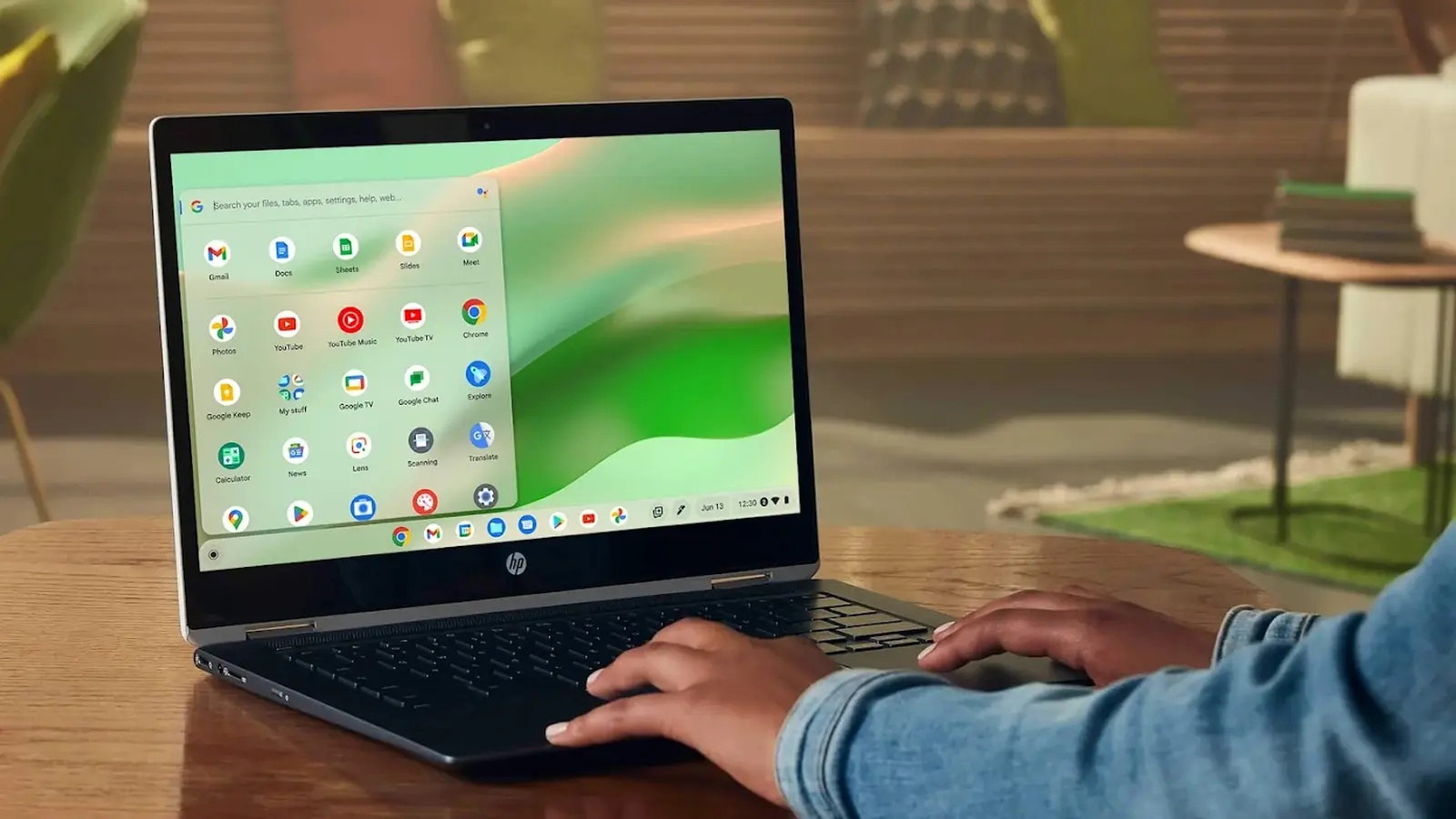
Recent court documents from the US v. Google case, obtained by The Verge, sketch a roadmap that few expected: Google plans to retire ChromeOS entirely by 2034 and fold desktop functionality into a unified Android-based system codenamed Aluminium OS. The move was quietly foreshadowed last year by the President of the Android Ecosystem, and now lawyers in the antitrust case have confirmed the direction in court transcripts.
Why 2034? There’s a practical anchor. Google’s last major ChromeOS hardware platform launched in 2023, and the company appears committed to a roughly ten-year support promise — which pushes official ChromeOS life into the 2033–2034 window. In short: existing devices get their support runway, then the brand steps off stage.
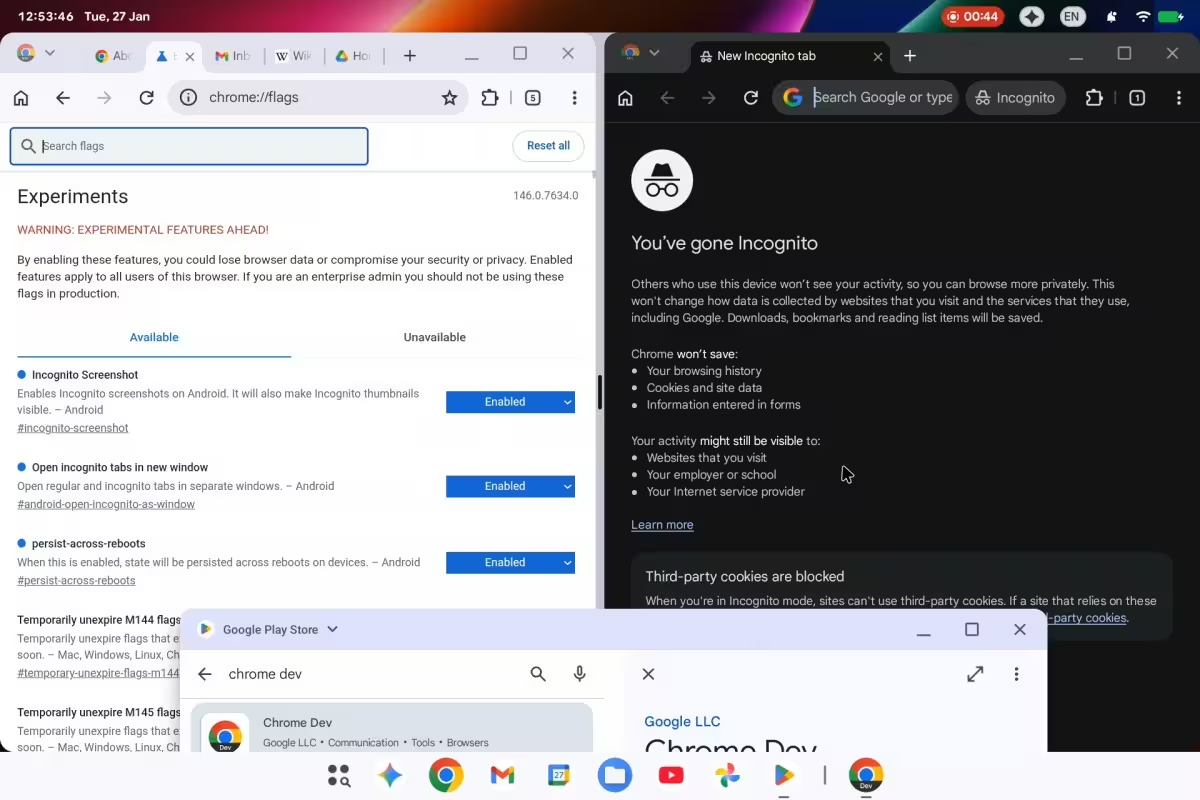
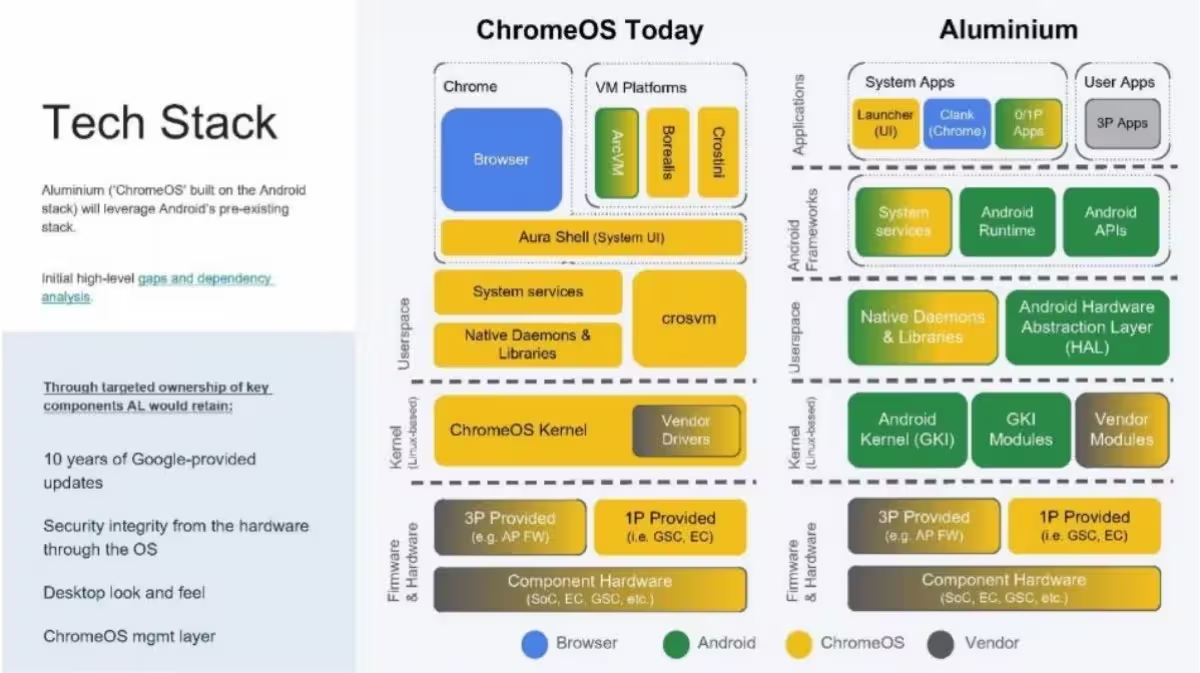
The leaked roadmap is surprisingly detailed. Commercially trusted testers are expected to see Aluminium OS in late 2026, with a broader rollout slated for 2028. A leaked build surfaced recently, showing an interface that feels like Android stretched for larger screens and ChromeOS refined by Android’s services. An accompanying infographic describes the new stack as, essentially, "ChromeOS built on the Android stack," and flags possible special privileges for Google’s first-party apps — the Chrome browser included.
All of this raises immediate, practical questions. What happens to current Chromebook hardware and enterprise fleets? Developers will need to reconcile Android-compatible binaries with legacy ChromeOS web and container-based apps. Hardware partners will watch drivers and power management closely. And from a regulatory standpoint, giving first-party apps privileged treatment in a merged OS will be scrutinized — especially in the context of the very antitrust case that revealed these plans.
It’s easy to imagine upside: one consolidated platform could bring richer apps to laptops, tighter OS-to-hardware integration, and faster feature development. It’s equally easy to see friction — migration headaches, compatibility surprises, and a cultural shift for users who bought into ChromeOS’s simplicity. Google is trying to redraw an ecosystem without dropping the customers already in it.
Watch this space: the transition from ChromeOS to Aluminium OS will be gradual, messy, and consequential. Will Google pull off a smooth merger or create a new battleground for desktop platforms? Time will tell.
Source: gsmarena



Leave a Comment