
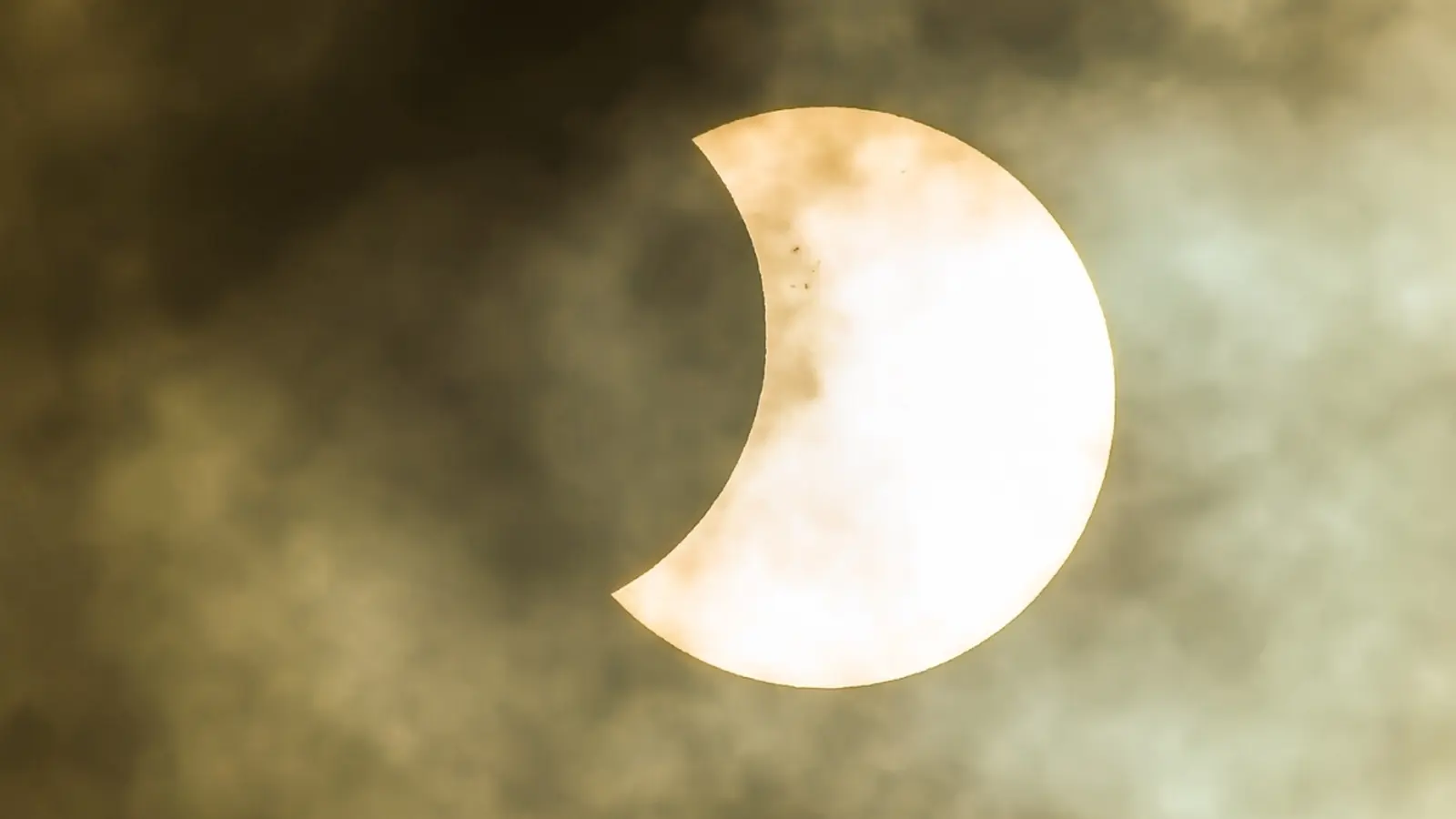
They registered a rise in electrical activity across a stand of Norway spruce, and the original paper leapt to an evocative conclusion: the forest was somehow 'sensing' and synchronizing ahead of a partial solar eclipse. The image stuck because it sounds like something out of folklore—a community of trees sharing memory and warning one another of an astronomical event. But spectacular narratives can obscure simpler physics and straightforward ecology.
What the Dolomites data actually showed
In October 2022, researchers working in a spruce forest in the Dolomites reported transient spikes in bioelectrical signals in several trees and stumps coincident with a partial solar eclipse. Older trees appeared to show stronger and earlier responses than younger ones. The authors suggested this pattern might reflect a form of communal anticipation: veteran trees encoding past experiences and transmitting cues that the rest of the stand follows.
It’s a neat idea. It also raises immediate questions. How would trees store episodic knowledge of a solar eclipse? How could that memory be applied to the very particular geometry and timing of another eclipse, given how variable eclipses are in path, magnitude and duration? And would the modest dip in daylight during a partial eclipse be enough to trigger widespread physiological change?
Alternative explanations have now been presented by ecologists Ariel Novoplansky and Hezi Yizhaq from Ben-Gurion University of the Negev. After re-examining the raw signals and the local weather record, they argue the electrical events align more plausibly with a sudden temperature drop, an active thunderstorm, and multiple lightning strikes near the site. Those environmental factors are already known to provoke strong, rapid electrical responses in plant tissues.
The numbers help frame the debate. The eclipse reduced incident light by roughly 10.5 percent for about two hours—less than the variation caused by typical cloud cover at that location. Gravitational changes associated with the moon’s passage are vanishingly small, comparable to the effect of a new moon and unlikely to be perceived by plant physiology. Meanwhile, lightning and abrupt cooling deliver sharp, high-amplitude stimuli that can produce coordinated electrical transients across neighboring trees.

Sampling and inference
Methodological limits also matter. The initial study sampled three live trees and five stumps. That’s a thin slice of a forest ecosystem. When you record from a handful of individuals in a heterogeneous landscape, local disturbances—one nearby lightning strike, a gust that drops temperature and humidity—can create patterns that look coherent but are in fact localized responses. Correlation does not equal communication.
Plants do have electrical signaling—electromes—that mediate wound responses, stomatal changes and systemic defense. These signals travel through the phloem and along membranes, and they can reflect temperature, light, mechanical stress, or ion fluxes after lightning. But moving from observation of electrical synchrony to claims of memory or collective anticipation demands multiple lines of evidence, replicated across sites and experimental manipulations that isolate eclipse effects from weather events.
Novoplansky is blunt: 'Instead of considering simpler, well-documented environmental factors, like a heavy rainstorm and a cluster of nearby lightning strikes, the authors leaned into the more seductive idea that the trees were anticipating the impending solar eclipse.' He and Yizhaq call for restraint and more rigorous control of confounding variables before embracing extraordinary interpretations.
Expert Insight
To put the argument in perspective, imagine listening to a city at dusk. One might hear a crescendo of car horns and think the population is reacting to a single event, when in reality a sudden storm or an accident produced the spike. Plant electrophysiology is analogous: clear signals exist, but their causes are often proximate and meteorological rather than prescient.
Dr. Lena Ortiz, a plant physiologist who has monitored electrome dynamics in temperate forests, offers a practical view: 'Electrical signals in trees are genuine and fascinating. They tell us about rapid, systemic responses to stress. But proving that those signals carry memory of past eclipses—or that older trees teach younger ones to anticipate celestial events—requires manipulative experiments. For example, replicate eclipse-mimicry under controlled light and storm conditions, or long-term monitoring across many stands to rule out local storms or lightning.' Her point underscores how the field must couple field observation with experimental rigor.
The broader implication is not a dismissal of bioelectrical research. On the contrary: tree electrophysiology is a lively and emerging area that promises insights into plant communication, stress signaling and ecosystem resilience. But scientific advances rest on eliminating easier, better-understood causes before invoking novel mechanisms.
So were the Dolomites spruces anticipating the moon’s shadow? The community now leans toward a less romantic answer: a passing storm and its electrical disturbances likely produced the recorded surges. The forest remains wondrous, even when its surprises are explained by lightning and temperature swings rather than foresight.
If you follow this line of research, expect clearer experiments soon—replicated field arrays, controlled perturbations, and a more cautious language around 'anticipation' and 'memory' in plants. That careful work will tell us whether forests ever do more than react, and if so, how.

“My work centers on sustainability, energy, and environmental science — examining how innovation can lead to a greener future.”

Discussion
Leave a Comment