
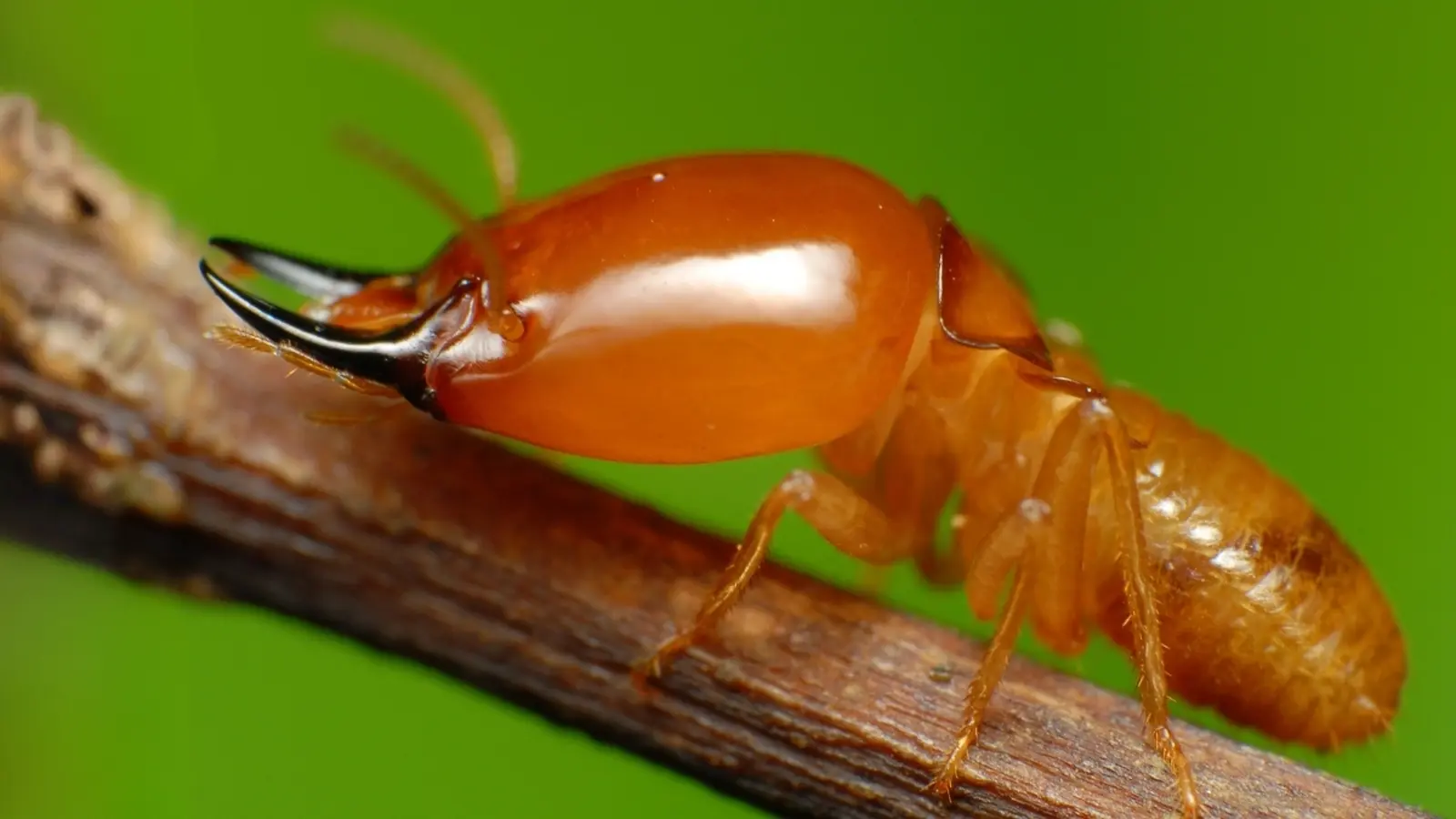
Imagine a world where mating rivalry simply vanished. What happens to traits that only exist to win fights that no longer occur? For termites, the answer was literal: sperm stopped swimming.
From roaming cockroaches to housebound superorganisms
Termites descended from cockroach-like ancestors that took to living in and eating wood. That switch — from free-living insects feeding on diverse diets to specialists subsisting on low-quality cellulose — set off a domino effect in their biology. Researchers comparing termite and cockroach genomes report that, rather than adding piles of new genes to power social life, termites shed entire suites of genes tied to digestion, metabolism and reproduction.
One of the most striking losses concerns sperm motility. In lineages that became obligatorily monogamous, sperm no longer faced competition inside the female reproductive tract. When a male’s sperm never has to displace a rival’s, the evolutionary pressure to sustain complex, energy-hungry swimming machinery fades. Over millions of years, genes that once built tails and the cellular systems that driven them became redundant and were lost.
University of Sydney evolutionary biologist Nathan Lo, an author on the study, frames it plainly: when monogamy becomes fixed, selection relaxes on the mechanisms that once mattered for male competition. The result is not just a behavioral shift, but a genomic one.

Macrotermes michaelseni termite queen (top left) being groomed by workers and the larger king, with soldiers in the foreground.
How diet, development and kinship weave colony roles
These genomic changes did not happen in isolation. The team found that developmental physiology — particularly how larvae allocate energy in response to food shared by older siblings — determines caste fate. Heavily fed larvae develop faster and become workers. Poorly fed larvae grow slowly and can become reproductive nymphs that, if crowned, will mate within the colony.
That system of food-mediated development is a feedback loop. Workers feed brood, which affects who becomes a worker versus a potential king or queen, which in turn stabilizes the colony’s labor force. High relatedness within the colony, driven by long-term monogamous pairings of founding kings and queens, made this arrangement evolutionarily viable. In effect, kinship and shared labor replaced sexual competition as the engine of selection.
Comparative genomics played a central role in teasing apart these patterns. By mapping gene presence and expression across cockroaches and multiple termite species, the researchers traced which genetic pathways shrank as social complexity grew. The surprising pattern: more elaborate societies coincided with smaller gene repertoires in certain functional categories.
That runs counter to an intuitive assumption that social sophistication requires bigger, more complex genomes. Instead, termite evolution illustrates another route: streamline what you no longer need, and repurpose remaining biology to coordinate a colony that behaves more like a single organism than a loose aggregation of individuals.

Reproductive caste of Mastotermes darwiniensis termites being groomed by a worker (middle), with soldiers at left and right.
What are the broader implications? For evolutionary biology, it’s a reminder that adaptation is not only additive. Loss can be a creative force. For applied science, understanding how social insects economize physiology could inspire biomimetic approaches to energy allocation and cooperative robotics. And for anyone who likes surprising trade-offs: the quieting of sperm motility in termites is a cautionary tale about what organisms give up when competition disappears.
So the next time you watch ant or termite workers scurry through a tunnel, consider the invisible genetic bargains that made those tunnels possible.

“The cosmos has always fascinated me. I write about space missions, astronomy, and the technologies pushing humanity beyond Earth.”

Discussion
Leave a Comment