
3 Minutes
Something is stirring beneath the shiny glass of next-year’s flagship phones: not a new camera trick, but the silicon that will run the whole show. Qualcomm’s follow-up to the current 8-series appears focused on raw muscle and memory bandwidth — and one variant looks built to be expensive on purpose.
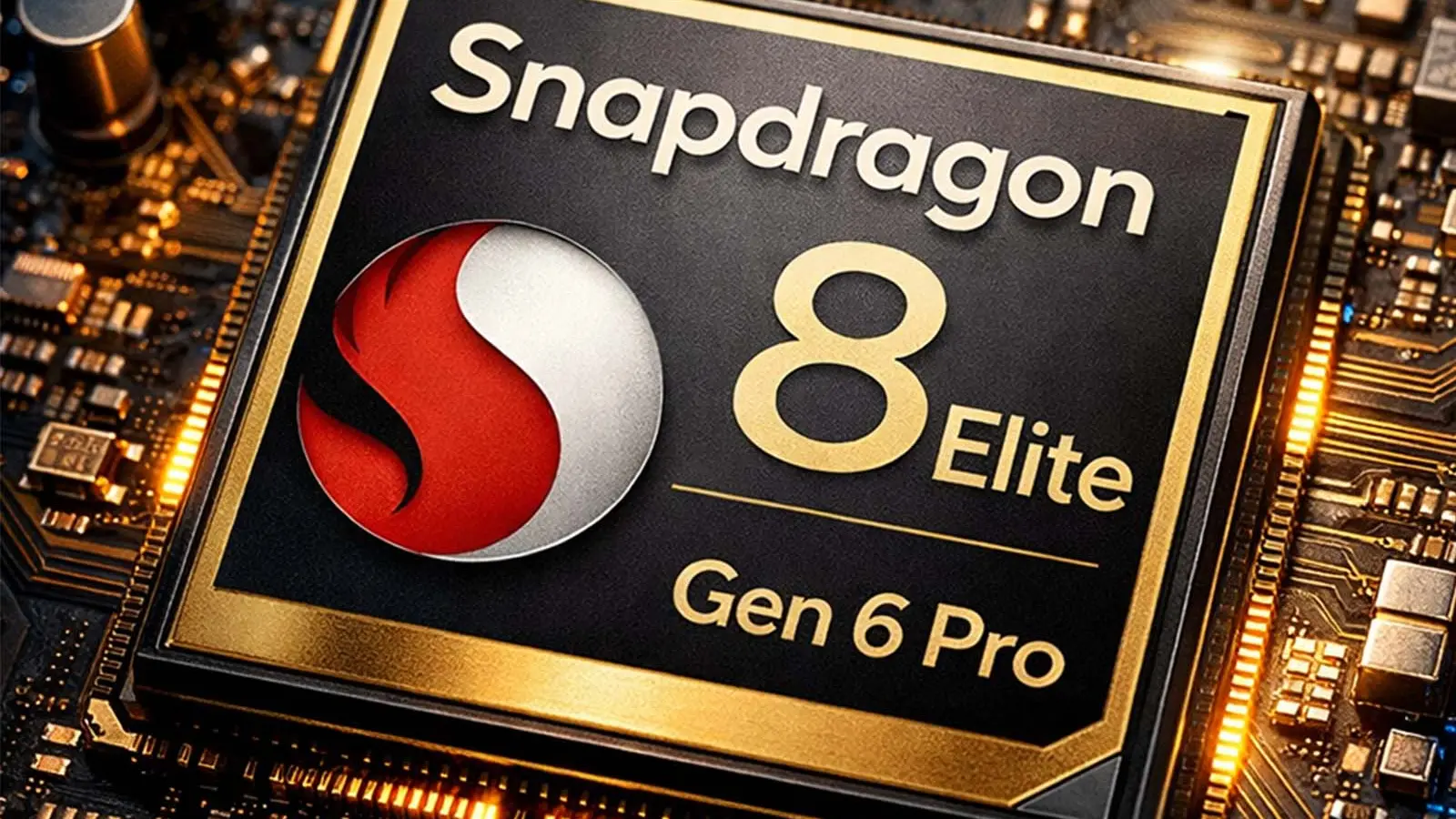
Leaked whispers from Digital Chat Station point to two SKUs, SM8950 and SM8975, which are being referred to as Snapdragon 8 Elite Gen 6 and Elite Gen 6 Pro. Both are reportedly being fabricated on TSMC’s N2P node, a clear sign Qualcomm is chasing better efficiency and higher clocks rather than incremental refreshes. Short version: expect improved performance-per-watt and more thermal headroom.
The split between the two chips is telling. The Gen 6 Pro (SM8975) is described as the fully trimmed model: it supports LPDDR6 memory, carries a fully enabled GPU layout, and benefits from a fuller cache configuration. In plain terms, that means faster memory access, stronger graphics performance, and heavier workloads handled more gracefully. It also explains why OEMs will likely price phones using that chip at a premium.

Not every flagship will get the Pro. The standard Gen 6 (SM8950) is being trialed in several prototype devices as a middle-tier flagship alternative. Some vendors may even opt to ship certain models with an N-1 chip — the SM8850 from the Gen 5 family — if they need to protect margins or hit a target price. Flexibility is the new norm.
Which phones might carry the high-end silicon? Tipsters suggest Ultra-tier devices: the Xiaomi 17 Ultra, Oppo Find X10 Ultra, Vivo X500 Ultra and similar handsets are on the short list. Sub-brand flagships could also pick the Pro variant — think Redmi, iQOO, Realme or OnePlus premium models — where margins and bragging rights justify costlier components.
Here’s a compact view of the rumored specs and positioning:
- Part numbers: SM8950 (Gen 6), SM8975 (Gen 6 Pro)
- Process node: TSMC N2P
- Memory: Gen 6 Pro supports LPDDR6
- GPU/cache: Pro gets a fully enabled GPU and larger cache
- Targets: Ultra and sub-brand flagship phones
One more headline-grabbing note: the Pro chip is rumored to push peak frequencies into the 5GHz–6GHz territory on paper — a likely exaggeration for marketing, but it signals Qualcomm’s intent to chase top-tier single-thread throughput while relying on N2P silicon improvements to manage power and thermals.
And then there’s MediaTek. Word on the street says MediaTek is building a 2nm-based Dimensity 9600 that could challenge — or even outpace — Qualcomm’s Gen 6 silicon in some scenarios. Real-world benchmarks and battery performance will provide the verdict, but competition rarely hurts consumers.
We’re watching two related storylines now: whether manufacturers lean hard into the Pro chip for headline devices, and how quickly LPDDR6 becomes a must-have spec instead of a marketing footnote. Either way, the next wave of flagships looks poised to make memory speed and GPU topping points of pride — and expense.
Keep an eye on handset announcements; the chip inside will tell you more about a phone’s ambitions than any megapixel number ever could.
Source: gizmochina


Comments
DaNix
Solid move for raw perf, but phones getting pricier tbh. Not every buyer cares and thermal limits will still bite.
mechbyte
If Qualcomm really goes LPDDR6 and 5-6GHz, battery life must be terrifying... or magic? feels like marketing spin, curious how MediaTek respones tho

Leave a Comment