

Bitmine adds 20,000 ETH amid growing bearish technicals
Tom Lee's technology infrastructure firm, Bitmine, continued its aggressive Ethereum accumulation over the weekend, buying 20,000 ETH for roughly $41.98 million. The purchase follows a late-January acquisition of more than 40,000 ETH and increases Bitmine's treasury to nearly 4.29 million ETH — putting the firm about 71% of the way to its stated goal of holding at least 5% of circulating supply.
While institutional accumulation of ETH can exert long-term price-supporting pressure by creating a supply squeeze, traders and analysts caution that technical and macro factors are currently pointing in the opposite direction.
Capital structure and staking strategy
Unlike some large crypto buyers that leveraged debt to expand their treasuries, Bitmine Immersion Technologies (BMNR) keeps a conservative balance sheet. The company reported roughly $586 million in cash and short-term liquidity and carries no debt. Bitmine is also shifting from passive holding to active staking, which management projects could generate more than $500 million in annual high-margin revenue if staking yields stay above about 2.5%.
Staking converts idle ETH into recurring yield, reducing liquid supply on exchanges and potentially supporting longer-term ETH price floors. But staking returns and validator economics depend on network conditions, withdrawal dynamics, and broader market appetite for liquid staking derivatives.
Macro and on-chain headwinds
Despite the headline-grabbing buy, three broad bearish factors are weighing on Ethereum sentiment:
- Market decline: Ether has been in a pronounced downtrend since mid-January, plunging as much as ~45% at one point to near $1,800. Volatility driven by macro risk and periodic mass liquidations has kept buyers cautious.
- ETF outflows: Spot Ethereum ETFs, previously a strong source of demand, have seen consecutive monthly outflows since November. Funds have lost more than $2.5 billion in that period, and sustained withdrawals could compress retail enthusiasm and reduce liquidity from a key buyer cohort.
- Falling TVL: Total value locked (TVL) on Ethereum has slid to about $57 billion, down sharply from roughly $98 billion in October. Lower TVL signals reduced on-chain activity and utility, which can dampen expectations for network-driven demand.
Technical picture: head and shoulders confirmed
On the weekly chart, Ethereum recently breached a major support at about $2,800, confirming a head and shoulders reversal pattern — one of the most recognized bearish structures in technical analysis. The pattern typically forms three peaks with the center peak higher than the shoulders and a neckline breakout that signals a trend reversal.
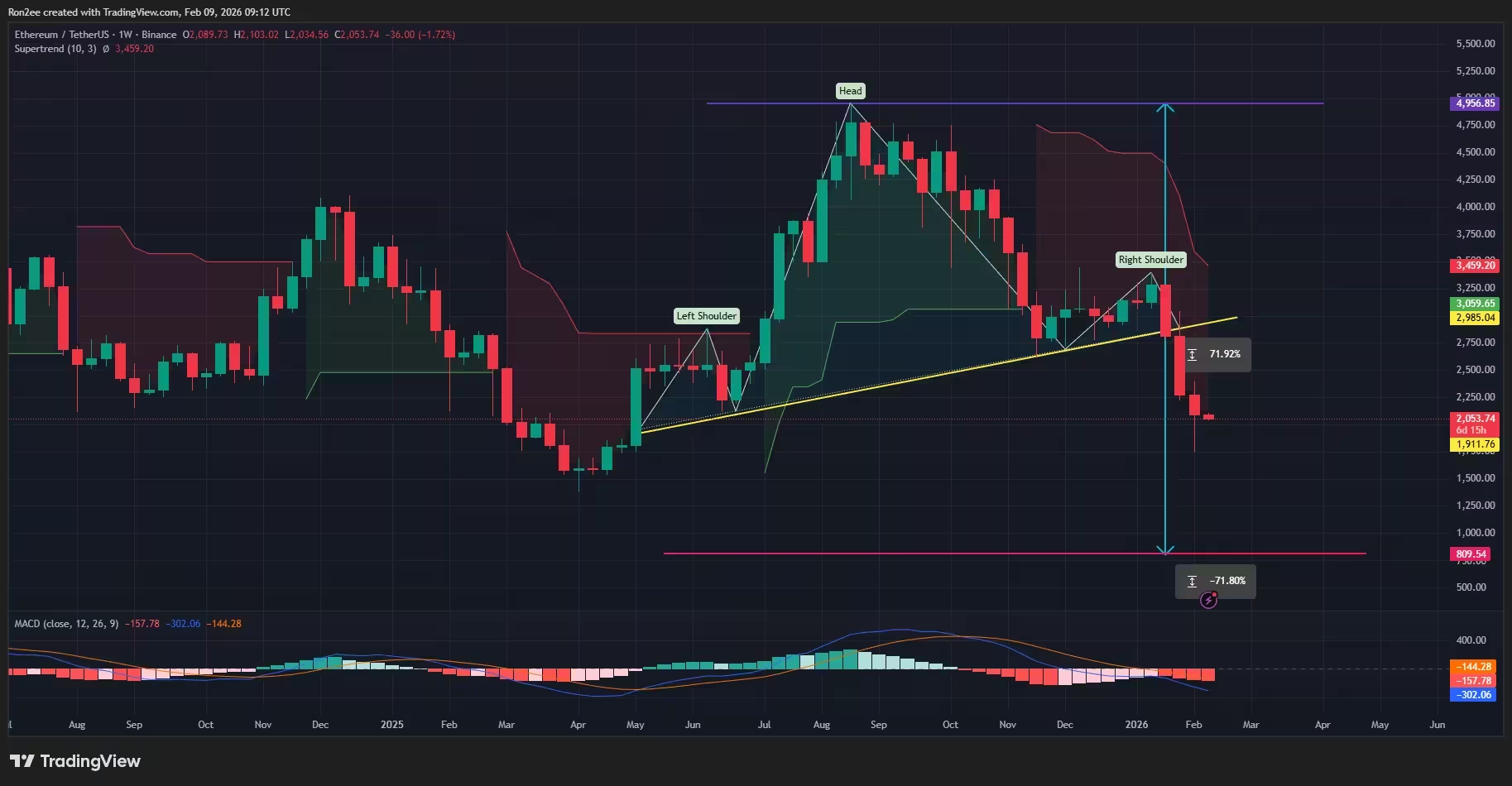
Ethereum price has confirmed a head and shoulders pattern on the daily chart — Feb. 9
At the time of reporting, ETH was trading near the psychological $2,000 level. If that floor fails, technical targets point toward a move to $1,000 as the next major support area. Measuring the distance between the head and the neckline suggests an even deeper technical target around $800 in an extreme scenario.
Momentum indicators add weight to the downside case. The MACD sits below the zero line and is sloping lower, indicating dominant selling pressure. The supertrend indicator has flipped to red, reinforcing the short-term bearish bias across multiple timeframes.
How institutional buys interact with fragile market structure
Large, patient buyers such as Bitmine can reduce available ETH supply and help establish higher long-term floors. Institutional staking of accumulated ETH can further lock up supply and create recurring income streams that support corporate economics.
However, such flows do not guarantee immediate price recovery. If retail and ETF demand remains weak and on-chain activity continues to decline, the market can still be dominated by technical selling and macro-driven risk aversion. That disconnect can lead to choppy price action where institutional accumulation is offset by short-term trader liquidation and fund redemptions.
Outlook and key levels to watch
Short term: Watch the $2,000 handle closely. A decisive break below could accelerate selling toward $1,000 and potentially test lower historical supports.
Medium term: Monitor ETF flows and TVL — renewed inflows or on-chain activity recovery would materially improve the outlook. Also watch staking yield trends, since higher yields increase the incentive to stake, lowering liquid ETH supply.
Long term: Continued institutional accumulation and responsible staking strategies can support higher price floors over months to years, but technical patterns and macro conditions will dictate the pace of any recovery.
For traders and investors, the interplay between institutional buying, spot ETF demand, on-chain metrics such as TVL, and classic technical signals like head and shoulders and MACD will determine Ethereum’s next leg — up or down.

“I cover automotive innovation, electric vehicles, and the future of mobility — where technology meets sustainability.”

Discussion
Leave a Comment