
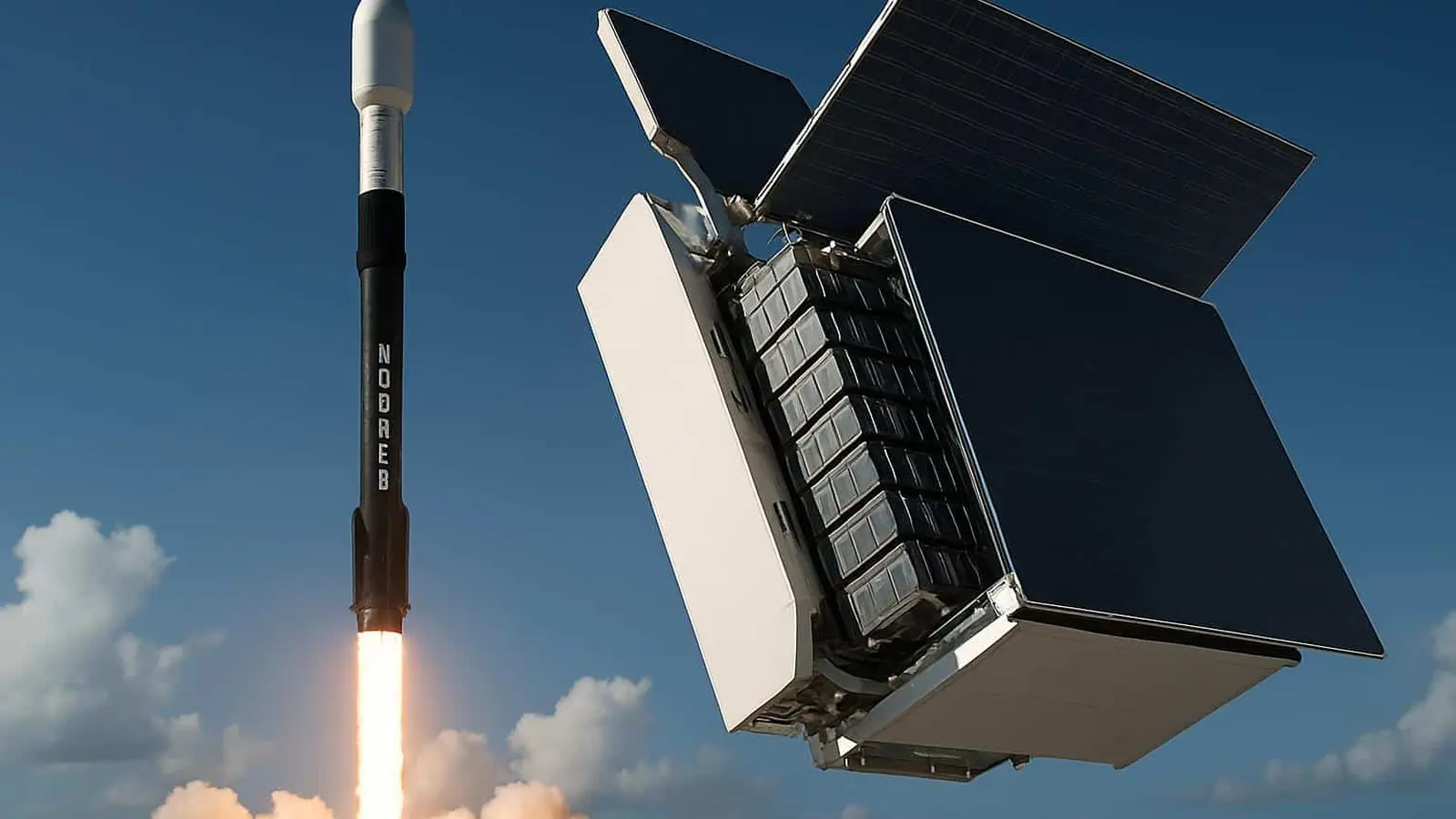
SpaceX has unveiled its next-generation Starlink V3 satellites — a major step toward true gigabit satellite internet. The new hardware promises far higher throughput, denser constellations, and a clearer path to global high-speed coverage.
A leap toward gigabit satellite internet
According to SpaceX, each Starlink V3 satellite is designed to deliver up to 1000 Gbps (1 Tbps) of download capacity and 200 Gbps of upload capacity. That’s more than ten times the performance of previous Starlink models and could push the total network download capacity to roughly 60 terabits per second once many V3 units are in orbit.
Bigger satellites, bigger bandwidth
V3 represents a clear departure from earlier Starlink designs. Where first-generation V1 satellites weighed roughly 300 kg and the V2 Mini units came in under 600 kg, each V3 satellite is about 2,000 kg. That extra mass buys more powerful radios, larger antennas, and higher-capacity payloads.
- Download: up to 1000 Gbps per satellite
- Upload: up to 200 Gbps per satellite
- Weight: ~2,000 kg per V3 unit
- Per-launch capacity: Starship can deploy up to 60 V3 satellites
- Network target capacity: about 60 Tbps
Why Starship matters for Starlink
SpaceX’s launch animation made it clear why the company is using Starship instead of Falcon 9 for V3 deployments: Starship can carry far larger and heavier satellites in a single flight. One Starship launch could add roughly 20 times the capacity of a Falcon 9 mission that carried V2 Mini units, making large-scale constellation build-out far more efficient.
When will V3 roll out — and will you need new gear?
SpaceX says deployment of the V3 fleet could begin as early as next year. While the new architecture should expand coverage and increase speeds for many users, full gigabit performance will likely require upgraded user terminals. In short: the network will gain capacity quickly, but some subscribers will need new hardware to take full advantage.
Built to burn: addressing space debris concerns
With more and heavier satellites heading to orbit, end-of-life behavior is critical. SpaceX emphasizes that V3 satellites are designed to fully re-enter and burn up in Earth’s atmosphere at the end of their service life, reducing long-term debris risk. That design choice becomes more important as constellation size scales up.
Imagine global broadband that approaches fiber-like speeds without being tied to ground infrastructure — V3 could bring that closer to reality. But as always, deployment logistics, user hardware upgrades, and responsible orbital cleanup will shape how quickly and sustainably we get there.


“I cover emerging technologies, digital innovation, and the intersection of tech and everyday life. My goal is to make complex trends accessible and inspiring.”

Discussion
Leave a Comment
Comments
No comments yet. Be the first.