

When expectant parents worry about long-term outcomes, numbers matter more than anecdotes. A new multi-center study presented at the Society for Maternal-Fetal Medicine’s 2026 meeting offers a clear signal: toddlers born to mothers who received an mRNA COVID-19 vaccine shortly before or during pregnancy did not show higher rates of autism or other early neurodevelopmental delays.
Study design and what researchers looked for
The investigation followed 434 children aged roughly 18 to 30 months, split evenly into two groups of 217. One group’s mothers had received at least one dose of an mRNA COVID-19 vaccine either within 30 days before conception or at any point during pregnancy; the comparison group’s mothers had not received an mRNA vaccine in that same window. Data were collected from May 2024 through March 2025 using a prospective, multi-center observational design within the Maternal-Fetal Medicine Units Network.
To reduce bias, vaccinated and unvaccinated mothers were matched on practical factors such as delivery location, timing of birth, insurance type and race. The study excluded births before 37 weeks, multiple pregnancies and infants with major congenital anomalies—conditions that independently affect developmental trajectories and would confound comparisons.
Child development was measured with validated screening tools appropriate for this age range. The Ages and Stages Questionnaire, Third Edition, assessed five developmental domains: communication, gross motor, fine motor, problem solving and personal-social skills. Investigators also reviewed results from the Child Behavior Checklist, the Modified Checklist for Autism in Toddlers (M-CHAT) and the Early Childhood Behavior Questionnaire to capture behavioral and social-emotional signals that can precede formal diagnoses.
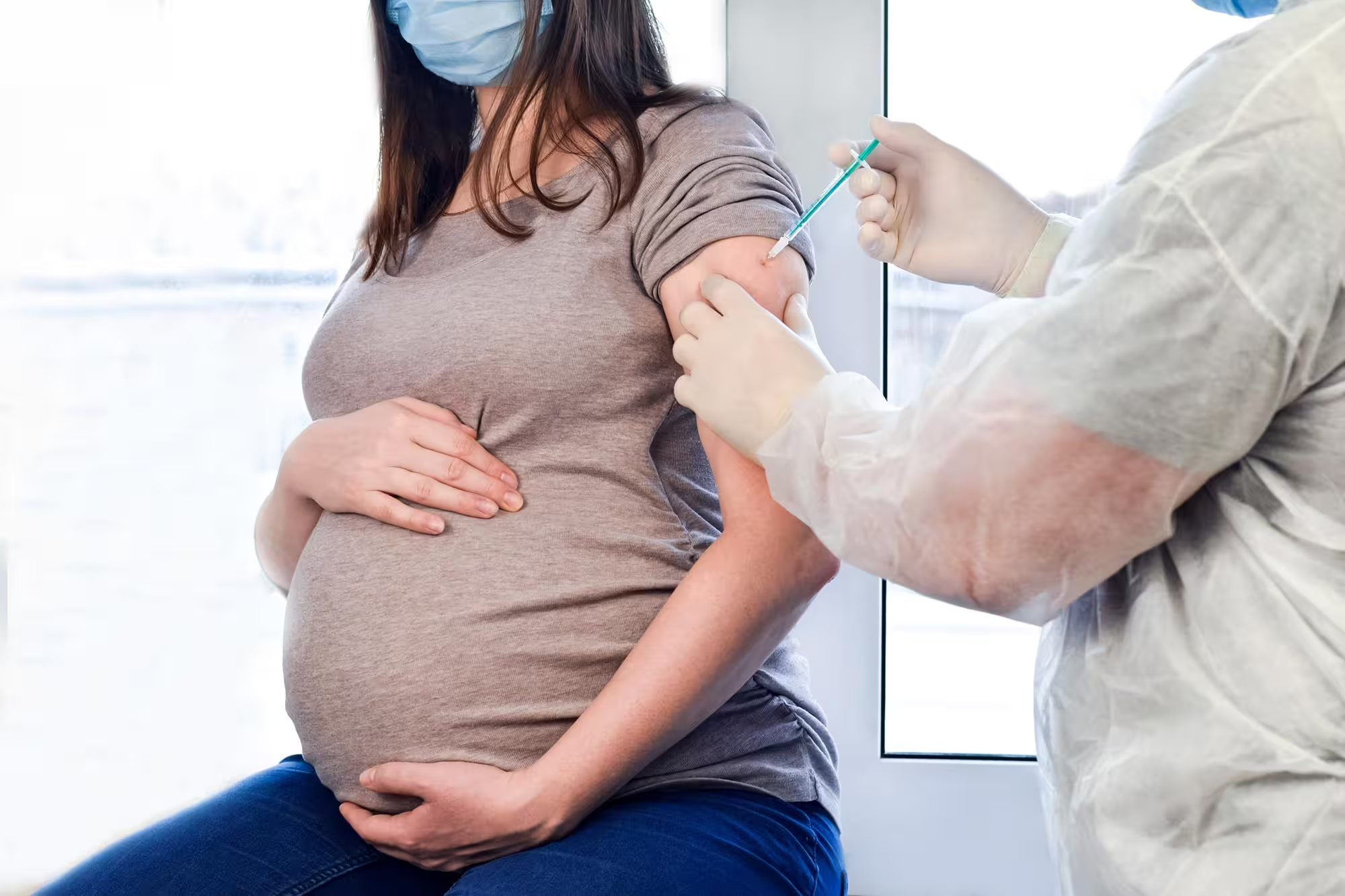
Findings and context
Across the assessments, researchers found no statistically meaningful differences between the two groups in rates of screening flags or scores across domains. In plain terms: early childhood developmental measures at 18–30 months were similar whether or not the mother had received an mRNA vaccine near or during pregnancy.
Senior investigator George R. Saade, MD, noted that neurodevelopmental outcomes did not diverge between groups. Brenna L. Hughes, MD, MSc, emphasized the rigor of conducting this work within an NIH clinical trials network, describing the results as reassuring for clinicians and parents weighing vaccination in pregnancy.
The study joins a growing body of safety data. mRNA platforms have been recommended for pregnant people in the United States alongside a protein subunit option; both are advised because they lower the risk of severe maternal illness and may provide antibody protection to the newborn. But vaccine safety conversations extend beyond maternal outcomes—families rightly ask about long-term effects on children. This study helps close that loop for early childhood neurodevelopment.
Limitations remain. The cohort was intentionally restricted to term, singleton births without major malformations; the follow-up window captures early developmental milestones but not later childhood when some neurodevelopmental conditions are diagnosed more reliably. Continued monitoring as the cohort ages will be important.
Large, prospective data show no association between maternal mRNA COVID vaccination near or during pregnancy and early childhood autism or developmental delays.
For clinicians, the takeaway is pragmatic: when advising pregnant patients, evidence from this well-controlled study supports the view that mRNA COVID vaccination around pregnancy does not increase early neurodevelopmental risk in offspring. For parents, the research provides data-driven reassurance while reinforcing the value of routine developmental screening as children grow.
Questions remain about longer-term outcomes and rare events; those deserve careful, ongoing study. Meanwhile, families and care teams can use this latest evidence when balancing the known maternal risks of COVID-19 infection against vaccine benefits for both mother and child.

“The cosmos has always fascinated me. I write about space missions, astronomy, and the technologies pushing humanity beyond Earth.”

Discussion
Leave a Comment