
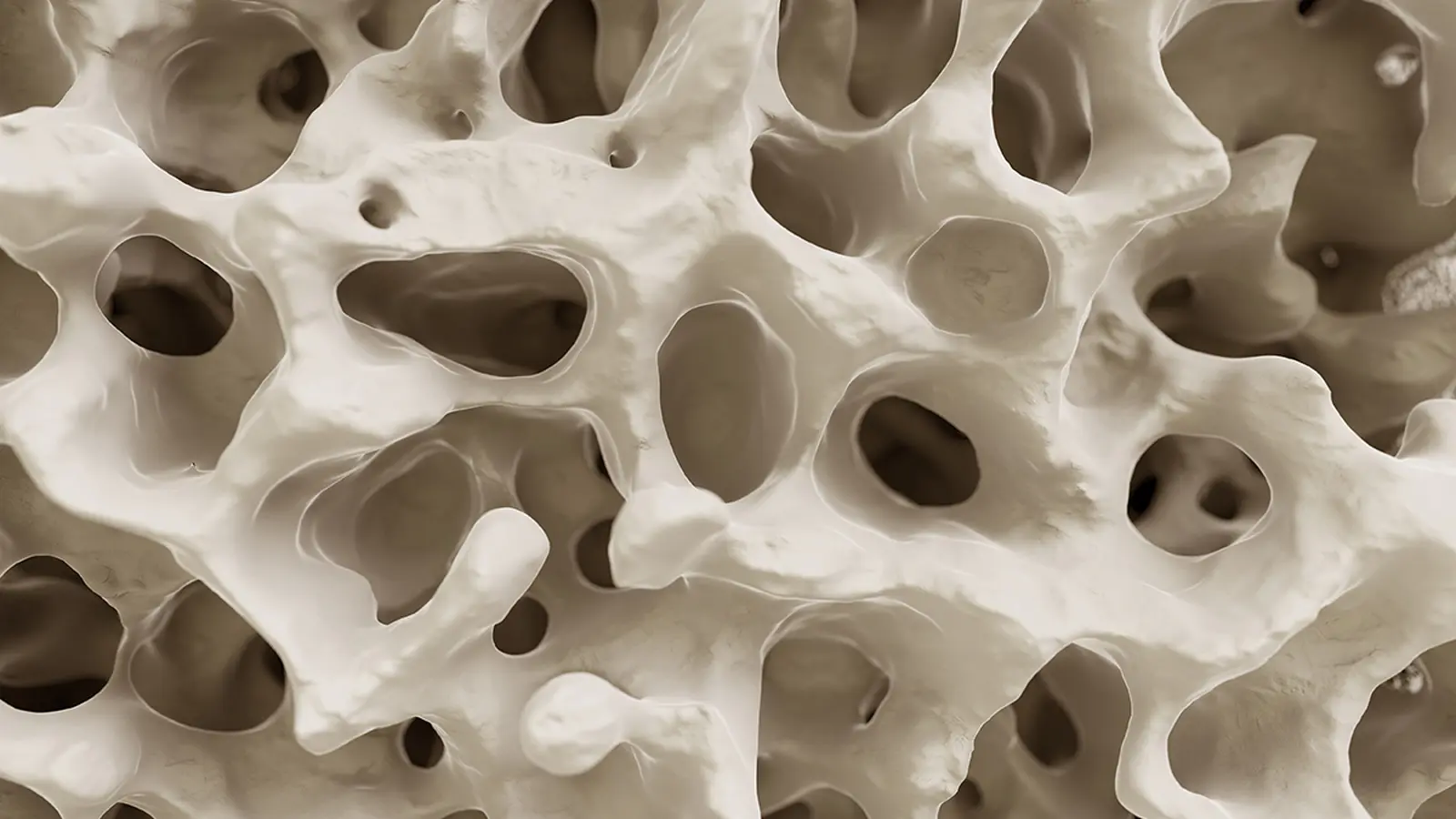
Imagine a tiny molecular switch inside bone marrow that flips on when you walk, jog, or lift a grocery bag — and that flip helps your bones grow stronger. That is essentially what researchers now say they have found: a protein that senses mechanical force and nudges stem cells toward forming bone rather than fat.
The protein, called Piezo1, operates in bone marrow mesenchymal stem cells (BMMSCs), the flexible progenitors that can become either osteoblasts — the cells that lay down new bone — or adipocytes, fat cells. How those stem cells choose their fate depends on chemical signals, hormones, inflammation and, crucially, mechanical forces. For decades scientists knew that exercise pushed BMMSCs to favor bone formation, but the molecular details were foggy. The new study from a team led by the University of Hong Kong pinpoints Piezo1 as a principal mechanosensor in that process.
Take away Piezo1 in mice, and the balance tips. Bones become thinner. Fewer osteoblasts form. Fat cells accumulate inside bone marrow. Exercise no longer produces the usual boost in bone density. The animal models used by the authors show that Piezo1 is not a peripheral player that merely whispers—it participates directly in the signalling cascades that determine cell fate.
The researchers followed the molecular breadcrumb trail downstream from Piezo1 to identify the pathways that connect mechanical strain with cellular decisions. When Piezo1 is active, it appears to suppress inflammatory signalling that otherwise diverts BMMSCs toward adipogenesis (fat formation). When Piezo1 is missing or inactive, inflammatory signals rise and the marrow becomes more permissive to fat deposition, with a parallel drop in bone formation. Importantly, reinstating Piezo1 activity or correcting its downstream signalling reversed those changes in the mouse models.

Activating Piezo1 or its downstream pathway could reproduce exercise-driven bone formation in mice.
That line of work opens a provocative possibility: could we someday develop an "exercise mimetic" — a drug that tricks bone marrow into responding as if the body were under mechanical load even when movement is limited? For older adults, frail patients, and people confined to bed, a therapy that reproduces some of exercise's molecular benefits would be transformative. But the path from mouse to medicine is long and winding.
What the experiments showed and why it matters
The team used genetic manipulations to remove Piezo1 from BMMSCs in mice and compared bone structure, cellular composition, and response to physical activity with normal animals. Loss of Piezo1 produced measurable decreases in bone mineral density and reduced markers of bone formation. At the same time, the marrow microenvironment showed increased adipocyte numbers and elevated inflammatory mediators. When the researchers restored Piezo1 signalling, both the composition and the bone-building response recovered.
Those results give researchers a concrete target: Piezo1 and its downstream effectors. By mapping the signalling network, the study provides the molecular vocabulary drug developers would need to design interventions. Still, Piezo1 is ubiquitous; it participates in mechanical sensing in blood vessels, lungs, and other tissues. Any pharmacological approach must therefore be precise, capable of modulating Piezo1 activity in bone tissue without provoking unwanted effects elsewhere.
The study, published in Signal Transduction and Targeted Therapy, sits at the intersection of mechanobiology and regenerative medicine. It also reframes osteoporosis — often treated as a problem of hormone imbalance and calcium loss — as a disease in which mechanical signalling goes awry. That perspective broadens the therapeutic toolbox and suggests complementary strategies: targeted drugs, biomaterials that deliver mechanical cues, or localized stimulation techniques that amplify Piezo1 activation.
Expert Insight
"This research deciphers how mechanical signals are converted into cellular decisions in the marrow," says Xu Aimin, a biomedical scientist involved with the work. "Piezo1 acts as a molecular ear for movement, and now we know some of the language it speaks. That knowledge is essential if we want to replicate exercise's benefits at the cellular level."
Mechanobiologist Eric Honoré, the study's senior author, adds a clinical perspective: "If we can target this pathway safely, we could protect people who cannot exercise from progressive bone loss and fractures. The potential is real, but so is the need for caution — Piezo1 performs many roles across the body, and off-target effects are a serious concern."
Translational work will require careful pharmacology, tissue-specific delivery methods, and ultimately human trials. Early-stage efforts might focus on local delivery systems — for example, drugs or biomaterials applied near fracture sites or implants — to reduce systemic exposure. Other avenues include designing molecules that selectively stabilize Piezo1's bone-specific interactions or modulate downstream inflammatory mediators without touching Piezo1 directly.
For now, the clearest public-health message remains what it has always been: physical activity is beneficial for bone health. But where movement is impossible, mapping the molecular mechanics of exercise offers a promising detour. The discovery of Piezo1's central role is a compass pointing toward therapies that could protect the aging skeleton and reduce fracture risk in vulnerable populations.
There is still much to test. Human biology rarely mirrors mouse models perfectly. But knowing where to look changes everything — and it may be the first step toward giving bones the conversation with movement, even when the body cannot.

“My work centers on sustainability, energy, and environmental science — examining how innovation can lead to a greener future.”

Discussion
Leave a Comment