
.webp)
Market snapshot: Bitcoin and altcoins retreat
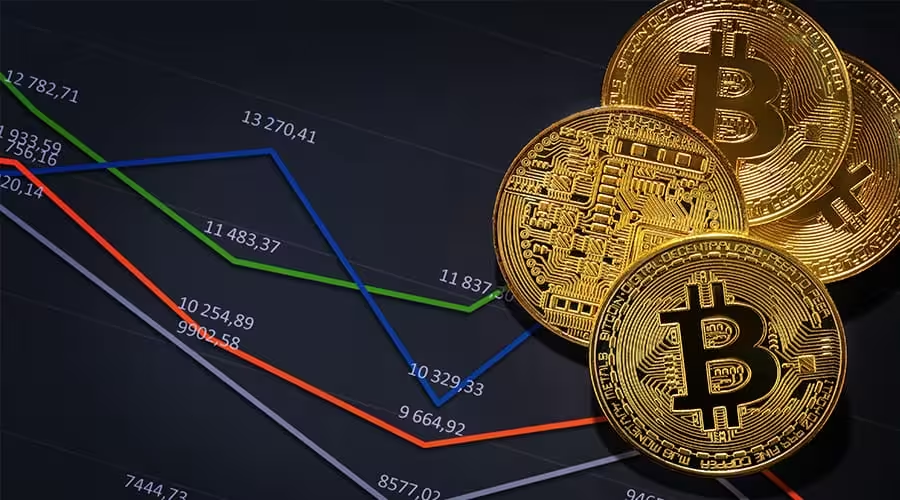
The crypto market is under renewed pressure this week, with Bitcoin trading around $111,300 and most altcoins well below their earlier monthly highs. Several tokens, including Zcash, Bittensor, Aster and Story, were among the largest decliners on Thursday as investor sentiment weakened across spot and derivatives markets.
Rising liquidations and lower participation
Data from CoinGlass show 24-hour liquidations jumped about 30% to roughly $530 million, underlining the short-term volatility. Last week’s crash also produced heavy damage — more than $19 billion in liquidations and over 1.6 million traders wiped out — and many participants are now hesitant to re-enter the market until a clear catalyst emerges.
Key metrics signaling reduced risk appetite
The crypto Fear and Greed Index has dropped into the fear zone at 32, reflecting growing risk aversion. Futures open interest declined sharply to about $161 billion from more than $233 billion a week earlier, while 24-hour trading volume fell to $328 billion from a recent peak of $728 billion. Lower open interest and volumes indicate traders are de-risking positions, reducing leverage, or moving to the sidelines.
Weak ETF flows from institutional investors
Wall Street demand has been tepid as well. Spot Bitcoin ETFs recorded net outflows of over $328 million this week, while spot Ethereum ETFs shed about $22 million, according to SoSoValue. Other popular crypto ETFs tracking Solana, Dogecoin and XRP also saw weak flows. By contrast, traditional safe-haven vehicles such as gold and silver ETFs continue to attract inflows as some investors view precious metals as more stable stores of value than crypto in the current macro environment.
Macro headwinds: trade tensions, inflation and rate expectations
Beyond technical and sentiment drivers, macroeconomic risks are amplifying pressure on crypto markets. Ongoing US–China trade tensions — including threats of tariffs and restrictions on rare-earth metal exports — could prolong supply-chain disruptions and keep inflation elevated. Persistent inflation would likely delay aggressive Federal Reserve rate cuts, constraining risk assets including Bitcoin and altcoins.
What traders should watch next
Market participants will be closely tracking several indicators: ETF inflows and outflows, futures open interest, the Fear and Greed Index, and macro headlines on US–China relations and inflation data. A sustained return of ETF inflows or a clear easing in geopolitical tensions could restore confidence and liquidity, while renewed negative headlines are likely to trigger further liquidations and volatility.
Overall, the current downturn reflects a combination of leveraged positioning being unwound, weak institutional demand for spot crypto ETFs, and macroeconomic uncertainty. Traders and investors should manage risk carefully, monitor leverage and liquidity metrics, and consider diversification amid this period of elevated market stress.

“I cover automotive innovation, electric vehicles, and the future of mobility — where technology meets sustainability.”

Discussion
Leave a Comment