
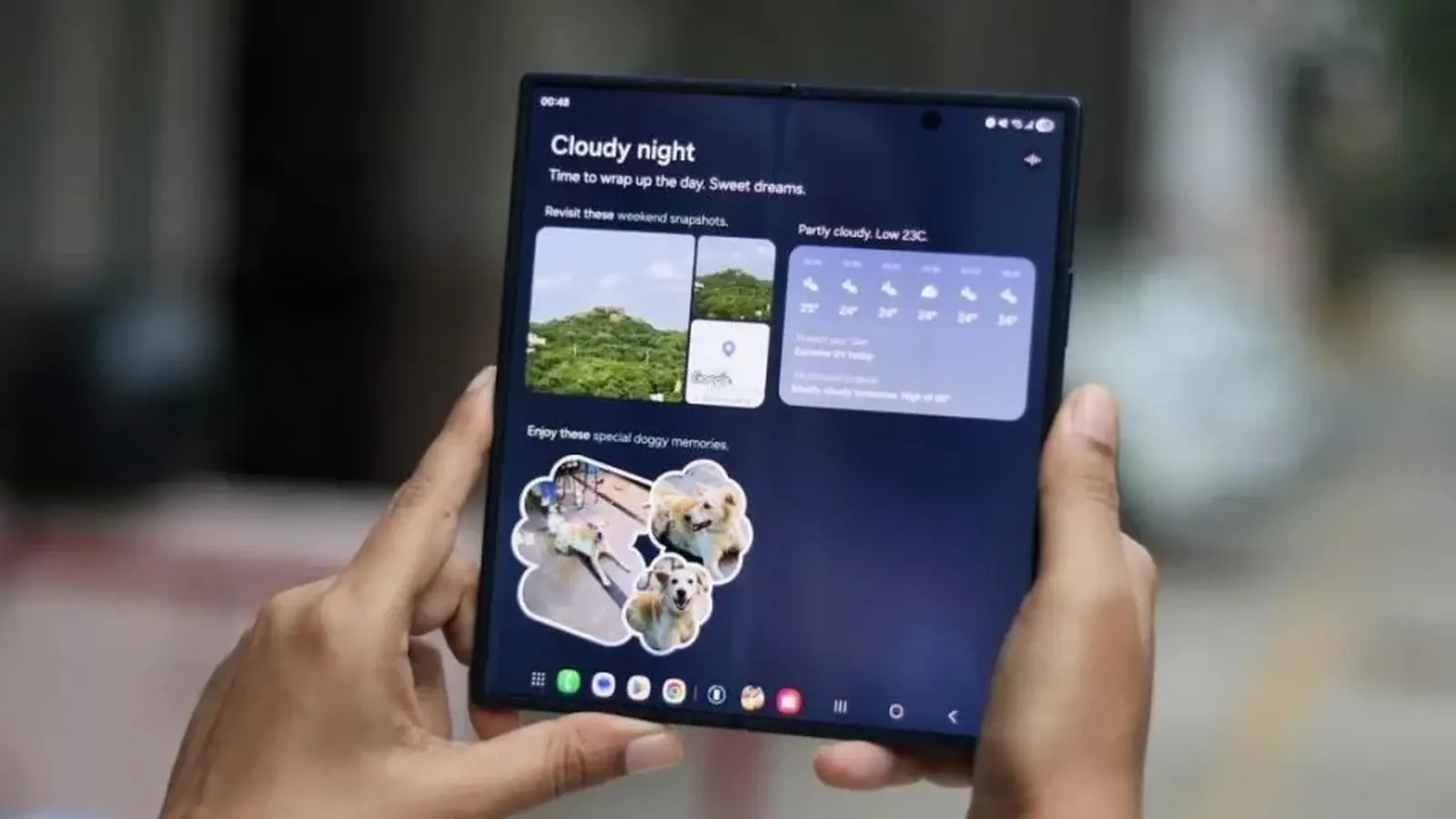
For years the Galaxy Z Fold’s skinny outer screen felt like a design compromise no one wanted to accept. Now a leak suggests Samsung may be rethinking that shape altogether — and the first images hint at a noticeably wider foldable that could change how people use these devices.
The tip comes from Android Authority, which discovered an animation inside One UI 9 firmware showing a foldable that opens and closes with different proportions than current Fold models. That animation maps to a device carrying an internal codename H8 and model number SM-F971U, a close sibling of Samsung’s usual numbering for Fold hardware. In other words: this isn’t a concept sketch. It’s likely a real handset under development.
What stands out is the screen geometry. The leak points to a 7.6-inch inner display with a 4:3 aspect ratio and a 5.4-inch outer display — both wider than prior Fold generations. Practical benefits are obvious. Web pages read more like on a tablet. Video fills more of the frame. Multitasking and productivity apps stop feeling cramped.
Camera and button locations in the animation mirror today’s Fold layout, with the selfie punch-holes matching current placements on both the outer and inner panels. That suggests Samsung is changing the form factor while keeping the familiar interaction model consumers already understand — a conservative evolution rather than a radical redesign.
Market strategy looks deliberate. The SM-F971U device appears to be an affordable variant positioned beneath Samsung’s flagship Fold line, likely to widen the market for foldables by lowering the entry barrier. Analysts see another motive as well: positioning. Rumors of Apple’s first foldable iPhone describe a wider outer screen too. By shifting proportions now, Samsung could blunt the impact of a wide-form competitor arriving later.
Timing matters. The firmware clues and model lineage imply this wider Fold could debut alongside the Galaxy Z Fold 8 family, with an expected reveal in late 2026. If that window holds, Samsung will have months to refine the experience and rally developer support for apps that benefit from a squarer inner canvas.
Small changes in aspect ratio can produce outsized differences in everyday use. A wider external display makes quick interactions less fussy. A 4:3 internal panel brings the Fold closer to a small tablet mindset without abandoning the pocketable promise. Samsung’s apparent move reads like a pragmatic admission: size and shape matter as much as raw specs.
Whether this model becomes the new mainstream Fold or remains a niche cheaper option remains to be seen. But one thing is clear — Samsung is experimenting with the basic assumptions of foldable ergonomics. That experiment could reshape expectations for the next wave of foldable phones, and not just for Samsung.
Watch the space. The era of long, skinny external screens may finally be coming to an end.
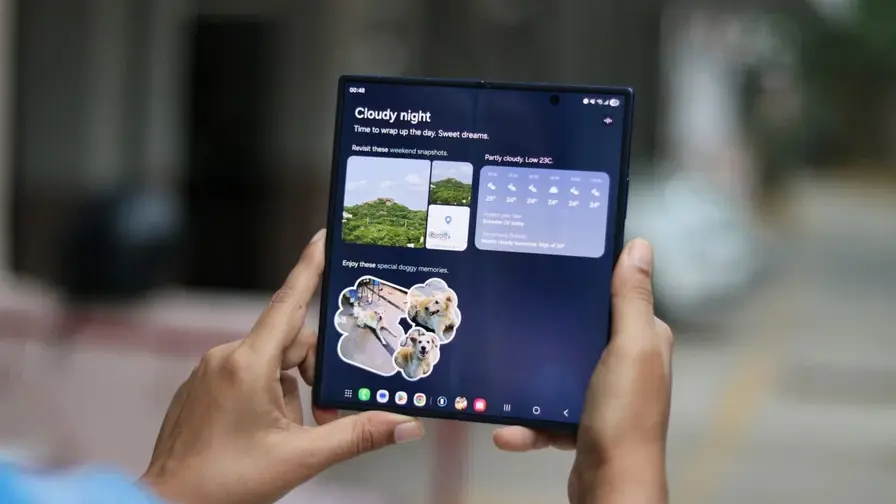

“I cover emerging technologies, digital innovation, and the intersection of tech and everyday life. My goal is to make complex trends accessible and inspiring.”

Discussion
Leave a Comment
Comments (2)
is this even true? Firmware animations can show concepts, not final parts. I want wider screens but skeptical until hands-on
Wow finally a less skinny Fold? That 4:3 inner screen could actually make it usable as a mini tablet. Hope they don't gut the battery tho, fingers crossed..