
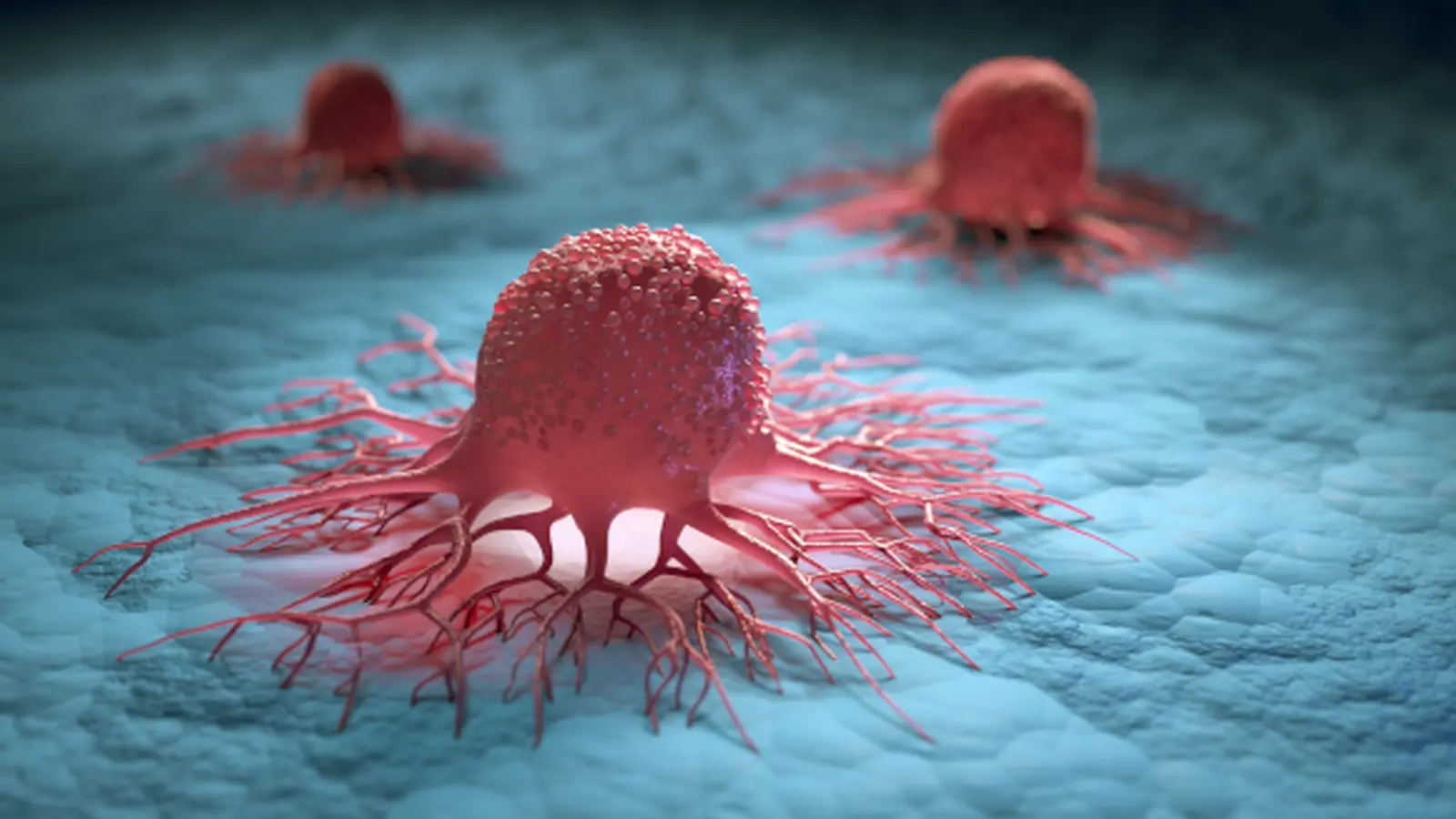
Lymphoma is a complex group of blood cancers that begins in lymphocytes, the immune system’s frontline defenders. When genetic mutations disrupt the tightly regulated processes that control lymphocyte growth, division, and survival, these cells can transform into malignant clones that accumulate in lymph nodes and other tissues. Credit: Shutterstock
Imagine attacking a fortress by undermining the scaffolding rather than trying to blow up the gate. That is essentially what researchers at VCU Massey Comprehensive Cancer Center discovered: a familiar heart medication can disable a hidden support structure inside cancer cells and, in preclinical tests, tip the balance against lymphoma with minimal collateral damage.
Cancer drug discovery often focuses on active sites — the chemical engines of enzymes. It makes sense; block the engine and you stop the machine. Trouble is, those engines are often built the same way across many healthy proteins, so hitting one can accidentally hit others. The VCU team took a different tack. They zoomed out to study USP11, a deubiquitinase enzyme that acts like a cellular quality control officer, removing small tags that usually mark proteins for recycling or destruction. But instead of targeting USP11's catalytic core, they targeted its ubiquitin-like, or UBL, domain: a non-catalytic surface that mediates critical protein-protein interactions.
Why the UBL domain matters
Deubiquitinases, abbreviated DUBs, are central to protein homeostasis. Think of ubiquitin tags as sticky notes placed on proteins to tell the cell what to do with them. DUBs peel those notes off. Cancer cells, which remodel protein networks to survive and grow, are especially dependent on these circuits. Historically, drug programs went after the catalytic pockets where ubiquitin is cleaved. Those pockets, however, look similar across many DUB family members, complicating efforts to create selective drugs.
Targeting the UBL domain sidesteps that problem. The UBL region does not perform the chemistry; it helps USP11 assemble with partners and position substrates. By disrupting those interactions, researchers hope to cripple the enzyme's cancer-supporting roles without disabling related enzymes. In the lab, this strategy produced striking selectivity: lymphoma cells were knocked down while normal cells were largely spared.
Glen E. Kellogg, Ph.D., led a structure-based virtual screen of more than 10 million compounds to find molecules predicted to bind USP11's scaffolding surface. The search yielded a lead compound named RBF4. Follow-up experiments showed that RBF4 suppressed growth of diffuse large B-cell lymphoma cells and reduced tumor progression in MYC-driven lymphoma models, limiting metastasis and fluid accumulation with no clear damage to surrounding tissue.
From arrhythmia drug to anticancer candidate
Here comes the twist. RBF4 turned out to be chemically identical to dronedarone, an FDA-approved antiarrhythmic. That discovery opens an attractive shortcut: a drug with a known safety profile and human dosing information could move more quickly into clinical testing for a new purpose — a classic case of drug repurposing. Repurposing does not erase the need for carefully designed cancer trials, but it can reduce early-stage uncertainty about toxicity.
"These findings expand our view of USP11 and show how RBF4, a molecule already used in cardiology, can be repurposed to expose a vulnerability in lymphoid cancers," said Ronald Gartenhaus, M.D., who directs the Richmond VA Cancer Center and serves as the study's senior author. Bandish Kapadia, Ph.D., added that focusing on non-enzymatic, scaffolding functions creates a new pathway for precision medicine in oncology — a way to disrupt cancer-specific wiring without triggering broad toxicity.
Because USP11 has been implicated across multiple tumor types — including breast, cervical, colorectal, esophageal, liver, ovarian, and pancreatic cancers — the implications extend beyond lymphoma. If clinical trials confirm efficacy, drugs that target scaffolding domains could become a new drug class in oncology.
How the discovery unfolded
The team combined biochemical studies, cellular assays, and animal models. Structural biology informed the computational screen that prioritized molecules predicted to engage USP11's UBL surface. Selected compounds were then tested for activity in diffuse large B-cell lymphoma cell lines and in mouse models of MYC-driven disease. Results were consistent: RBF4 reduced tumor burden and spread while sparing normal tissues in those models.
That preclinical safety profile is encouraging but not definitive. Dronedarone is prescribed for heart rhythm disorders under specific conditions, and cancer patients often have different comorbidities and concurrent therapies. Careful pharmacokinetic and interaction studies will be essential before oncologists prescribe this drug off-label for lymphoma.
Expert Insight
"Repurposing is not a shortcut to cutting corners; it is a pragmatic route that leverages decades of clinical experience with a compound," says Dr. Maya Linton, a fictional oncopharmacologist with experience in early-phase trials. "The crucial questions now are dosing, schedule, and combination partners. Does the drug sensitize lymphoma cells to standard chemotherapy or to targeted therapies? Those are studies worth doing."
VCU researchers are collaborating with hematologist-oncologists to design initial clinical trials at Massey. If early human studies mirror the preclinical data, RBF4/dronedarone could become an example of how revisiting an old drug with a fresh structural perspective reveals unexpected therapeutic angles.
Beyond the immediate translational promise, the study signals a conceptual shift: enzymes should not be reduced to their catalytic cores. Many proteins depend on scaffolding interactions to perform context-specific tasks. Disrupting those interfaces may offer a more selective and clinically tolerable way to dismantle cancer's molecular machinery. That idea will probably inspire new screens, new chemistry, and, with luck, new therapies for patients who need them.

“My work centers on sustainability, energy, and environmental science — examining how innovation can lead to a greener future.”

Discussion
Leave a Comment