

Overview: Rapid Difficulty Surge and Near-ZH/s Hashrate
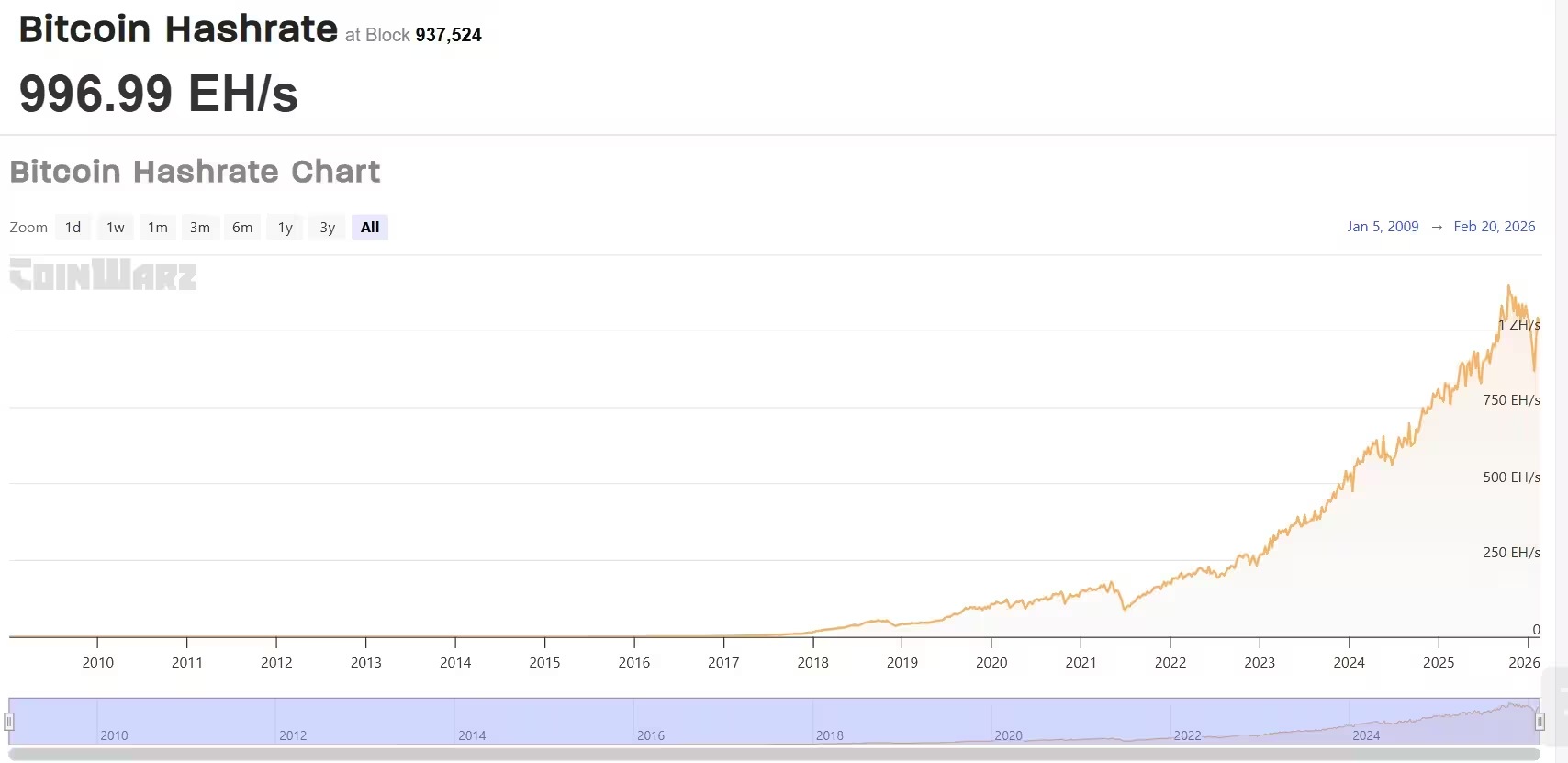
Bitcoin’s mining difficulty has accelerated to 144.40 trillion (T) at block 937,524, registering one of the steepest climbs in network competition since the 2021 bull market. At the same time, total network hashrate has climbed to 996.99 EH/s — just shy of the symbolic 1 zettahash per second (ZH/s) milestone. These moves underline strong miner activity and a significant expansion in mining infrastructure throughout 2024 and 2025.
What is mining difficulty and why it matters
Mining difficulty is the protocol-level mechanism that keeps Bitcoin block times near an average of 10 minutes. When more computational power (hashrate) joins the network, the protocol raises difficulty roughly every two weeks to maintain a steady issuance rate. Difficulty and hashrate are tightly linked: rising hashrate pushes difficulty higher, and both metrics are widely used to measure network security and miner participation.
Hashrate near 1 ZH/s: a milestone for Bitcoin
The current hashrate spike to nearly 1,000 EH/s (996.99 EH/s) reflects new ASIC deployments, expanded mining facilities, and increased capital flows into mining operations. Reaching or surpassing 1 ZH/s would be a symbolic threshold that demonstrates a historically high level of computational power securing the Bitcoin blockchain. A higher hashrate generally means greater resistance to attacks and stronger network security, as more machines compete to validate transactions and produce blocks.
Why difficulty is surging so quickly
Several factors are driving the fastest difficulty acceleration since 2021:
- Miner confidence and investment: Improved profitability, access to financing, and more efficient ASIC hardware have encouraged operators to scale up.
- Infrastructure and grid access: Larger mining farms and better integration with renewable or low-cost power have allowed operators to bring capacity online quickly.
- Market anticipation: Expectations around BTC price appreciation and continued institutional interest make mining expansion an attractive play for many firms. This rapid buildout mirrors the aggressive growth seen during the 2021 rally, but the current wave is also shaped by newer, more energy-efficient equipment and improved operational scale.
What this means for miners and markets
The sharp rise in difficulty signals intense competition among miners. While higher difficulty and hashrate enhance blockchain security and are often seen as long-term bullish indicators, they also compress mining margins. Smaller operators and higher-cost miners may struggle if Bitcoin’s price does not rise in step with competition. Sustained margin pressure can drive consolidation in the mining sector as inefficient players exit or are acquired by larger firms.

Network security and long-term implications
Rising hashrate and difficulty make the Bitcoin network more resilient against attacks and increase the cost of compromising the chain. From a macro perspective, steady increases in both metrics reflect strong confidence from miners about the network’s long-term prospects. However, short-term volatility in BTC price can expose miners to profitability stress, particularly during difficulty spikes.
Risks and what to watch next
Key indicators for traders and industry observers include: BTC market price, miner revenue and mining difficulty adjustments (roughly every two weeks), total hashrate trends, and energy cost dynamics. If hashrate continues to accelerate without matching BTC price appreciation, expect tighter margins, a wave of efficiency upgrades, and possible consolidation among smaller miners. Conversely, if price moves higher, current investment in capacity could translate into sustained network security gains and a stronger mining ecosystem.
In summary, the jump to 144.40T difficulty and the move toward 1 ZH/s highlight a robust phase of miner expansion, signaling both improved network security and heightened competition. Stakeholders should monitor BTC price, hash rate trends, and difficulty adjustments to assess how these dynamics affect miner profitability and the broader Bitcoin market.

Discussion
Leave a Comment