
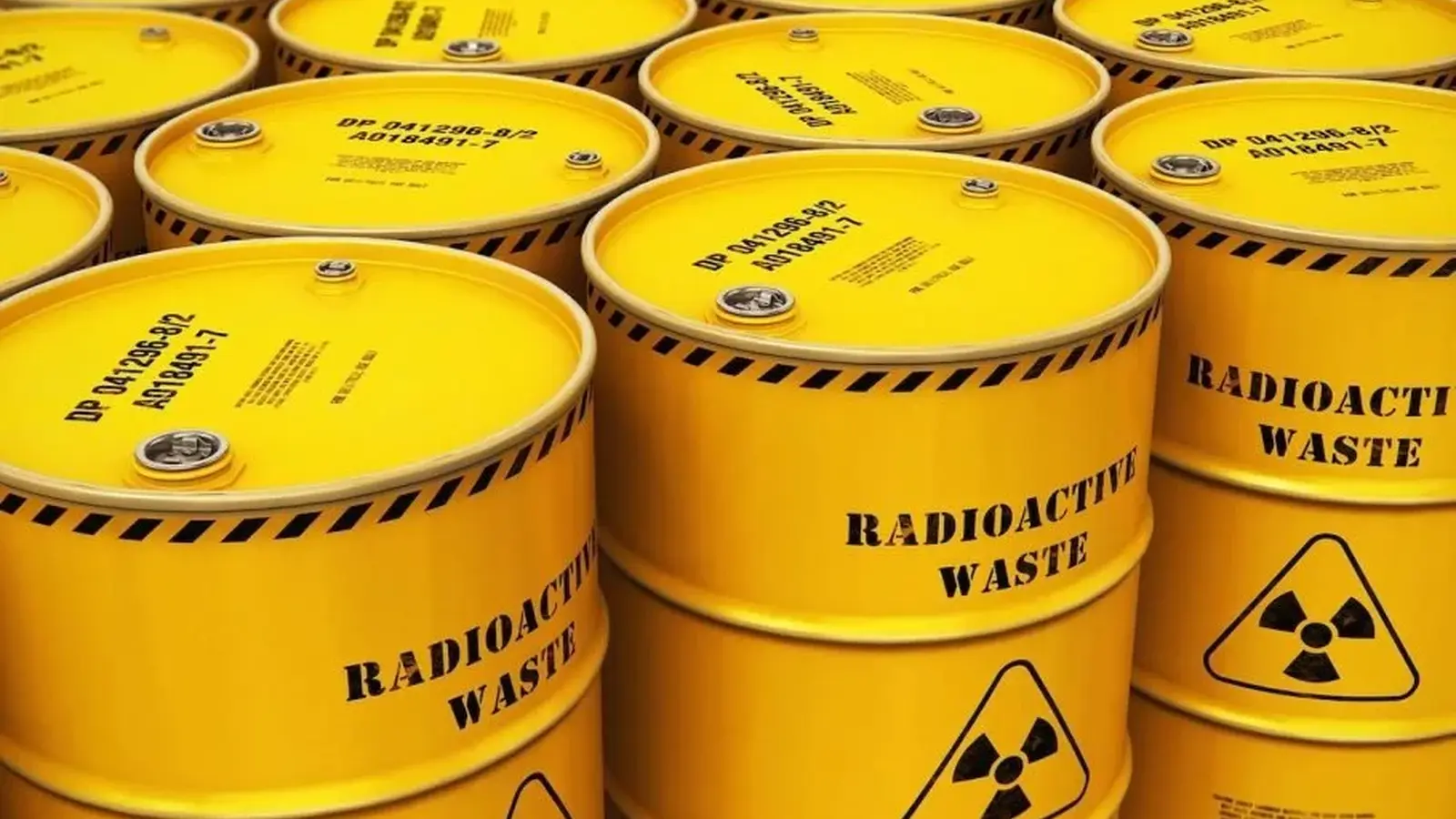
Imagine turning a hazardous pile that could outlive civilizations into something manageable within a few human lifetimes. Bold idea. Real progress.
How the accelerator-driven system works
Scientists at Thomas Jefferson National Accelerator Facility, working with partners including RadiaBeam and Oak Ridge National Laboratory, are developing accelerator-driven systems (ADS) to tackle the problem of spent nuclear fuel. In an ADS, a high-energy beam of protons smashes into a heavy target—often liquid mercury—producing a cascade of neutrons in a process called spallation. Those neutrons are then steered into chambers filled with used reactor fuel.
The effect is alchemical without the mysticism: neutrons interact with the most long-lived, radiotoxic isotopes and transmute them into shorter-lived or stable nuclides. The fuel isn’t simply buried; its radioactivity profile is rewritten. According to project lead Rongli Geng, conventional spent fuel can pose serious hazards for on the order of 100,000 years. With ADS, that dangerous window can shrink to roughly 300 years—a reduction of about 99.7 percent. That’s seismic for waste management, and it also releases substantial heat that could feed carbon-free electricity generation.

Technical advances making ADS practical
There’s clever engineering behind the headlines. Traditional superconducting accelerator cavities require cooling to extremely low temperatures, demanding huge refrigeration infrastructure and driving up cost. Jefferson Lab researchers are experimenting with niobium cavities coated with tin (niobium-tin). This material combination can run at higher temperatures while maintaining superconducting performance, cutting the need for sprawling cryogenic plants and improving overall system efficiency.
In parallel, teams are optimizing cavity geometry and beam dynamics to raise neutron yield from spallation targets. Higher neutron production per unit input energy makes the whole system more economical. Partnerships with industry—RadiaBeam for advanced accelerator components and Oak Ridge for materials and fuel handling expertise—are speeding development toward pilot-scale demonstrations.
Challenges and real-world prospects
Can ADS move from the lab to the grid? Not tomorrow. Scaling ADS to handle national fleets of commercial spent fuel requires leaps in reliability, substantial cost reductions, and regulatory pathways for a novel class of reactors. The engineering hurdles include durable target designs that survive intense proton bombardment, remote handling for highly radioactive assemblies, and integrated systems that convert the waste heat into usable electricity without adding carbon emissions.
Yet the roadmap is clear. The stated ambition is high: recycle the United States' commercial spent fuel stock within about 30 years if commercialization proceeds quickly. That would transform how societies think about nuclear power—less as a burden to the far future and more as a recyclable, low-carbon source whose byproducts can be tamed.
It’s an audacious technological pivot. For now, researchers refine cavities, raise neutron output, and run simulations and experiments. The big question remains: will economics and policy move as fast as physics?


“My work centers on sustainability, energy, and environmental science — examining how innovation can lead to a greener future.”

Discussion
Leave a Comment
Comments (2)
Feels a bit overhyped, but the tech bits are neat. scaling, cost and regs will kill or crown it. curious if tin coated cavities really save much, or just shift costs.
300 years? sounds almost magical, but is that based on demo data or optimistic models? what about target longevity, waste handling, proliferation risks??