

Stablecoin supply slump and tariff fears hit crypto liquidity
Tariff shocks and rising geopolitical uncertainty have prompted a noticeable rotation of capital out of crypto and into traditional safe-haven assets, analysts say. The shrinking stablecoin supply — a key liquidity rail for digital assets — is creating a tangible headwind for Bitcoin and the broader cryptocurrency market.
Stablecoins: the liquidity rail under pressure
Matrixport and other market observers warn that stagnant stablecoin issuance often signals that investors are off-ramping into fiat rather than redeploying capital within crypto markets. Data from CryptoQuant shows the total stablecoin supply fell by roughly $5.6 billion year-to-date, sliding from $159 billion on Jan. 1 to about $153.4 billion as of this week. On top of that, stablecoin reserves on major exchanges like Binance have declined materially since late 2025.
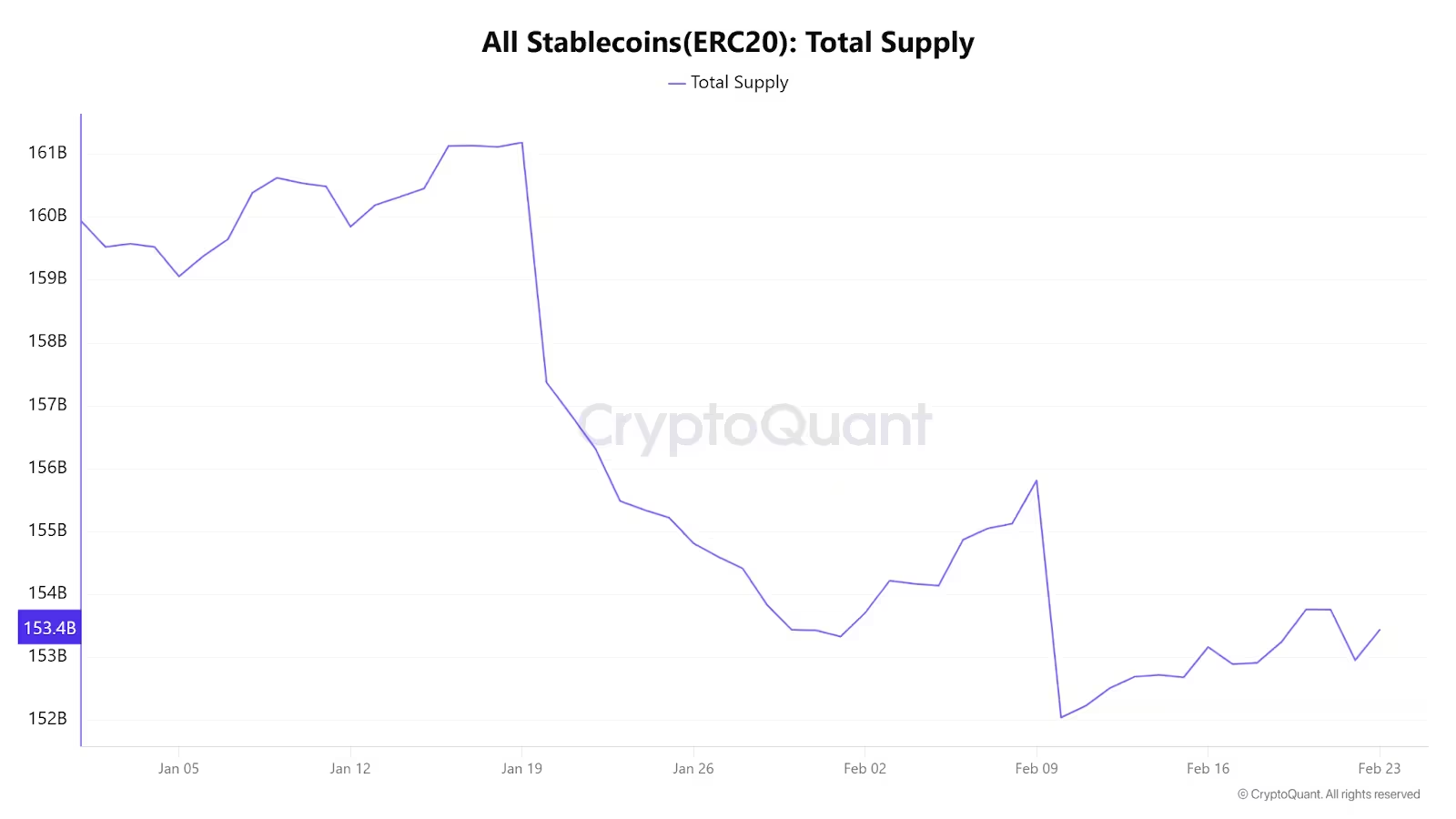
All ERC-20 stablecoins, total supply, year-to-date chart.
Why this matters for Bitcoin and crypto valuations
Stablecoins act as the primary bridge for liquidity into decentralized finance (DeFi), spot trading, and institutional flows. When supply stagnates — or shrinks — the practical result is reduced dry powder to buy dips or support market rebounds. In thin markets, even modest capital rotations into alternatives such as precious metals can amplify volatility and keep price recovery muted.
Bitcoin decoupling from gold — short-term dynamics
Bitcoin's correlation with traditional safe havens appears to be shifting. CryptoQuant reports that BTC's 90-day Pearson correlation with gold has turned strongly negative, dropping toward -0.75. In simple terms, Bitcoin is no longer tracking gold’s moves in the short term, with CryptoQuant CEO Ki Young Ju describing the current phase as “not digital gold.”

Tariffs, macro risk and capital rotation into precious metals
Renewed tariff uncertainty has exacerbated market caution. Announcements around a global tariff plan and possible rate increases have fueled fears of slower trade and growth, pushing some investors toward gold and silver. Bitget's chief analyst, Ryan Lee, says tariff concerns, geopolitical tensions, and broader macro risk have triggered a risk-off stance that drains crypto liquidity. As a result, digital assets now compete for capital with both defensive assets (like gold) and growth-oriented sectors (such as AI-linked equities).
Market indicators: gold, silver, tokenized commodities on the rise
The rotation is visible across asset classes: gold and silver have climbed roughly 19% and 21% year-to-date, respectively, while Bitcoin has experienced a decline in the same period. Tokenized real-world assets (RWAs) and tokenized commodities are also capturing increased inflows — notably Tether Gold (XAUT) saw a 20% rise in market value to about $2.7 billion over the past 30 days, with holder counts up by a third.

Bitcoin, Gold, Silver, year-to-date chart.
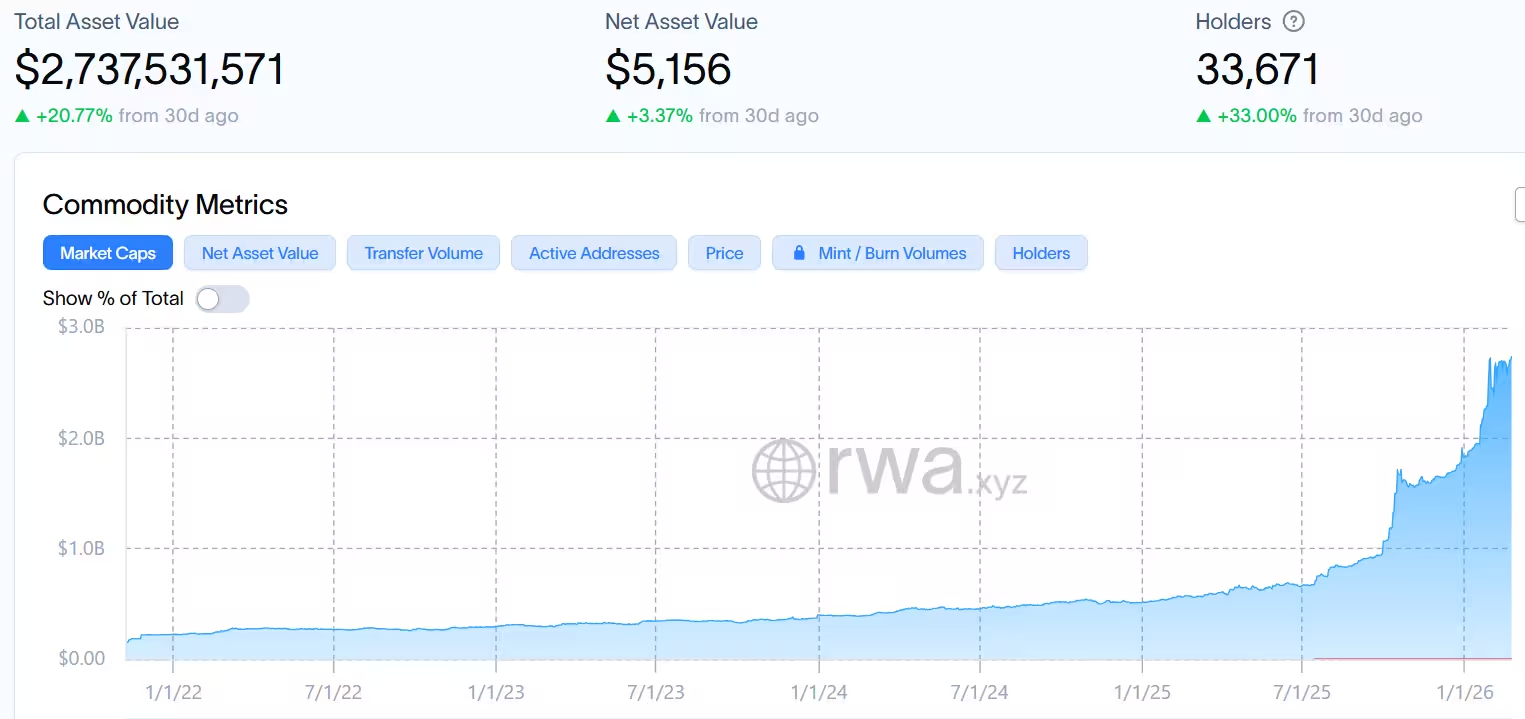
XAUT market capitalization, all-time chart.
What could restore crypto upside?
Analysts emphasize that broad crypto market upside will likely remain constrained until clearer recovery catalysts appear. These include more constructive signals from the Federal Reserve on interest rate cuts, firmer U.S. trade policy clarity, or renewed institutional inflows that reverse stablecoin declines. Without such catalysts, the market may continue to experience muted rallies and episodic sell-offs driven by liquidity shortfalls.
Outlook for traders and investors
For traders and crypto investors, the current backdrop reinforces the need to monitor macro developments closely — especially tariff policy, Fed commentary, and stablecoin supply metrics. Risk management, diversified exposure, and attention to tokenized commodity flows and RWA adoption may provide more stable entry points while liquidity remains constrained.
In short, tariff uncertainty and stablecoin stagnation are reshaping capital flows: until liquidity rails are reinforced, Bitcoin and other digital assets may struggle to regain sustained momentum.

Discussion
Leave a Comment