
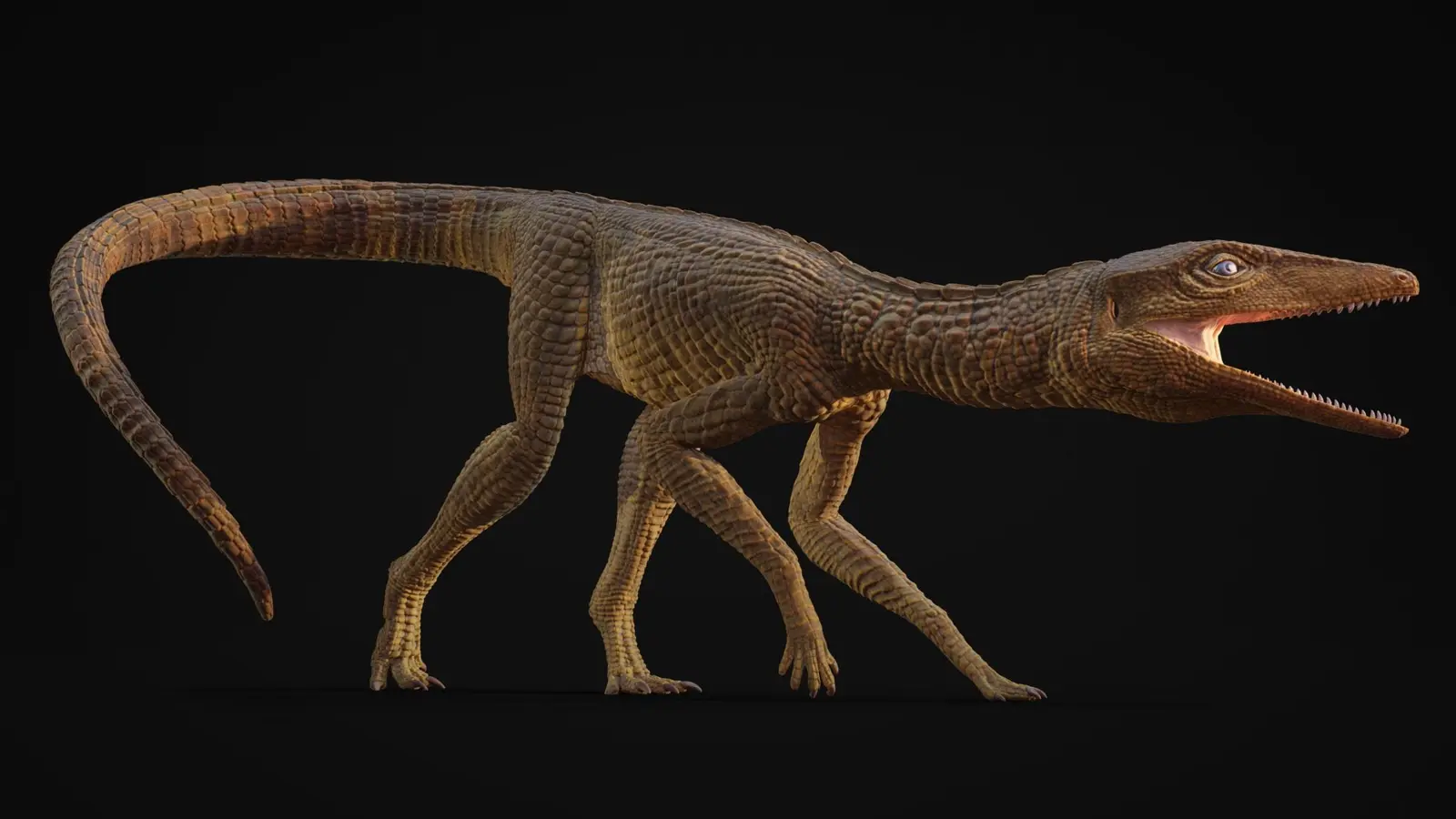
Thirteen differences in bone and skull anatomy can change a story. That was the moment a research team realised a small, terrestrial crocodile from the Late Triassic was not a familiar Terrestrisuchus after all, but a previously unrecognised species.
"My PhD explores how these primitive crocodiles are related to one another," says Ewan, the lead student on the project. He and colleagues performed a painstaking anatomical description of the new specimen, comparing its features to a suite of early crocodilians. The result: clear, repeatable distinctions — thirteen anatomical characters that set this animal apart.

Scientific context
Discoveries like this matter because the Late Triassic was a hinge in Earth’s history. Volcanic activity would later trigger the Triassic–Jurassic mass extinction, reshuffling ecosystems and wiping out many lineages. By cataloguing species that existed just before that upheaval, palaeontologists build a baseline for how vertebrate communities were structured and which traits might have helped some groups survive.
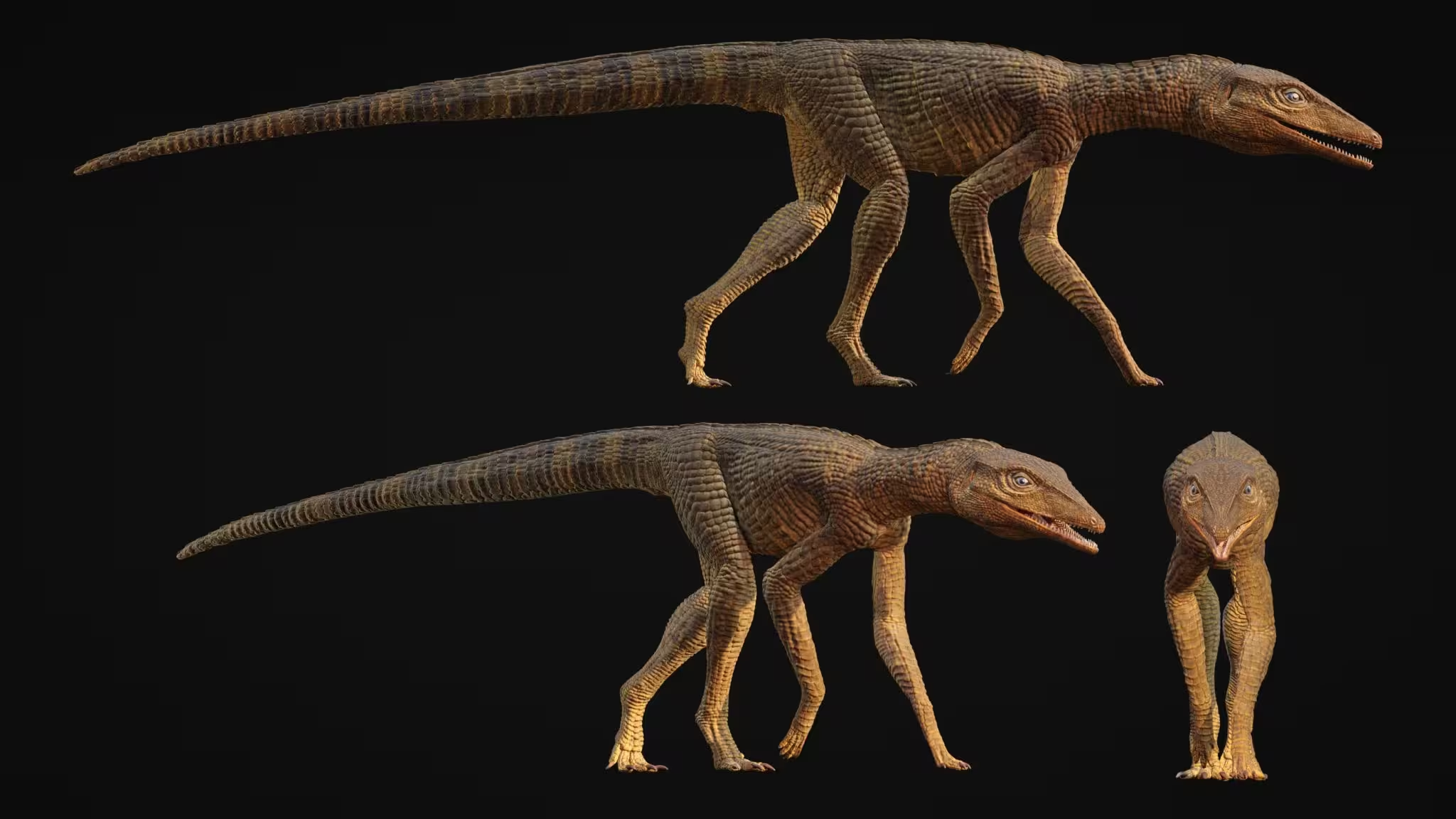
Finding an additional crocodile species expands our view of ecological diversity in that landscape: small predators and opportunistic omnivores filling niches on land long before modern crocodilians dominated rivers and coasts. It also refines evolutionary trees, helping researchers trace which anatomical changes were ancestral and which were specialised experiments in form and behaviour.
In short, a single specimen — when examined closely — can speak to patterns of adaptation, extinction risk, and the deep-time responses of reptiles to environmental crisis. Who knows what other surprises are still waiting in rock that, until now, seemed familiar?

“My work centers on sustainability, energy, and environmental science — examining how innovation can lead to a greener future.”

Discussion
Leave a Comment