
Imagine opening Street View and turning a dull corner shop into a moody film noir scene with a single prompt. Strange idea. Exciting possibility.
Reports from Android Authority unearthed code strings in the latest Google Maps release that point to an unexpected experiment: embedding Nano Banana, Google's lightweight image generator and editor, directly inside Maps. The company behind the model has been quietly building a strong user base, and folding it into Maps would push creative AI into a utility most of us use daily.
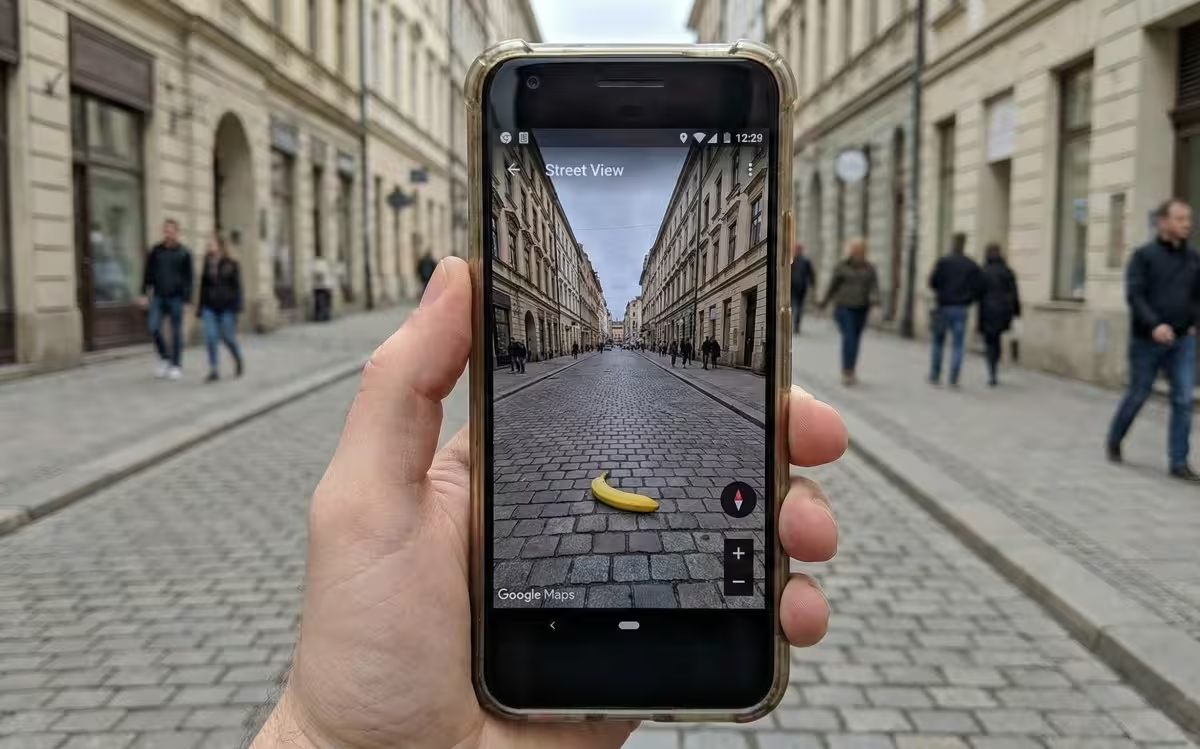
So how would it work? The leaks suggest Nano Banana could generate or restyle images using Street View frames as a canvas. Want to see the Eiffel Tower at sunset with cinematic lighting? Type a prompt, let the model reinterpret the Street View capture, and you get a stylized rendering tied to a real location. It sounds playful, but technically it's a neat convergence of geodata and generative visuals.
There are practical hooks here. Travel writers and social creators could mock up mood boards. Businesses might preview visual branding against their storefront. For casual users, it’s a way to remix place-based memories. Yet this crossover raises questions: how will Google handle identifiable faces, license plates, or copyrighted storefront art once generative edits are possible? Google already applies blurs and moderation in Maps; expect similar guardrails if this moves forward.
One reason this is plausible now: the code is already sitting in the Maps APK. That usually means internal testing or staged rollouts are on the horizon. That never guarantees a public launch—features get shelved all the time—but it does suggest Google's thinking about embedding creative AI where people navigate the world, not just where they make images.
Will this become a gimmick or a genuine utility? That depends on execution. If Nano Banana in Maps remains a fun, lightweight editor for playful mockups, adoption could be limited but viral. If integrated with sharing, local business tools, or travel features, it could reshape how people visualize destinations before they visit.
Either way, the discovery signals a broader trend: AI is migrating from isolated labs into everyday apps. The map on your phone might soon do more than point the way—it could help you imagine it differently. Ready to redraw your next route?

“I love exploring gadgets, apps, and trends that redefine how we connect, work, and play in a digital world.”

Discussion
Leave a Comment