
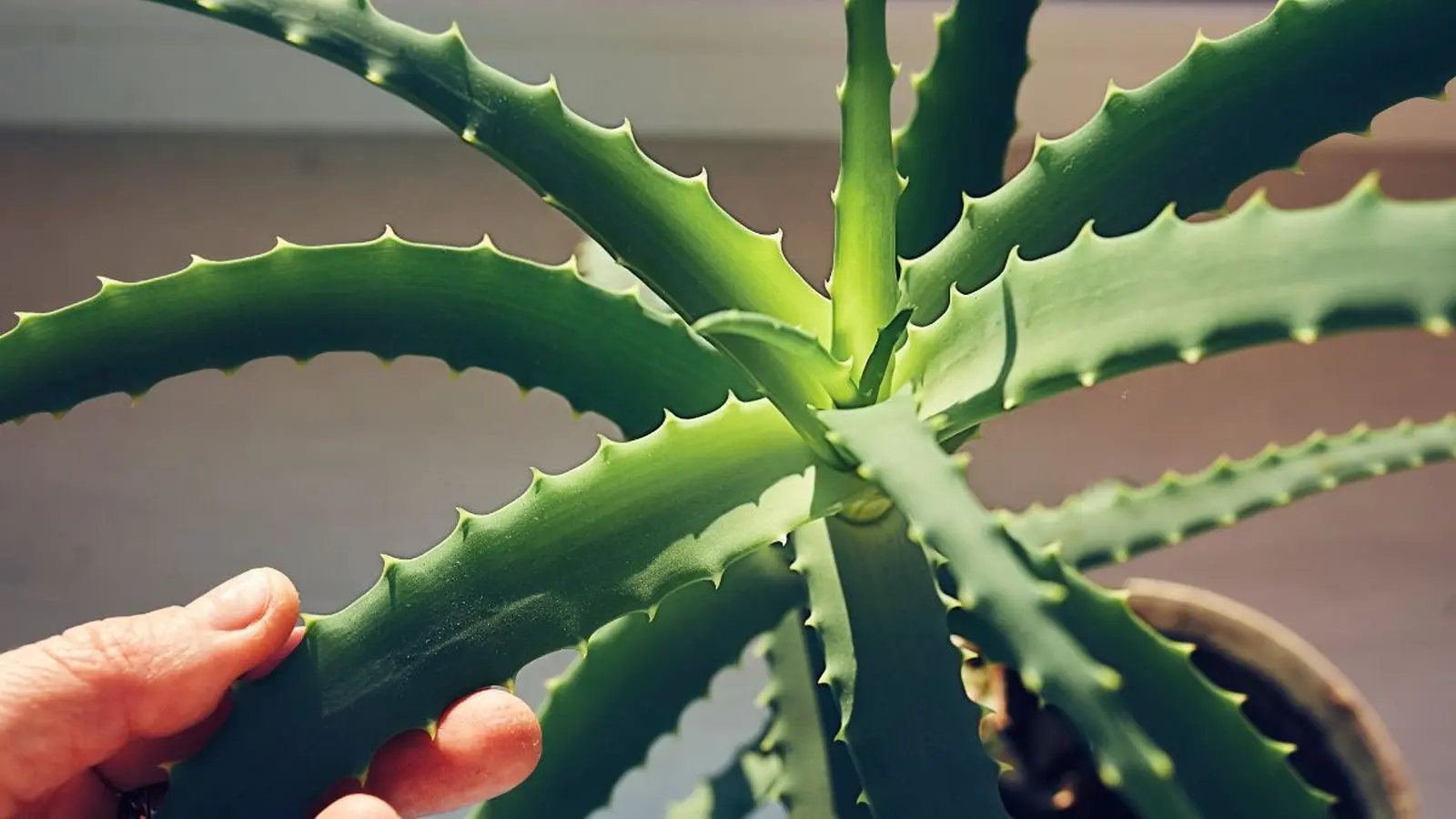
Imagine a common houseplant pointing researchers toward a new drug candidate for Alzheimer's disease. Strange, yes. But the latest computer-based study from Hassan II University of Casablanca suggests that beta sitosterol, a compound found in Aloe vera leaves, may interact with enzymes tied to memory loss—and that interaction looks promising on screen.
Aloe vera has a long folk-medicine pedigree: soothing skin, easing digestion, calming inflammation. Scientific evidence for those uses varies. What this new research does is not prove a cure. It does, however, place a spotlight on one molecule and ask a useful question: could a plant steroid slow the biochemical erosion that contributes to cognitive decline?
The study was carried out entirely in silico—researchers used molecular models and simulations rather than test tubes and clinical cohorts. That matters. Computer chemistry can rapidly screen many natural compounds and flag those most likely to bind to a biological target. It cannot, by itself, tell you whether a compound is safe, bioavailable, or effective in living tissue. Still, simulations are a fast, inexpensive filter to prioritize what to test next.
Why acetylcholine matters and what the simulations found
Acetylcholine is a neurotransmitter essential for learning and memory. In many people with Alzheimer's disease, acetylcholine levels drop. Two enzymes—acetylcholinesterase (AChE) and butyrylcholinesterase (BChE)—help break down acetylcholine. So, inhibiting those enzymes has been a longstanding therapeutic approach: keep acetylcholine around longer, and you may ease symptoms.
The Moroccan team modeled the three-dimensional shapes of AChE and BChE and then virtually docked 11 Aloe vera compounds into the enzymes' active sites to estimate binding affinity—the tighter the fit, the more likely a compound could block the enzyme. Beta sitosterol scored highest for binding to both AChE and BChE, according to the paper.

Using structural models of the molecules, the researchers simulated how well aloe vera compounds fit the binding sites of AChE (top) and BChE (bottom).
Binding is one thing. Acting like a drug is another. So the team ran ADMET predictions—Absorption, Distribution, Metabolism, Excretion, Toxicity—to estimate how beta sitosterol might behave in the body. Those models suggested acceptable properties for beta sitosterol, and succinic acid also emerged as a compound worthy of further study.
“Our findings suggest that beta sitosterol, one of the aloe vera compounds, exhibits significant binding affinities and stability, making it a promising candidate for further drug development,” says Meriem Khedraoui, a chemist on the study. Coauthor Samir Chtita adds that the comprehensive analysis supports the potential of these compounds as safe and effective therapeutic agents—language that signals cautious optimism rather than triumph.
Limits, context, and what comes next
One clear limit: in silico work is hypothesis generation, not hypothesis confirmation. Laboratory assays, cell studies, and animal models are necessary steps before any clinical trial. Then come pharmacokinetic tests, dose-ranging studies, safety panels. Each step prunes many candidates.
Alzheimer's is complex. It affects more than 55 million people worldwide today, and projections estimate roughly 138 million cases by 2050 as populations age. Multiple pathways likely contribute: protein misfolding, immune responses, vascular factors, metabolic dysfunction—and cholinergic deficits are only one piece of that puzzle. That means no single molecule is likely to be a universal cure; what researchers seek are useful tools that can slow progression, improve quality of life, or work in combination with other therapies.
Natural products remain a fertile ground for such tools. Plant-derived molecules have long informed drug discovery—from aspirin to statins—and computational chemistry accelerates the early stages. But the road from a plant molecule to a prescription pill is long, expensive, and uncertain.
Expert Insight
"Computational screening is like turning on a spotlight in a dark room: it reveals interesting shapes, but you still need to walk over and touch them," says Dr. Elena Márquez, a neuropharmacologist not involved in the study. "Beta sitosterol has chemical features that make it worth testing in enzyme assays and cellular models. The real questions are whether it reaches the brain in effective concentrations and whether it has off-target effects that limit use in older patients."
Researchers emphasize the pragmatic angle. These findings do not mean Aloe vera gels or supplements will prevent dementia. They do mean that compounds from a familiar plant have biochemical properties that deserve lab bench attention. If subsequent in vitro and in vivo tests corroborate binding and biological effect, medicinal chemists could modify beta sitosterol to improve potency, selectivity, and brain penetration.
Alzheimer's will require many avenues of attack. Some treatments aim at amyloid or tau proteins; others target inflammation, blood flow, or metabolism. Cholinesterase inhibitors are already part of the therapeutic toolbox for symptom relief; finding new, potentially safer or more effective inhibitors would expand options.
For now, beta sitosterol sits on a shortlist generated by smart simulations—a lead, not a lifeline. The study is published in Current Pharmaceutical Analysis, and it adds another data point to an expansive, multidisciplinary hunt for treatments. The next phase is clear: test the molecule where it counts—in cells and animals—and then follow the evidence wherever it leads.
Science moves in small, cumulative steps. Sometimes those steps start under a windowsill.

“My work centers on sustainability, energy, and environmental science — examining how innovation can lead to a greener future.”

Discussion
Leave a Comment