
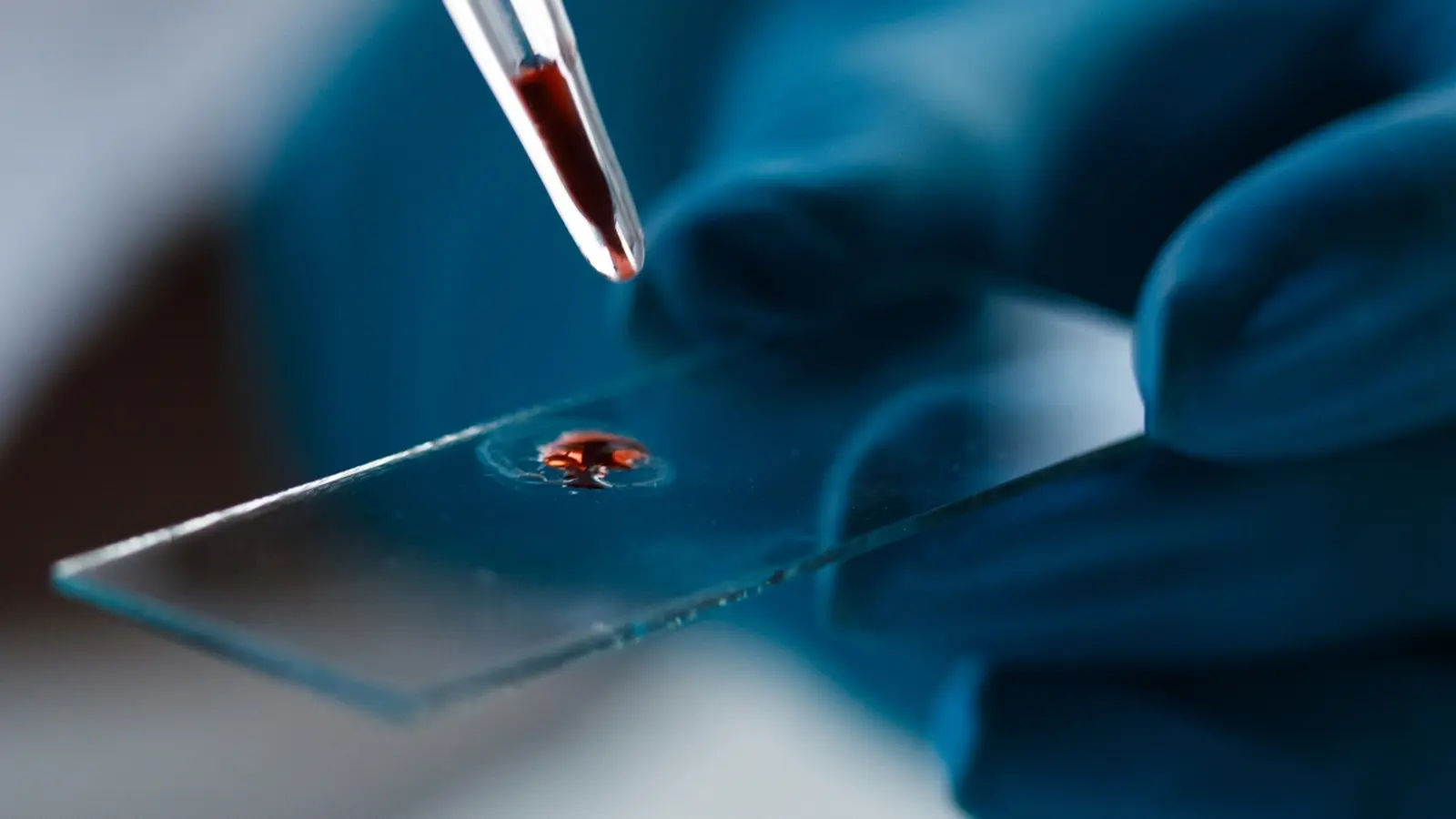
Imagine learning you are on a path toward dementia years before a missed name or misplaced key gives you the first clue. That is the promise behind a new, deceptively simple blood-based ‘‘molecular clock’’ that can narrow the likely onset of Alzheimer's symptoms to a three- or four-year window.
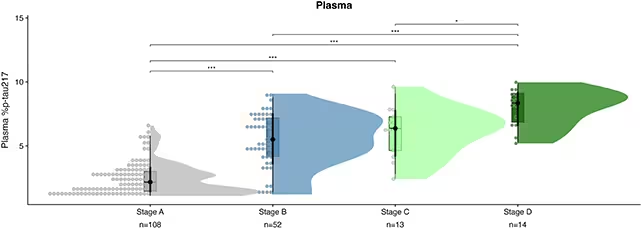
Levels of p-tau217 protein were shown to correlate with Alzheimer's progression.
How a protein in blood maps years of brain change
Scientists at Washington University in St. Louis adapted an existing blood assay for p-tau217 and layered mathematical modeling on top of it. The result? A tool that links measured protein levels to the point when memory and other cognitive problems will become noticeable. Simple sounding. Powerful in application.
Why p‑tau217? Because this phosphorylated form of tau tracks two of the core biological hallmarks of Alzheimer's: aggregated tau tangles and amyloid‑beta plaques. Blood concentrations of p‑tau217 reflect processes occurring inside the brain, offering a window into long-term, slow-moving pathology without the cost and discomfort of PET scans or lumbar punctures.
Researchers examined longitudinal blood data from 603 participants collected over several years. By mapping p‑tau217 trajectories against the age when cognitive symptoms first appeared, they derived formulas that position an individual on a timeline between the earliest biological change and clinical decline. The typical interval between initial brain changes and detectable cognitive impairment is long—often 10 to 30 years—so a tool that tightens the prediction to a few years is valuable for research planning and, eventually, patient care.
There are caveats. Right now the method is best-suited to group-level predictions. It reliably separates cohorts likely to develop symptoms within a defined window but does not yet deliver pinpoint forecasts for a single person. Researchers emphasize that more data and refinement are needed before this becomes a routine prognostic test in the clinic.
Patterns, age effects and why the clock matters
Lead author Kellen Petersen likens amyloid and tau accumulation to tree rings. Read the rings wrong and you misjudge the age. Read them right and you can estimate when the tree sprouted. The comparison captures two things: first, that accumulation follows a consistent trajectory across many people; second, that the age at which these biomarkers cross a pathological threshold is a strong predictor of when symptoms will appear.
One finding stood out—older individuals tended to have a shorter interval between the onset of biological change and symptom emergence. Younger brains may hold up better longer, masking damage even as pathology builds. That has implications for trial design: enrolling younger, biomarker-positive participants might require longer follow-up to capture symptom onset, whereas older participants could show changes faster.
Practical benefits ripple outward. Clinical trials testing preventive therapies need participants who are likely to develop symptoms during the study window. A blood-based clock helps target those individuals more efficiently, reducing trial size and timelines. It also expands access: blood tests are far cheaper and easier to scale than imaging or spinal-fluid diagnostics, which are expensive and not widely available in many regions.
But ethical questions remain. Would people want to know a narrowed timeframe for symptom onset if treatments to stop progression are limited? How should clinicians communicate probabilistic forecasts? These are not technical problems alone; they touch consent, counseling, and public health planning.
Expert Insight
"This is the kind of translational advance we hope for—bridging laboratory markers and practical decision-making," says Dr. Maya Chen, a neuroepidemiologist unaffiliated with the study. "If validated across diverse populations, a blood clock could reshape how we recruit for trials and how clinicians prioritize monitoring. But we must pair it with robust counseling resources; knowing a window without clear preventive options can do more harm than good."
The study appears in Nature Medicine and is led by neurologists at Washington University, including Suzanne Schindler, who highlights accessibility: blood tests can broaden research and clinical reach beyond centers that can perform PET scans or lumbar punctures. The next steps include testing the model in larger and more diverse cohorts, integrating other blood-based biomarkers and refining the algorithms to improve individual-level accuracy.
For now, the molecular clock is less a personal horoscope and more an instrument for science—one that promises to sharpen the timing of trials and deepen our understanding of the slow, years‑long slide into Alzheimer's. The hope is that better timing will accelerate treatments and, one day, give people a clearer sense of what to expect and when to act.

“My work centers on sustainability, energy, and environmental science — examining how innovation can lead to a greener future.”

Discussion
Leave a Comment