
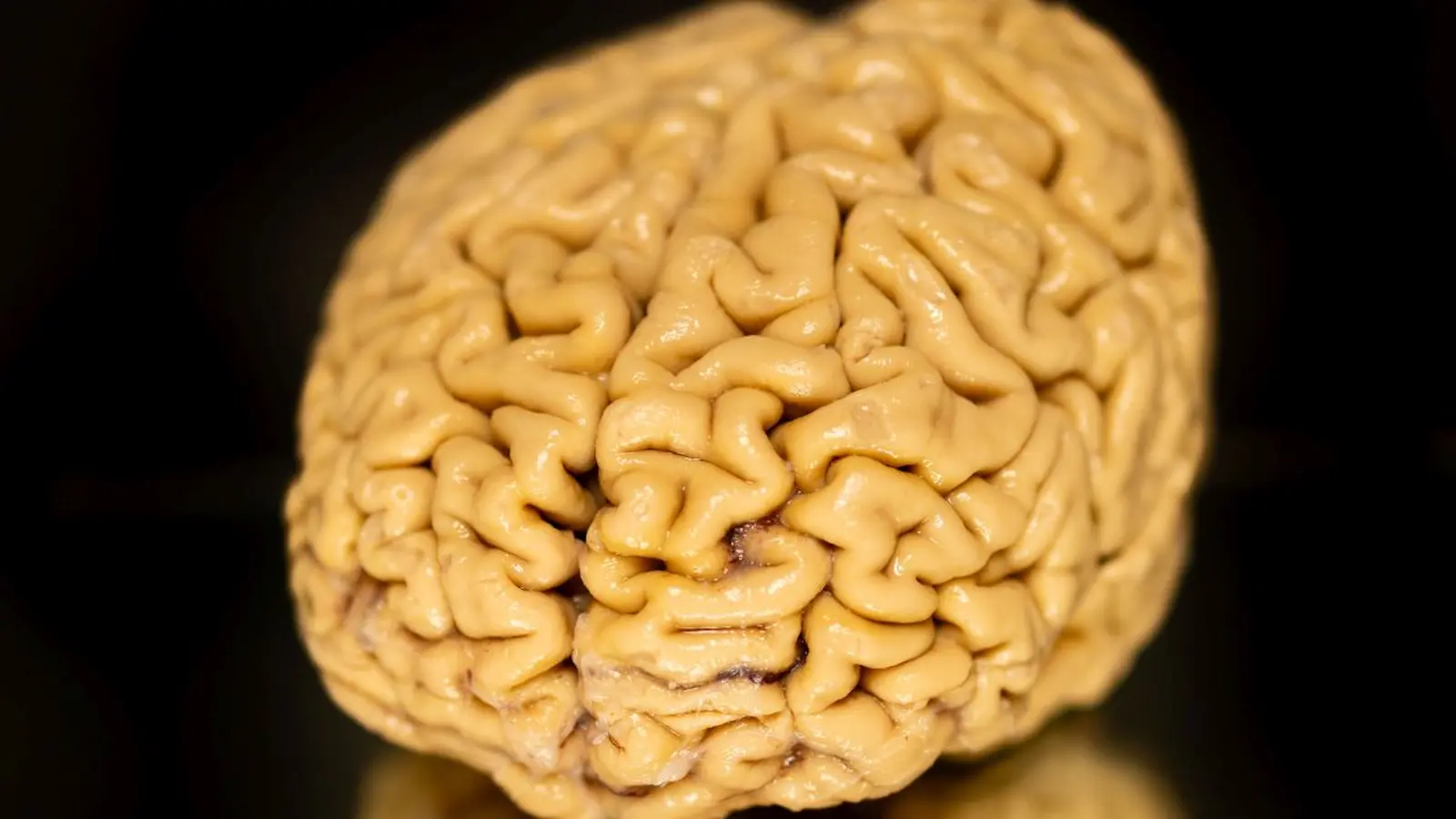
The most unsettling part of aging isn’t the gray hair. It’s the moment you walk into a room and can’t remember why—then wonder, briefly, whether your brain is already sliding down a slope you can’t stop. New research offers a calmer, more hopeful picture: some older adults may keep their memory unusually strong because their brains are still making new neurons—especially in the hippocampus, the region most tied to learning and recall.
Scientists have long argued about whether adult neurogenesis—the birth of new brain cells—really persists in humans. A new analysis of donated human brain tissue doesn’t just weigh in on that debate; it adds an intriguing twist. People known as “superagers,” who maintain exceptional memory into very old age, appear to have far more developing neurons than their similarly aged peers. And in Alzheimer’s disease, the opposite pattern shows up: the pipeline that produces new neurons looks diminished.
Aging brains aren’t all aging the same
The study examined hippocampal tissue from 38 adult brains donated to science, spanning a spectrum of ages and cognitive outcomes. The researchers grouped samples into five categories: healthy young adults (roughly ages 20–40), healthy older adults (60–93), superagers (86–100), people with preclinical Alzheimer’s pathology (80–94), and individuals diagnosed with Alzheimer’s disease (70–93).
The goal wasn’t simply to count neurons. It was to map a biological process—neurogenesis—by tracking cells at different stages of development. In the hippocampus, the pathway is thought to begin with neural stem cells (cells that can become neurons), progress through neuroblasts (stem cells actively differentiating), and end with immature neurons poised to integrate into memory-related circuits.
To do that, the team first used younger adult tissue to establish what “normal” adult neurogenesis markers look like. Then they analyzed nearly 356,000 individual cell nuclei isolated from hippocampal samples. That scale matters. Looking at single nuclei helps capture subtle shifts that can be masked when tissue is averaged into a single bulk signal.
The standout finding: superagers had roughly twice as many immature neurons as other healthy older adults. In a field where effects can be frustratingly small, “twice as many” is the kind of result that makes researchers lean closer to the data.
Neuroscientist Orly Lazarov of the University of Illinois Chicago, one of the study’s key investigators, framed it as progress toward understanding why some people remain cognitively resilient. The implication is straightforward but powerful: if neurogenesis contributes to memory maintenance, then the aging brain may be more biologically dynamic than the public often assumes.
The neurogenesis debate—and why this paper matters
For decades, neuroscience textbooks taught a grim rule: you’re born with your neurons, and you mostly keep what you’ve got. That began to change in the late 1990s when evidence emerged suggesting adults can generate new hippocampal neurons. Follow-up studies supported the idea, but skepticism never fully disappeared. In 2018, another high-profile report argued that human hippocampal neurogenesis drops sharply and becomes minimal after adolescence, reigniting the controversy.
Part of the dispute comes down to methods. Postmortem tissue varies in quality, and molecular markers for “new neurons” can degrade or be misread. Different labs also use different staining techniques, definitions, and thresholds. That’s why studies that combine careful tissue selection with modern, high-resolution approaches—like single-nucleus profiling—carry weight in the conversation.
This new work doesn’t claim to settle everything. But it strengthens the case that adult neurogenesis can be detected in humans and that it differs across aging trajectories—healthy aging, superaging, and Alzheimer’s disease.
Where Alzheimer’s shows up early: a weakening pipeline
The superager result is eye-catching, but the Alzheimer’s comparisons may be the most clinically relevant. The study included a “preclinical” group—people who, based on brain pathology, showed early Alzheimer’s-related changes without a formal dementia diagnosis. In those samples, the researchers saw molecular hints that the neurogenesis-supporting system was beginning to falter.
In samples from people diagnosed with Alzheimer’s disease, the signal was clearer: a marked reduction in immature neurons. That pattern fits with a growing body of research linking hippocampal dysfunction, synaptic failure, and memory impairment to the progression of Alzheimer’s. If fewer new neurons are available to refresh circuits—or if the environment becomes hostile to their survival—memory formation may become more fragile over time.
It’s important to be precise here: neurogenesis is not the only mechanism behind memory, and Alzheimer’s is not “caused” by a single failing. But the hippocampus is one of the earliest and hardest-hit regions in the disease. Anything that helps explain resilience—or vulnerability—in that region is worth attention.
Genes that hint at resilience, not just luck
The team also looked at gene activity patterns in the analyzed nuclei. Superager cells showed increased activity in genes associated with stronger synaptic connections (the communication points between neurons), greater plasticity (the brain’s ability to adapt), and brain-derived neurotrophic factor (BDNF), a protein that supports neuron survival and growth.
Taken together, that profile reads like a nervous system that remains “trainable” late in life—better able to preserve circuitry and potentially incorporate new cells into working networks. Neuropsychiatrist Tamar Gefen of Northwestern University, who studies superaging, has argued that superagers demonstrate how adaptable an older brain can be. Findings like these supply a biological narrative for that observation, linking exceptional memory to measurable cellular signatures in the hippocampus.
Expert Insight
“People hear ‘new brain cells’ and imagine a fountain of youth,” says Dr. Elena Marquez, a fictional cognitive neurologist and science communicator who reviews aging research for hospital education programs. “The more realistic—and more interesting—idea is that some brains keep a healthier habitat for neuron growth: better synaptic support, better trophic signaling like BDNF, and less of the inflammatory stress that can make the hippocampus a tough place for new neurons to survive.”
Marquez adds that the public takeaway shouldn’t be self-diagnosis. “This doesn’t mean you can test your ‘neurogenesis score’ tomorrow. But it does reinforce a theme we see across brain-health science: the aging brain is responsive. Biology can bend.”
What comes next: from lab markers to real-world strategies
The obvious next question is also the hardest: can we safely boost hippocampal neurogenesis in adults—and would that meaningfully protect memory? The researchers suggest that identifying why superagers maintain stronger neurogenesis could guide therapeutics aimed at healthy cognitive aging, cognitive resilience, and Alzheimer’s prevention.
Any future translation into medicine will require caution. Interventions that stimulate cell growth must be tightly controlled, and Alzheimer’s disease involves multiple pathways—amyloid, tau, vascular health, immune activity, and more. Still, neurogenesis sits at a promising intersection of basic biology and potential lifestyle influence. Animal studies have linked physical activity, enriched environments, sleep quality, and stress regulation to changes in hippocampal neurogenesis, though human evidence is more complex and often indirect.
For now, the study’s most valuable contribution may be conceptual: it challenges the fatalistic view that memory decline is inevitable and uniform. Superagers, by definition, are rare. Yet their brains may illuminate principles that apply more broadly—how to keep hippocampal circuits supported, plastic, and resilient well into late life.
Conclusion
If there’s a “secret ingredient” in superaging, it may not be a single gene or a perfect lifestyle. It may be something more fundamental: the capacity to keep building, even slowly, within the brain’s memory center. In a landscape dominated by fear of dementia, that’s a striking message—one grounded not in wishful thinking, but in the cellular fingerprints left behind in the hippocampus.

“The cosmos has always fascinated me. I write about space missions, astronomy, and the technologies pushing humanity beyond Earth.”

Discussion
Leave a Comment