
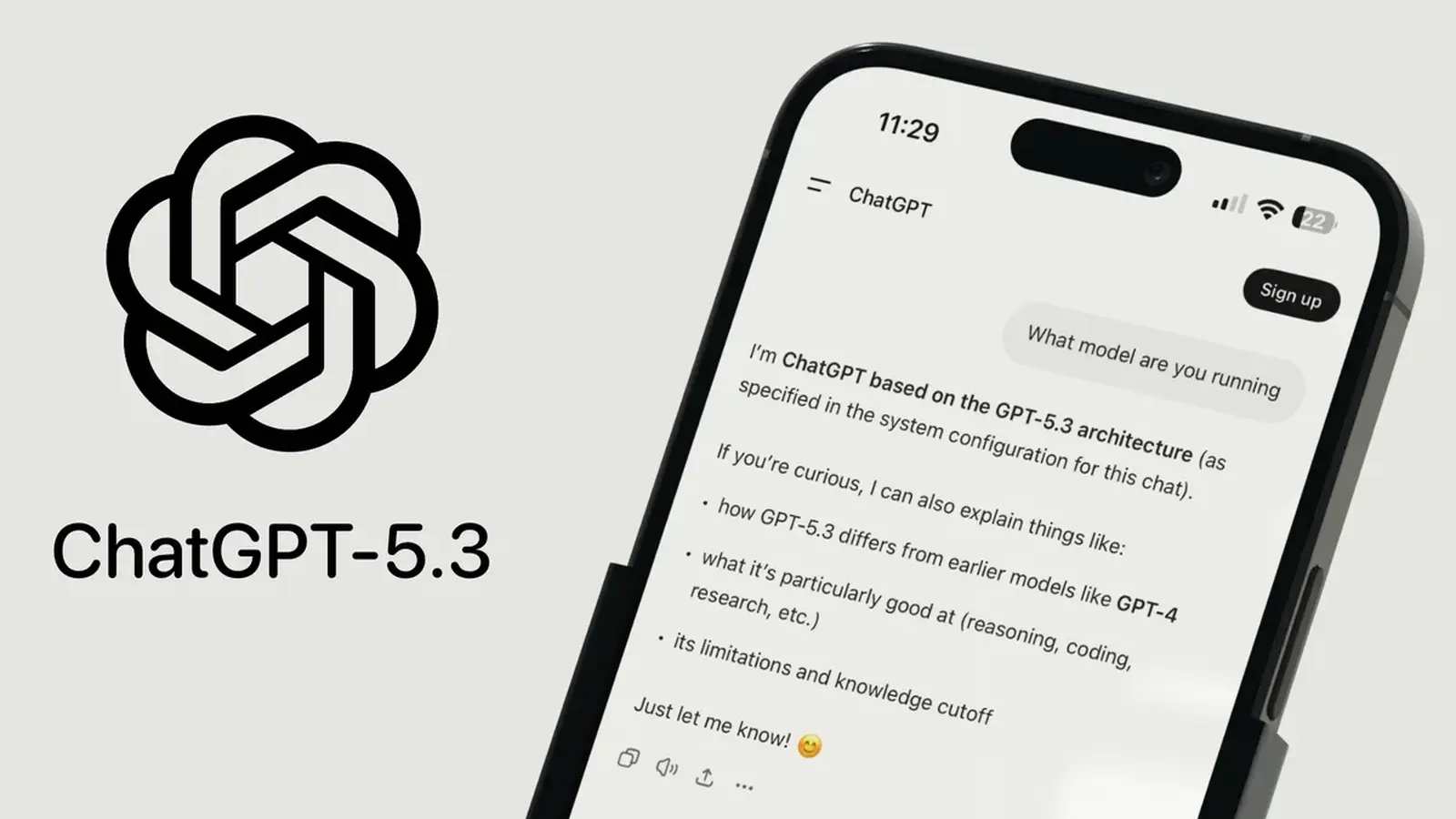
The quickest way to tell ChatGPT 5.3 Instant is different? Ask it something mildly sensitive and wait for the usual sermon. It doesn’t come.
OpenAI’s latest “Instant” update isn’t trying to win a leaderboard. It’s trying to win back your patience. GPT-5.3 Instant is designed to feel less like an anxious hall monitor and more like the assistant people thought they were getting in the first place—faster, cleaner, and noticeably less “cringe.”
Less scolding, fewer detours
If you used GPT-5.2 Instant, you probably met the habit: long disclaimers, moralizing intros, and that oddly parental tone that could turn a simple question into a lecture. Sometimes it would refuse outright. Other times it would wrap the answer in so much caution tape that the useful part barely made it out alive.
GPT-5.3 Instant trims that behavior down. OpenAI says unnecessary refusals are significantly reduced, and the model is less prone to opening with wordy preambles. The interaction is more direct: you ask, it answers. No dramatic throat-clearing.
Just as important, the awkward “therapy-speak” is being dialed back. Those moments where a chatbot tells you to “Stop. Take a breath.” have become less common, and the overall voice is sharper and more natural. Small tweak, big difference—because tone is the product when you’re chatting all day.
There’s another practical shift here: the model is getting better at answering like it understands what you’re actually trying to do. Not performing politeness. Not over-validating. Not mirroring your feelings like a motivational poster. Just helping.

Web search that feels like an answer, not a link dump
ChatGPT’s web-enabled mode used to have a familiar failure mode: a scattered list of links, loosely related, with the real point buried halfway down a multi-paragraph response. You could get there—but you’d often have to dig.
With GPT-5.3 Instant, OpenAI says the system blends its own reasoning with web results instead of handing you a pile of sources and calling it a day. The goal is simpler than it sounds: surface the answer near the top, then back it up, rather than forcing users into a rabbit hole.
Accuracy is getting a boost too. OpenAI reports hallucination rates drop by up to 26.8% on higher-stakes topics like medicine and law when web browsing is used, and by 19.7% when the model relies on its internal knowledge. Those are the kinds of improvements that matter in real life—when “close enough” isn’t good enough.
This is part of a broader shift you can feel across consumer AI: companies are finally optimizing for brevity and usefulness, not just personality. Amazon’s Alexa+ recently leaned into more succinct voice responses, and it’s the same impulse at work here. People don’t want a novella. They want the point.
For many users, the old tone was more than a minor annoyance—it was a reason to switch tools. If you drifted toward alternatives that felt more straightforward, GPT-5.3 Instant is OpenAI’s attempt to close that gap and make ChatGPT feel efficient again.
It’s not a perfect rollout. OpenAI notes that tone in non-English languages still needs work, so global users may see uneven results depending on language and context. Still, GPT-5.3 Instant is starting to roll out to all ChatGPT users now. GPT-5.2 Instant will remain available for paid users until June 3, 2026, before it’s retired.

“I love exploring gadgets, apps, and trends that redefine how we connect, work, and play in a digital world.”

Discussion
Leave a Comment