
5 Minutes
Something unusual is hiding inside the camera module of Vivo’s upcoming flagship. Not just another high‑megapixel sensor or a familiar lens upgrade—but a mystery component that the company itself is teasing rather than explaining.
Vivo Product Manager Han Boxiao has been dropping clues about the Vivo X300 Ultra on Weibo over the past week. Piece by piece, the phone’s camera system is coming into focus. First came details about the main and periscope cameras. Now, Boxiao has turned attention to the ultra‑wide shooter—and hinted that another powerful sensor is quietly tucked inside the module.
A surprisingly large sensor for an ultra‑wide camera
The Vivo X300 Ultra will reportedly feature a 50‑megapixel ultra‑wide camera powered by Sony’s LYTIA‑818 sensor. On paper, that may sound like another routine specification. In practice, it’s anything but typical.
The sensor measures roughly 1/1.28 inches, making it one of the largest sensors ever used for an ultra‑wide smartphone camera. Most ultra‑wide lenses traditionally rely on much smaller sensors, which limits light capture and often leads to noisy night shots.
Vivo appears determined to change that. Paired with a 14mm focal length lens, the ultra‑wide camera is designed for sweeping landscapes, architecture, and large group shots. The larger sensor should also allow the camera to pull in significantly more light—something that could noticeably improve both photography and video recording.
Video seems to be a particular focus this time. According to Boxiao, ultra‑wide cameras often produce the most stable footage because their wider field of view naturally minimizes shake. The X300 Ultra reportedly improves stabilization from the previous generation’s CIPA 5.0 standard to CIPA 6.0. In real‑world terms, that could mean smoother handheld video and steadier motion capture without relying heavily on digital correction.
But the ultra‑wide upgrade might not be the most interesting part.
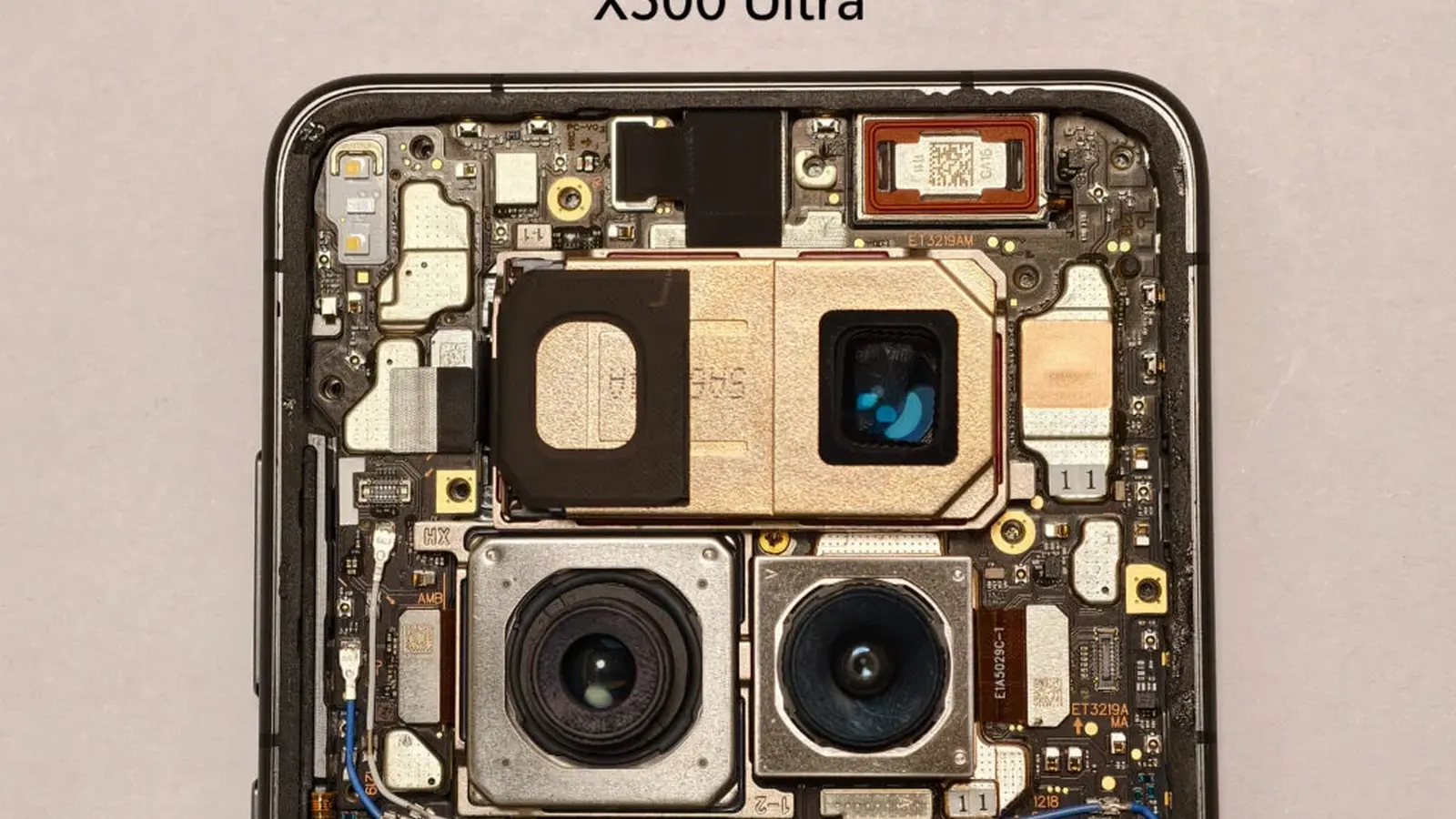
In a promotional image shared by Boxiao, one element of the camera module is deliberately hidden behind a sunglasses emoji. The implication is obvious: another sensor exists, but its details aren’t ready for public release.
Industry chatter suggests it could be a 5‑megapixel multispectral sensor. If that speculation is accurate, the component would likely assist with advanced color accuracy and scene analysis—potentially improving skin tones, white balance, and environmental lighting interpretation. Vivo has hinted that future updates will explain both the new sensor and the phone’s upgraded color processing system.
The rest of the camera setup already reads like a spec sheet built for photography enthusiasts.
At the center of the system sits Sony’s LYTIA‑901 sensor, which Vivo plans to introduce globally as part of the main camera. Alongside it is a 200‑megapixel sensor with a large 1/1.12‑inch size and a 35mm focal length. That focal length is a subtle but meaningful choice—35mm is widely considered a natural perspective for street photography, closely matching how the human eye perceives scenes.
Zoom performance could be another headline feature. The device is expected to include a fifth‑generation ZEISS 200‑megapixel periscope telephoto camera built on Samsung’s HP0 sensor. Vivo claims the system supports up to 3° optical image stabilization, a level that could deliver gimbal‑like steadiness even when shooting distant subjects.
Selfie fans won’t be ignored either. Reports point to a 50‑megapixel front camera with autofocus, a combination that should improve both sharpness and framing for video calls and creator content.
And then there’s the accessory ecosystem. Vivo is preparing an optional 400mm teleconverter kit capable of reaching up to 17× optical zoom. Another teleconverter aimed at everyday shooting is also expected, suggesting Vivo is pushing the X300 Ultra toward a modular photography experience rather than just another smartphone camera upgrade.
The official launch is scheduled for later this month in China. If Vivo follows its typical release pattern, the X300 Ultra could reach international markets sometime in the second quarter of the year.
Until then, one question remains unanswered: what exactly is that hidden sensor—and why is Vivo so eager to tease it instead of revealing it outright?
Source: gizmochina


Comments
Reza
Is this even true? 50MP ultra wide with a 1/1.28 sensor sounds wild, but who's testing real dynamic range and stab in everyday use not PR?
atomwave
Whoa a hidden sensor? Vivo playing mystery marketing again. If that multispectral thing is real colors could be insane... but hope battery not wrecked

Leave a Comment