
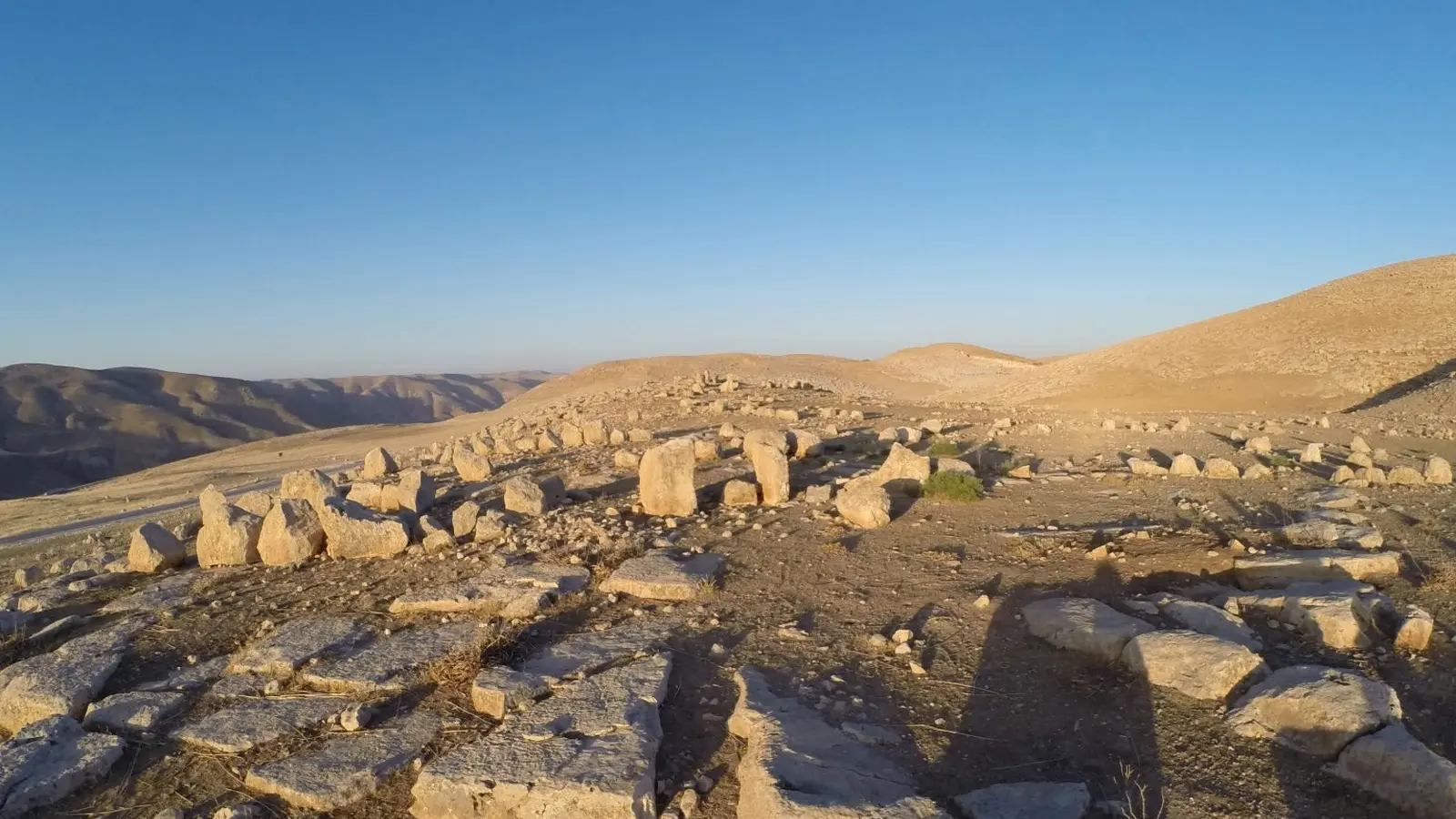
Archaeologists from the University of Copenhagen have uncovered a striking Early Bronze Age ritual complex at Murayghat in Jordan. The 5,500-year-old site reveals a shift from household-focused settlements to large communal monuments that may have helped ancient communities cope with social and environmental upheaval.
From household shrines to communal stones: a landscape transformed
Following the decline of the Chalcolithic period (roughly 4500–3500 BCE), communities in the southern Levant faced changing climates and growing social instability. At Murayghat, the archaeological record suggests people responded not by rebuilding the same type of villages, but by creating visible, shared places of ritual and memory.
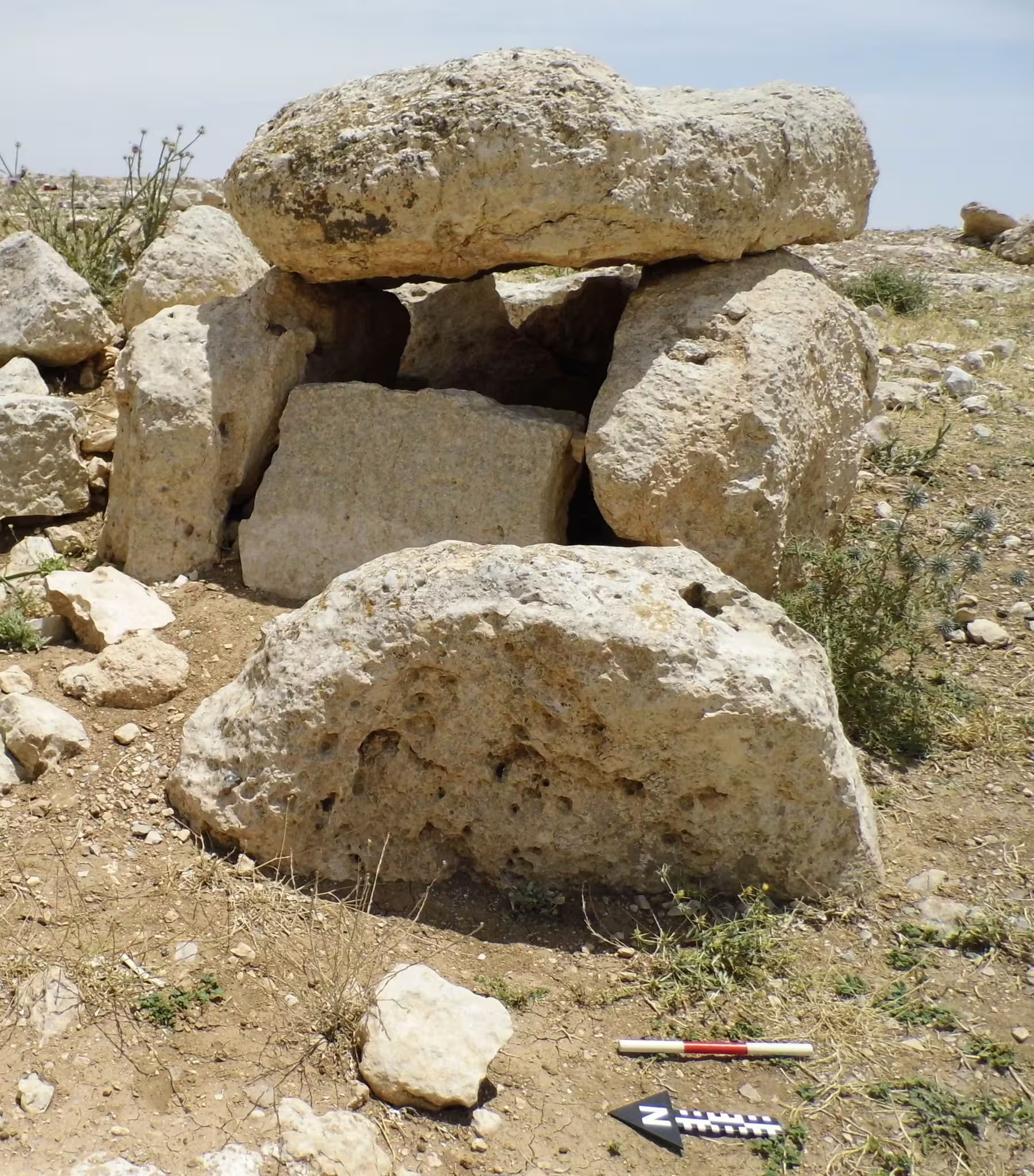
Rather than the dense domestic settlements and small private shrines typical of the Chalcolithic, Murayghat’s Early Bronze Age phase is dominated by clusters of dolmens (stone-built burial monuments), standing stones, and large megalithic enclosures. These features point towards ceremonial gatherings, communal burials, and public display—practices that could redefine identity and social roles when centralized authority weakened.
What the excavation revealed — artifacts, layout, and social signals
Excavations at Murayghat recovered Early Bronze Age pottery, large communal bowls suited to sharing food, grinding stones, flint tools, animal horn cores, and a small number of copper objects. The combination of household implements and feasting vessels, together with visible megaliths, supports an interpretation of ritual activity and periodic gatherings—perhaps seasonal or tied to funerary rites.
Project lead Susanne Kerner (University of Copenhagen) explains that the site’s elevated hilltop location and carved bedrock features would have made Murayghat a highly visible meeting point. In a landscape without strong central rulers, such monumental markers likely helped communities negotiate territory, leadership, and collective memory.
Key discoveries
- More than 95 dolmen remains documented across the site.
- Stone-built enclosures and carved bedrock features indicating ceremonial use.
- Artifacts implying ritual feasting and communal activities.
Why Murayghat matters for archaeology
Murayghat adds nuance to our understanding of the Early Bronze Age transition. It shows that when familiar social structures faltered, communities could invest in shared ritual spaces to stabilize social bonds and mark territories. For researchers studying megalithic architecture, social resilience, and the role of ritual in post-collapse societies, Murayghat is a valuable case study.
This discovery also underscores the importance of landscape archaeology—reading how stone, visibility, and communal objects worked together to form social strategies. As fieldwork continues, Murayghat promises further insights into how ancient communities used monuments to navigate climatic stress and social change.

“The cosmos has always fascinated me. I write about space missions, astronomy, and the technologies pushing humanity beyond Earth.”

Discussion
Leave a Comment