

Analyst Willy Woo Warns of a New Trigger for the Next Crypto Bear Market
Prominent on-chain analyst Willy Woo warned that the next crypto bear market may be driven not by familiar Bitcoin-specific dynamics, but by a broader business cycle downturn—the kind that defined the 2001 and 2008 recessions. His analysis suggests the market could face a liquidity shock that tests how Bitcoin and other digital assets behave in a systemic economic contraction.
Two cycles that shaped past crypto moves
Historically, crypto price action has been influenced by two overlapping cycles: Bitcoin halving events occurring roughly every four years and fluctuations in the global M2 money supply. Halving cycles exert a supply-side influence on Bitcoin (BTC), while central bank-driven changes to M2 affect liquidity and risk appetite across global markets.
Enter the business cycle
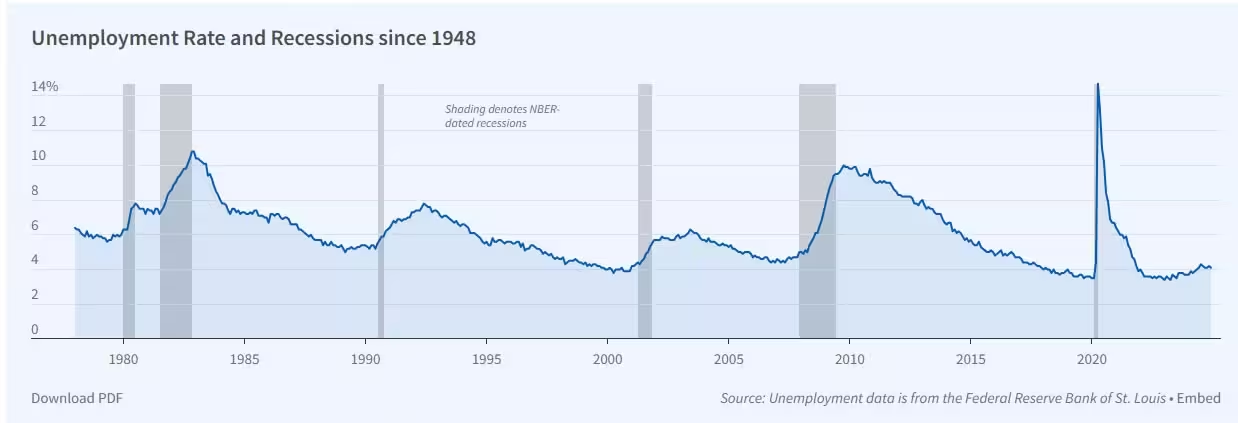
Woo argues the next bear market will be defined by a traditional business cycle downturn rather than only halving or M2 dynamics. Business cycle recessions—periods marked by falling GDP, rising unemployment, lower consumer spending, and reduced industrial activity—can rapidly drain liquidity from risky assets, including cryptocurrencies. The last major downturns that had wide-reaching market consequences were in 2001 and 2008, both occurring before crypto markets were established.
Historical business cycles and recessions
Why a business cycle recession matters for Bitcoin and crypto
In a business cycle-driven recession, liquidity tightens as credit conditions deteriorate and institutional and retail investors de-risk. That dynamic raises the question Woo posed: if a severe recession occurs, will Bitcoin behave like growth tech stocks—plummeting with equities—or will it act more like gold, maintaining value as a perceived store of value?
Lessons from 2001 and 2008
The dot-com collapse of 2001 produced a protracted decline in equities as overvalued tech firms unraveled, while the 2008 financial crisis saw a sharp contraction in credit and a severe stock market drop. Both episodes highlight how quickly systemic shocks can force deleveraging and compress liquidity—two forces that could amplify a crypto bear market if they recur.
Monitoring recession signals and liquidity
The National Bureau of Economic Research (NBER) tracks indicators such as employment, personal income, industrial production and retail sales to identify recessions. While there was a short recession in early 2020 due to the pandemic, current data does not point to an imminent long-term recession—although risks remain elevated. Additional economic pressures, including trade tariffs and slowing growth forecasts, could prolong weakness through 2026 and increase downside risk for crypto.
Implications for traders, investors and the blockchain sector
Crypto does not trade in a vacuum. Speculative markets price in expected future conditions—M2 trends, halving cycles and, increasingly, macroeconomic health. Market participants should watch liquidity indicators, credit spreads and macro data alongside on-chain signals. For investors, the potential scenario is binary: either Bitcoin is signaling that a global market top is already baked into prices, or BTC will have to realign with macro fundamentals in a material way.

Discussion
Leave a Comment