
4 Minutes
The future of cooling isn’t just about blasting cold air anymore. It’s about intelligence—systems that learn, adapt, and quietly manage energy while keeping buildings comfortable. At ACREX ISHRAE 2026 in India, LG Electronics stepped onto the exhibition floor with a clear message: climate control is becoming smarter, more efficient, and far more responsive to the spaces we live and work in.
The company’s booth brings together a wide spectrum of HVAC technologies built for everything from homes and hotels to factories and data centers. Instead of focusing on a single product, LG is presenting an ecosystem of cooling solutions designed to handle the complexities of India’s varied climate—from humid coastal cities to scorching inland regions.
Where Artificial Intelligence Meets Climate Control
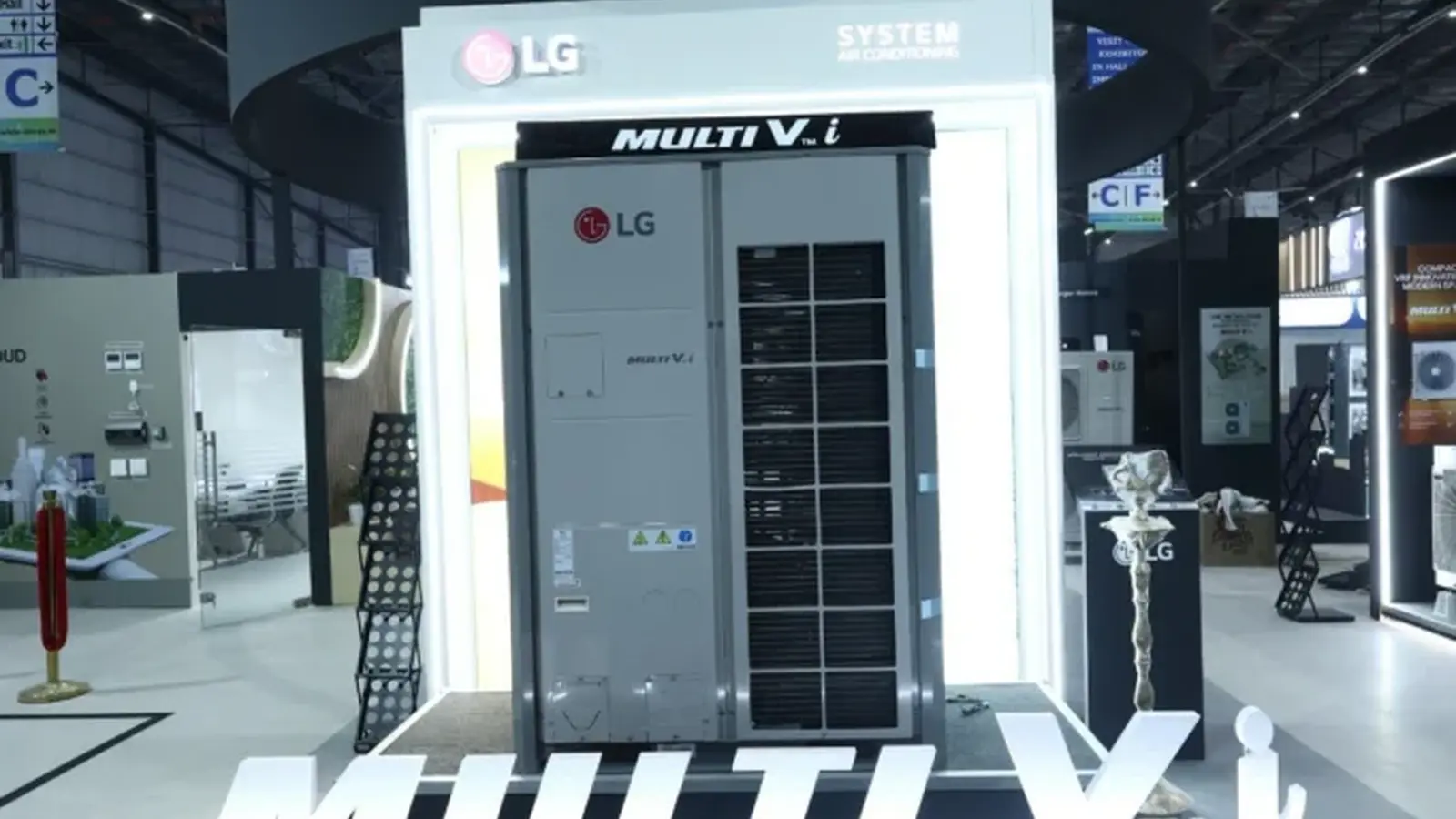
Front and center is LG’s Multi V i VRF system, an advanced variable refrigerant flow platform powered by artificial intelligence. The idea is simple: cooling systems shouldn’t just run—they should think.
The Multi V i integrates features such as AI Smart Care, AI Smart Metering, and AI Space Care. Together, these tools monitor usage patterns, analyze indoor conditions, and adjust performance automatically. The result is a system that can maintain comfort levels while keeping energy consumption under tighter control.
This kind of intelligent management is especially valuable in large properties—office complexes, luxury residences, and hotels—where cooling demand shifts throughout the day. Rather than operating at a constant level, the system responds dynamically to how the space is actually used.
Another highlight at the showcase is LG’s fifth-generation Multi V5 VRF system. At its core sits the company’s Ultimate Inverter compressor, designed to deliver stable and efficient performance even under demanding conditions.

The system also relies on dual sensing control, which simultaneously monitors temperature and humidity. That matters more than many people realize. In tropical climates, humidity plays just as big a role as temperature in determining indoor comfort. By balancing both variables, the system creates a more consistent environment rather than simply lowering the temperature.
Durability is another major focus. The Multi V5 is engineered to operate across a wide temperature range—from minus 20°C all the way up to 53°C—allowing it to perform reliably in both extreme heat and colder regions.
Efficiency doesn’t stop with cooling. LG is also introducing its Hydrokit solution, which captures waste heat generated by VRF systems and repurposes it to produce hot water. For residential buildings and hospitality projects, that means a single system can contribute to both climate control and water heating, cutting overall energy use.
Beyond commercial buildings, LG is targeting large-scale infrastructure projects as well. The company is displaying a lineup of AHRI-certified chillers, including magnetic bearing, screw, and centrifugal models. These systems are designed for environments where continuous, dependable cooling is critical—think manufacturing plants, hospitals, and data centers where downtime simply isn’t an option.
Taken together, the technologies on display hint at a broader shift happening across the HVAC industry. Cooling is no longer just mechanical—it’s digital, data-driven, and increasingly autonomous. And as buildings grow smarter, the systems that regulate their climate are evolving right along with them.


Comments
Jonas
Worked on a hotel HVAC retrofit, VRF + controls cut peak loads but install was messy, integrations tripped us up. If LG cleans the setup, nice win
coreflux
wow didn't expect that... AI managing humidity too? cool, but kinda creepy. hope the energy savings are real and not just marketing fluff

Leave a Comment