
4 Minutes
A trillion dollars. Not market cap—revenue. That’s the scale Nvidia is now openly chasing, and it’s tying that ambition to a fast-emerging idea that’s starting to reshape how software actually gets built: agentic AI.
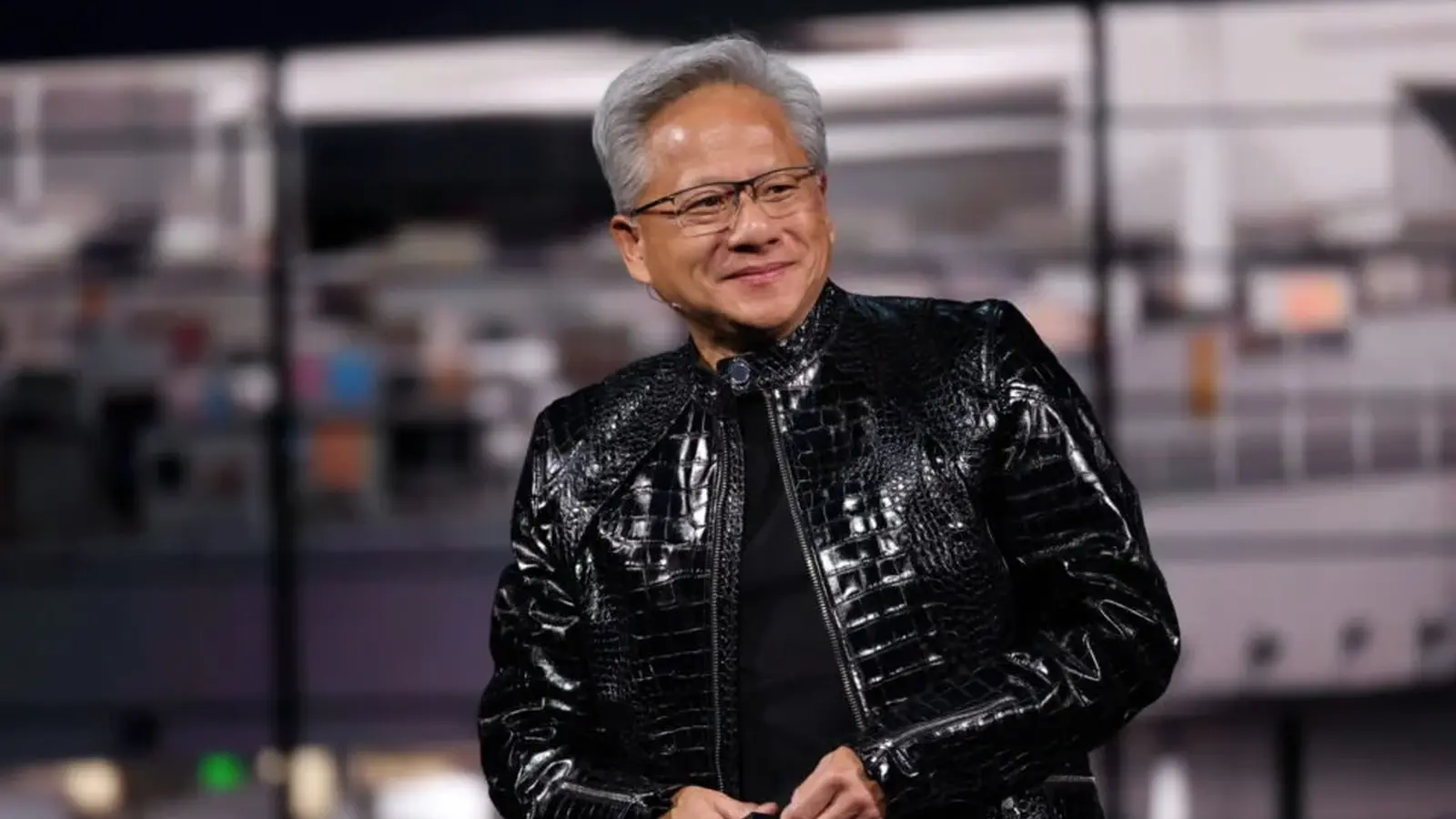
Speaking at Nvidia’s GPU Technology Conference in California, CEO Jensen Huang laid out a striking projection. The company expects its Blackwell and Vera Rubin platforms to generate $1 trillion in revenue by 2027—double the $500 billion target it shared just a year ago. That kind of jump isn’t just optimism. It’s a signal that Nvidia sees the ground shifting under the entire AI economy.
Huang’s confidence rests on a simple but powerful assumption: AI demand isn’t leveling off—it’s accelerating. And not because of bigger models alone, but because those models are starting to act.
From Models to Machines That Act
Agentic AI is the centerpiece of that vision. Unlike traditional systems that wait for prompts, these agents can plan, execute, and adapt—handling complex, multi-step tasks with minimal human input. That shift changes everything, especially where the real computing cost sits.
Training used to dominate the conversation. Now, inference—the moment when AI actually does work—is becoming the main event. As more agent-driven systems run continuously, generating and processing massive streams of tokens, the infrastructure required to support them grows exponentially.
Huang pointed to Anthropic’s Claude Code as a turning point. Inside Nvidia, he said, software engineers rarely work alone anymore. AI agents are embedded in the workflow, writing, reviewing, and optimizing code alongside humans. Quietly, the nature of programming is changing.
His framing is hard to ignore: agentic AI isn’t just another layer of software—it’s “the new computer.”
The Platform Play Gets Bigger
Nvidia isn’t just talking about this future—it’s building aggressively toward it. The company unveiled a wave of initiatives that all point in the same direction: owning the infrastructure behind autonomous AI systems.
There’s a deeper push into CPUs. New inference-focused chips following its acquisition of Groq. And a notable partnership with OpenClaw, an open-source AI agent platform that’s quickly gained attention for its capabilities—and its risks.
Huang compared OpenClaw’s role to early Windows, calling it a foundational layer for agentic computing. In his view, businesses that once needed an “HTML strategy” for the web era will soon need an “OpenClaw strategy” for the AI agent era.
That comparison may be ambitious. OpenClaw requires broad access to user systems, raising serious security concerns. Reports suggest both major tech firms and government entities have warned against unrestricted use. In one widely discussed incident, an AI agent reportedly wiped out a corporate inbox—an edge case, but a revealing one.
Nvidia’s response is NemoClaw, a more controlled, enterprise-focused version designed to address privacy and security concerns. It’s also a clear sign the company wants a stronger foothold in the open-source ecosystem—not out of altruism, but because open platforms can drive wider dependence on Nvidia hardware.
And the ambitions don’t stop at Earth. Huang also teased space-based AI data centers powered by a future Vera Rubin system, along with partnerships with Hyundai, Nissan, BYD, and Geely to scale robotaxi production to 18 million units annually. It’s a vision where AI doesn’t just assist industries—it runs them.
Still, not everyone is buying the momentum. Investors have started to cool on the massive spending cycles that once fueled AI enthusiasm. Even strong earnings haven’t insulated Nvidia from skepticism, with shares dipping despite headline-grabbing announcements.
That tension—between bold technological conviction and growing financial caution—might define the next phase of AI. Nvidia is betting that agentic systems will justify the infrastructure bill. The market, for now, isn’t fully convinced.
If Huang is right, the next computing revolution won’t be about smarter tools—it’ll be about autonomous ones running the show.


Comments
Reza
Feels overhyped but ok. Nvidia betting big, chips, space datacenters? sounds like hype-cycle 2.0, hope regulation keeps up.
atomwave
Is this even true? A trillion in revenue by 2027 feels wild. Agentic AI sounds powerful but also risky, security nightmares if agents get loose...

Leave a Comment