
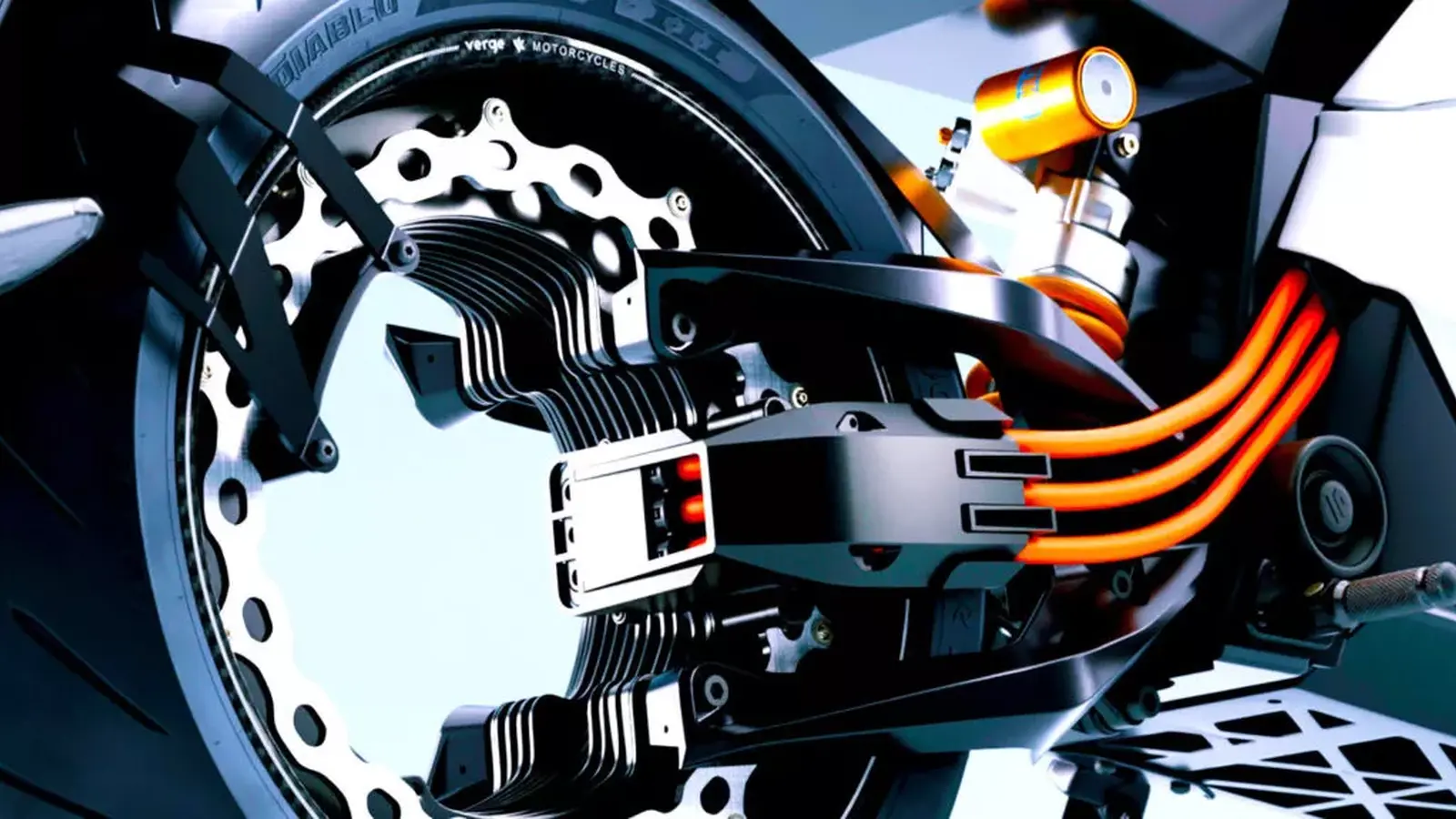
Ten minutes. That’s all it took to turn a nearly drained electric motorcycle into something ready for the road again. Not in a lab, not under idealized conditions—but at a public charger, in plain view.
That moment, staged by Finland’s Donut Lab alongside Verge Motorcycles, hints at a shift the two-wheel world has been waiting for. Electric bikes have always trailed behind cars in one critical area: charging speed. Range anxiety is one thing—but waiting around with a helmet in hand? That’s a dealbreaker.
Now, things might be changing.

Fast charging, without the usual complexity
The bike used in the demonstration wasn’t even Verge’s newest machine. It was an older TS Pro, retrofitted with Donut Lab’s latest battery pack—an 18 kWh unit designed with a different philosophy. During the test, it pulled over 100 kW at peak and climbed from 10% to 70% in just over nine minutes. Stretch it to 80%, and you’re looking at roughly 12 minutes total.
On paper, 100 kW doesn’t sound groundbreaking. Not when Chinese automakers are throwing around numbers like 1,000 or even 1,500 kW. But here’s the twist: those systems rely on complex liquid cooling setups to keep temperatures under control.
This one doesn’t.
Donut Lab’s battery is air-cooled—simpler, lighter, and easier to package inside a motorcycle, where space is always at a premium. That makes the performance far more impressive than the raw numbers suggest. It’s not just about speed; it’s about achieving that speed without adding bulk or complexity.
And it’s already a leap forward. According to the company, this new pack charges up to three times faster than Verge’s previous-generation battery.

Why this matters for electric motorcycles
Electric motorcycles have struggled to gain mainstream traction, and it’s not because they lack performance. If anything, instant torque and silent acceleration are their strongest selling points. The real issue has been usability—range, charging time, and infrastructure.
This is where Donut Lab’s approach could tip the balance. By focusing on high energy density and efficient thermal behavior without liquid cooling, the company is tackling the exact constraints that make motorcycle design so challenging.
Ville Piippo, Donut Lab’s chief technology officer, described the test as a real-world proof point—multiple battery cells operating under genuine riding conditions, not simulations. That distinction matters. It suggests the tech isn’t just promising; it’s practical.
There’s also room to grow. Donut Lab says charging performance will improve further as Verge fine-tunes the system. In other words, this isn’t the ceiling—it’s the starting line.
For riders, the implications are simple. Less waiting. More riding. And maybe, finally, a reason to take electric motorcycles seriously.

“I cover automotive innovation, electric vehicles, and the future of mobility — where technology meets sustainability.”

Discussion
Leave a Comment