
4 Minutes
Two percent. That’s all Elon Musk says he can currently secure of the chips his companies actually need. Not 20%. Not even 10%. Just two. So instead of waiting for the semiconductor industry to catch up, he’s doing what he tends to do—building his own solution from scratch.
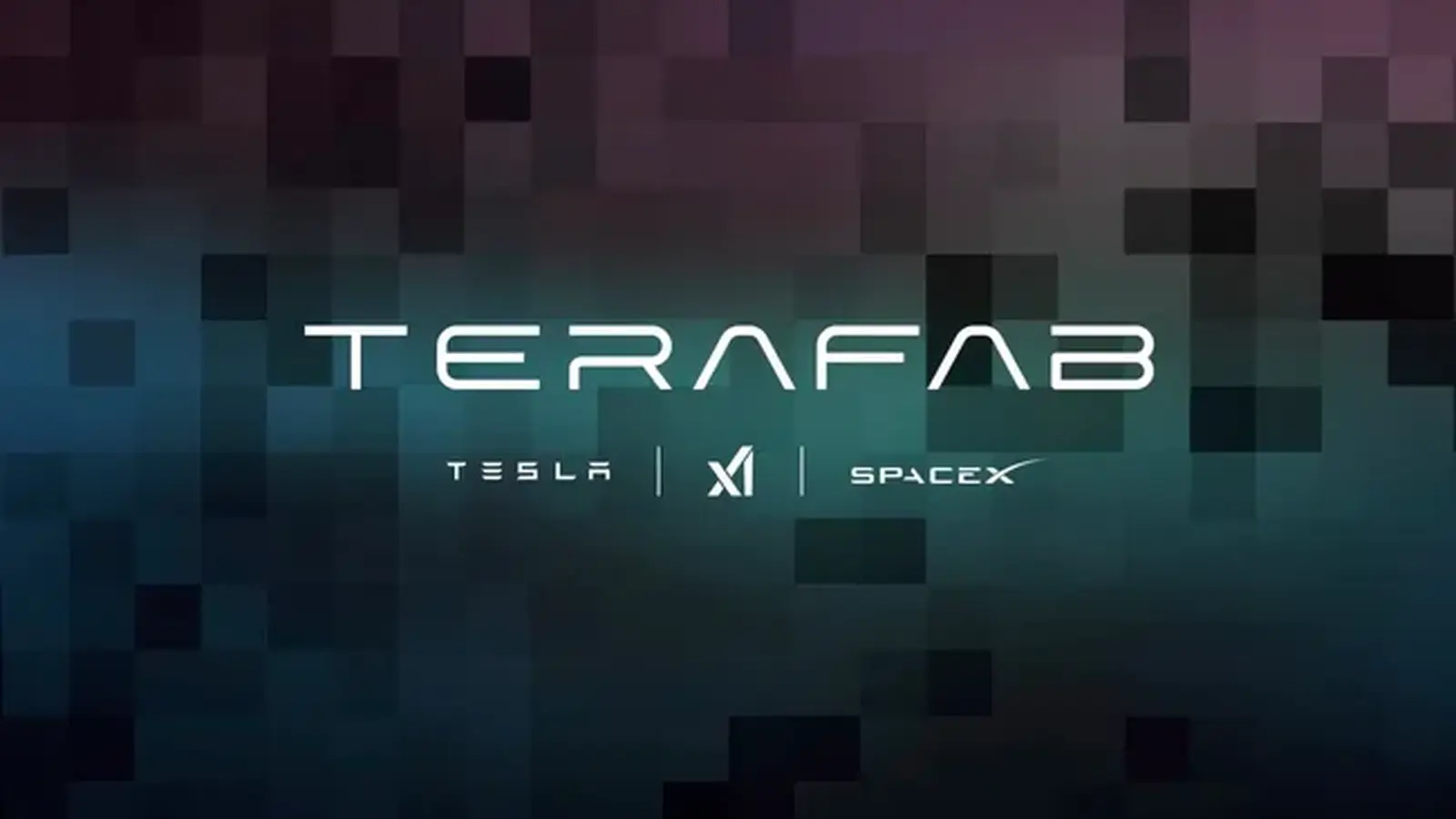
Over the weekend in Austin, Musk unveiled “TeraFab,” a chip manufacturing project that sounds less like a factory and more like a controlled experiment in rewriting how chips are made. The announcement, delivered via livestream from the old Seaholm Power Plant, carried his usual mix of urgency and inevitability: either they build it, or they run out of chips. Simple as that.
The planned facility will rise on Tesla’s campus in eastern Travis County, backed by a joint effort between Tesla and SpaceX. But the real story isn’t where it’s being built. It’s how.
One Roof, No Bottlenecks
Traditional chip manufacturing is fragmented. Design happens in one place, fabrication in another, packaging somewhere else entirely. Each step adds time, cost, and friction. TeraFab aims to collapse that entire pipeline into a single, tightly integrated environment.
From lithography masks to logic and memory chip production, all the way through testing and packaging—everything happens under one roof. Musk claims no existing facility operates quite like this at scale.
The payoff? Speed. The kind that could fundamentally reshape how chips evolve.
Engineers could design a chip, test it, tweak it, and run a new version almost immediately without waiting on external partners. That compressed loop, Musk argues, could accelerate progress by an order of magnitude. In an industry where iteration cycles can stretch for months, that’s not a small claim.
And then there’s the demand driving all of this.
TeraFab isn’t being built for generic processors. It has two very specific targets. The first: edge inference chips designed for Tesla’s vehicles and its Optimus humanoid robots. Musk didn’t downplay the scale here—he suggested future robot production could land somewhere between one billion and ten billion units annually. Even by Silicon Valley standards, that’s an audacious projection.
The second category is even more specialized: radiation-hardened chips built for space. These are designed to survive environments that would quickly degrade or destroy conventional silicon, making them essential for SpaceX missions and beyond.
Despite the ambition, Musk isn’t cutting ties with existing suppliers. He confirmed Tesla, SpaceX, and xAI will continue sourcing chips from industry giants like TSMC, Samsung, and Micron—and even encouraged them to scale faster.
Ambition Meets Reality
There’s no denying the appeal. A vertically integrated chip factory capable of rapid iteration could push the boundaries of semiconductor design in ways the current system struggles to match. It’s the kind of idea that feels both obvious and wildly difficult at the same time.
But there’s a familiar wrinkle: timing.
No production timeline was shared during the announcement. And for those who remember Tesla’s long-promised Roadster—first revealed over a decade ago and still not delivered—that absence matters.
So yes, TeraFab sounds like a leap forward. Maybe even a necessary one. But until silicon actually starts rolling off those Austin production lines, it remains what many of Musk’s boldest ideas begin as: a compelling vision, waiting to prove itself in the real world.
Source: digitaltrends


Comments
astroset
Is this even true? No timeline, mega claims, and more robots than sense... feels like hype until real chips roll off the line. curious tho
mechbyte
wow, only 2%? wild. If TeraFab can really loop design test package all under one roof thatd be a game changer, but sounds huge and risky when does it actually start?

Leave a Comment