
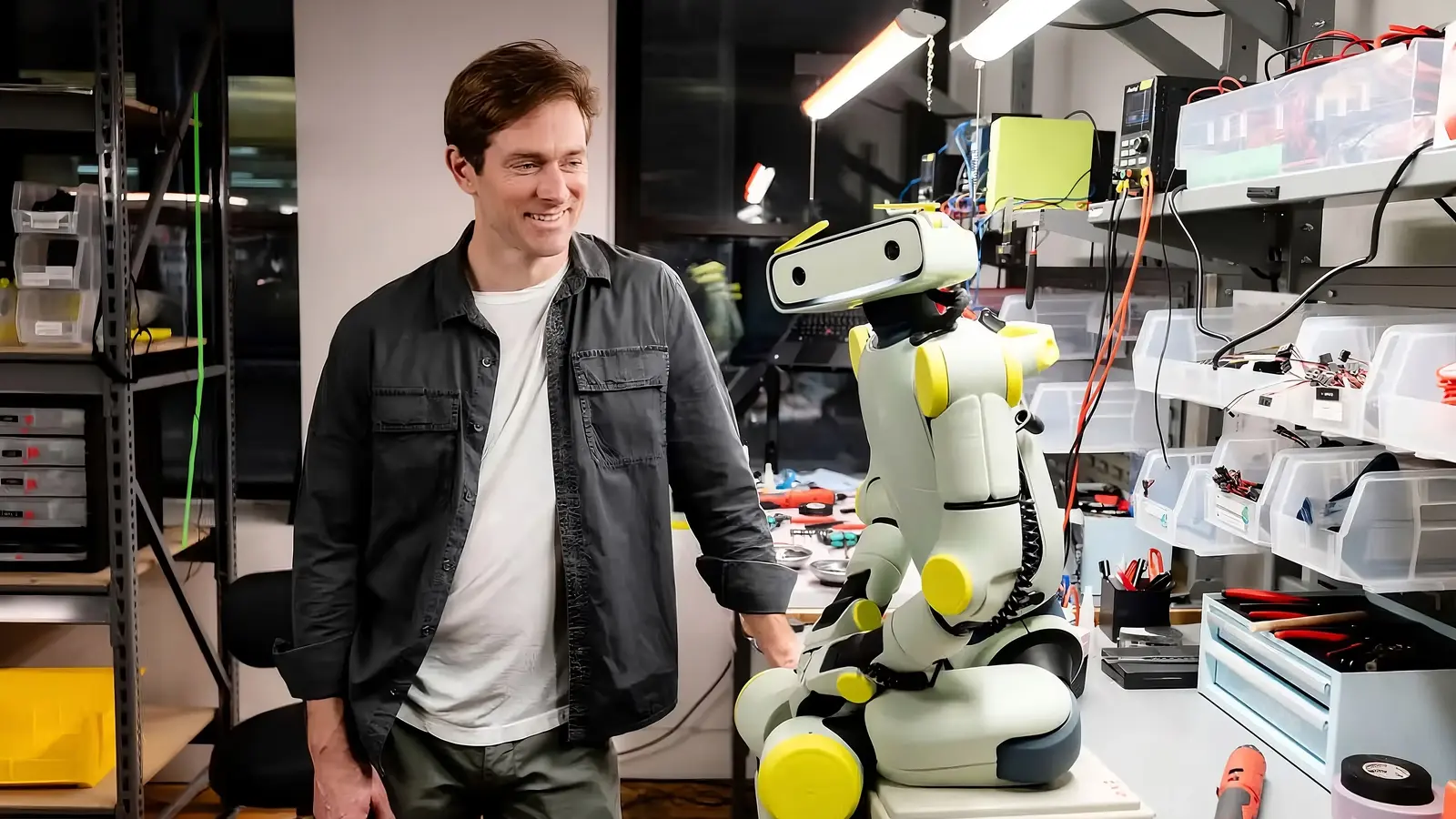
A $50,000 robot that smiles, moves on its own, and chats back might sound like a sci-fi prop—but Amazon is treating it like the next frontier of everyday tech.
The company has acquired Fauna Robotics, a young startup that only surfaced publicly weeks ago with a striking debut: a humanoid machine named Sprout. It doesn’t just sit there looking impressive. It moves through spaces independently, recognizes people, manipulates objects with its hands, and communicates using expressive gestures and conversation. In short, it behaves less like a tool and more like a presence.
Details around the deal remain tightly held, but the direction is hard to miss. Fauna’s founders and team are reportedly heading to Amazon’s New York office, folding their work directly into a company that has been quietly stacking robotics expertise at an accelerating pace.
Not Just Warehouses Anymore
Amazon’s robotics story used to revolve around fulfillment centers—machines gliding across warehouse floors, optimizing logistics behind the scenes. That chapter isn’t closing, but it’s no longer the whole picture.
Just days before this acquisition surfaced, Amazon snapped up Rivr, a Swiss startup building delivery robots designed for the “last few meters” problem—getting packages from curb to doorstep. Their wheeled, four-legged machines already assist drivers in real-world conditions.
Put the pieces together and a broader ambition starts to emerge. Amazon isn’t just automating infrastructure; it’s inching toward robots that operate in human environments, close to customers, and eventually inside homes.
That’s where Sprout becomes especially interesting. Unlike industrial robots, it’s designed for interaction. It reacts. It engages. It’s built with personality in mind, not just productivity.
The Price Tag Tells Its Own Story
At roughly $50,000, Sprout sits in a curious middle ground—too expensive for casual consumers today, yet entirely plausible for businesses, labs, or early adopters. The comparison often floated in robotics circles is telling: owning a robot may soon resemble owning a car, complete with financing models and long-term value calculations.
For companies, the math could already make sense. A humanoid robot capable of customer interaction, assistance, or repetitive physical tasks isn’t just a novelty—it’s a potential workforce extension.
Amazon, for its part, hasn’t outlined exactly how it plans to deploy Fauna’s technology. Its public statement leans on familiar themes: safety, usefulness, and improving everyday life. But reading between the lines, this is less about a single product and more about capability building.
Because once you have robots that can move, see, understand, and respond, the applications multiply fast.
Still, expectations need tempering. The 2020s have pushed robotics forward in meaningful ways, especially with AI-driven perception and interaction. Yet widespread adoption of humanoid robots—especially in homes—likely sits years away. Costs need to fall. Reliability needs to rise. And people need time to get comfortable sharing space with machines that feel, well, a little human.
Amazon seems willing to wait. And more importantly, to build.

“I love exploring gadgets, apps, and trends that redefine how we connect, work, and play in a digital world.”

Discussion
Leave a Comment