
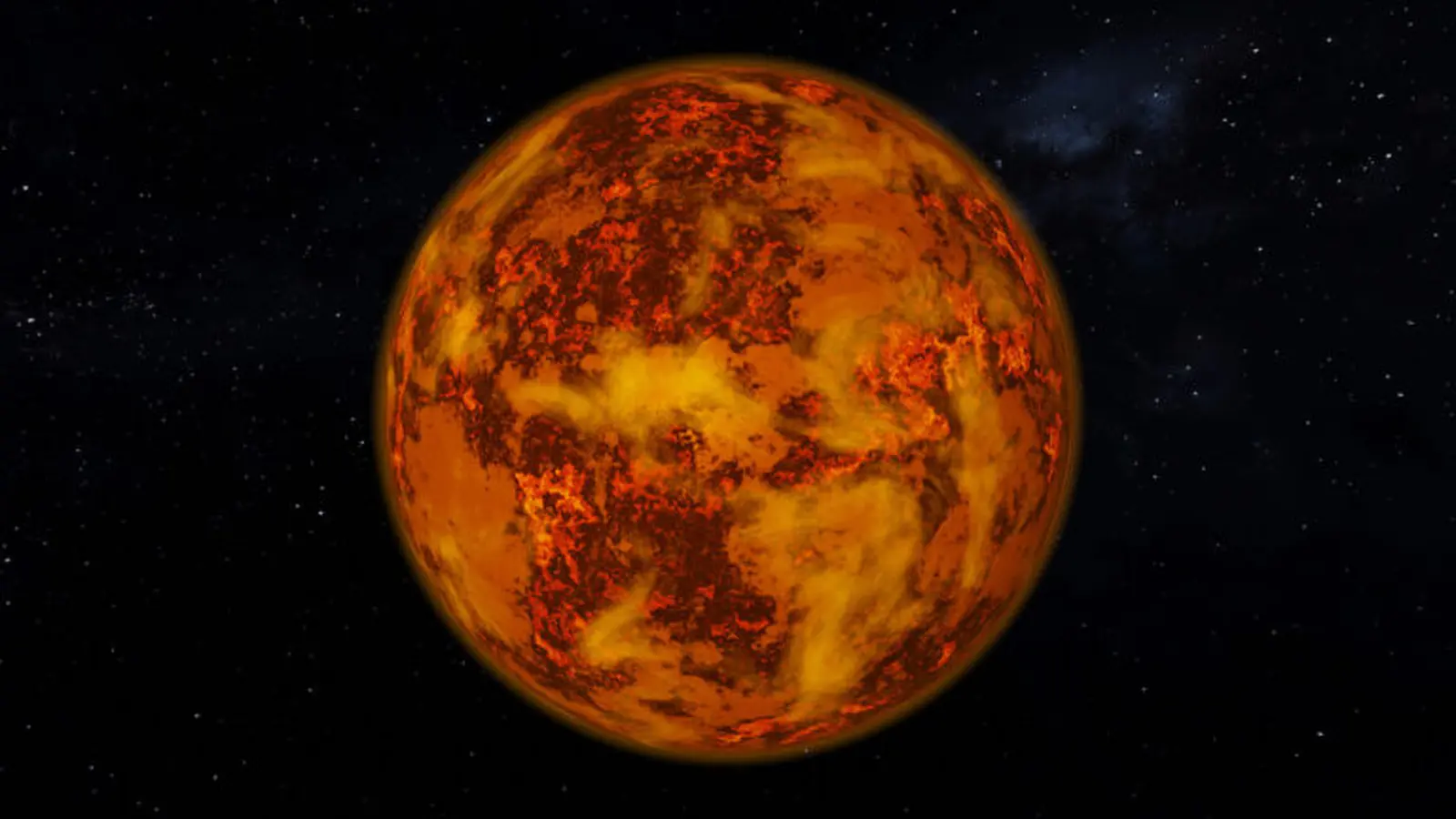
Scientists have uncovered chemical traces of Earth's earliest form — a so-called "proto Earth" — preserved inside rare, ancient rocks pulled from deep within the mantle. These tiny isotopic fingerprints survived 4.5 billion years of stirring, impacts and mantle convection, offering a direct glimpse of conditions on our planet before the Moon-forming collision.
Finding a needle in a haystack: how tiny isotopes reveal planetary origins
Imagine being able to pick out a single grain in a bucket of sand and use it to reconstruct the bucket's history. That is the scale of this discovery. An international research team led by geochemists analyzed ancient rocks from Greenland, Canada and Hawaii and detected a unique potassium isotopic signature — one that doesn't match any known geological process or previously catalogued meteorite class.
Potassium has a radioactive isotope, potassium-40, and variations in potassium isotopes can act as tracers of a rock’s origin. Earlier meteorite studies suggested that different meteorite families carry distinct potassium fingerprints. Building on that work, the team looked specifically for a deficit in potassium-40 that would signal material distinct from later-arriving meteorites and modern mantle chemistry.
.avif)
Models showed that the potassium signature fitted with later arrivals of meteorites.
What the rocks tell us about Earth's earliest 100 million years
The chemical signature the researchers measured is consistent with material formed in the brief window before a colossal collision with a Mars-sized object — often called Theia — reshaped the young planet and produced the Moon. According to the study, this proto-Earth phase may have lasted on the order of 100 million years. The unique potassium isotope ratio survived despite the violent collisions and internal mixing that followed.
"This is maybe the first direct evidence that we've preserved the proto Earth materials," says geochemist Nicole Nie of MIT. "We see a piece of the very ancient Earth, even before the giant impact. This is amazing because we would expect this very early signature to be slowly erased through Earth's evolution."
Methods: rock sampling, isotope analysis and computer simulations
To build their case, scientists combined high-precision isotope measurements with computer models. Samples came from three different environments: ancient continental rocks in Greenland and Canada, and volcanic material from Hawaii, where plumes can tap deep mantle reservoirs. In the lab, mass spectrometry revealed the rare potassium isotopic anomaly.
Next, researchers ran simulations using compositions of known meteorite groups and modeled how isotopic signatures would evolve over billions of years of geological processing and impacts. When those altered signatures were compared with the measured potassium pattern, the best match pointed to material from the proto Earth rather than later accreted meteorites or current mantle processes (Wang et al., Nat. Geosci., 2025).
Implications: incomplete meteorite inventory and planetary assembly
One surprising implication is that our current collection of meteorites — the record we use to reconstruct the Solar System's building blocks — is incomplete. If the proto-Earth material has a signature not seen in known meteorites, then there may be classes of early Solar System fragments we haven't sampled on Earth or in space yet.
That gap has consequences for models of planetary formation. Many reconstructions assume the planet formed from a mixture represented by known meteorite groups. The new evidence suggests Earth incorporated at least one additional component with a distinct isotopic chemistry.
Where this research goes next
Future work will target more samples from diverse deep-mantle sources and refine isotopic measurements for other elements. Missions that return pristine asteroid material, and improved meteorite hunting in Antarctica and deserts, could help locate meteorite types that match the proto-Earth fingerprint. Better constraints on early Solar System reservoirs will sharpen our picture of how Earth — and by extension other terrestrial planets — assembled.
Expert Insight
Dr. Amina Shah, a planetary scientist not involved in the study, offers context: "Finding a preserved proto-Earth signature is like discovering an original page from a book we thought had only rewritten copies. It doesn't overturn existing models, but it forces us to add missing chapters that explain how different raw materials were incorporated into the growing Earth."
The discovery, published in Nature Geoscience, demonstrates how high-precision geochemistry, targeted sampling and numerical modeling can recover signals from the earliest chapters of planetary history. For anyone curious about Earth's origin, these rare isotopic traces are a new and direct way to read what the planet looked like before the Moon-forming impact.

“The cosmos has always fascinated me. I write about space missions, astronomy, and the technologies pushing humanity beyond Earth.”

Discussion
Leave a Comment