
3 Minutes
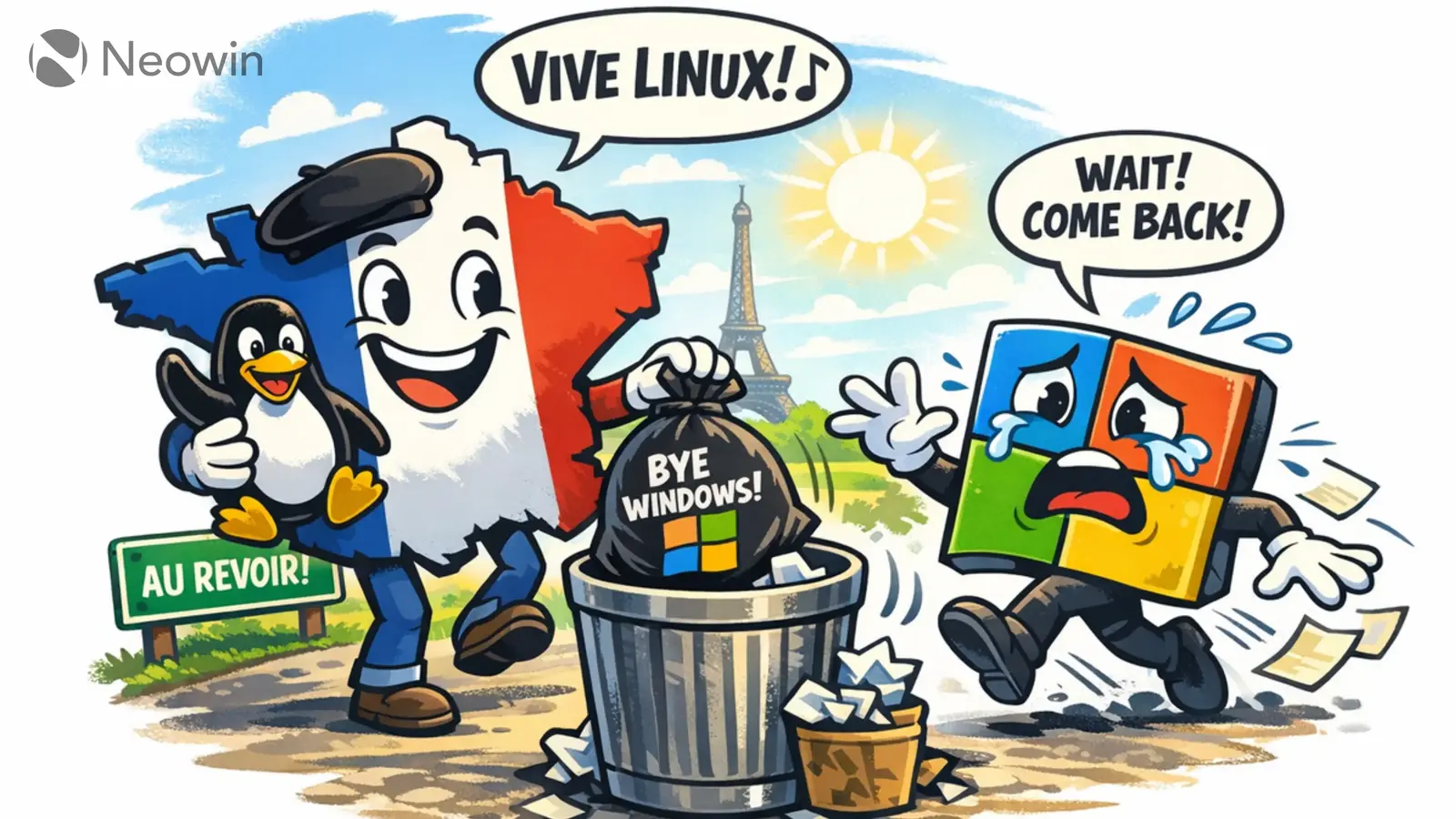
France is preparing to do what once sounded unthinkable in a modern European government: step away from Windows and build its public sector around European technology instead. The move is not just about software choice. It is about control, independence, and a growing unease with how much of the continent’s digital infrastructure still depends on American vendors.
What started as a local shift in Lyon has now become a national signal. The French city had already begun replacing Windows and Microsoft Office with Linux and other free and open source alternatives. Now Paris is following a similar path, but on a much larger scale, with government bodies agreeing to reduce reliance on what officials describe as “extra-European” technologies.
A quieter break with Big Tech
According to reports, several French government agencies met earlier this week and lined up behind a broader strategy to favor tools developed within the European Union. That means future procurement decisions will increasingly prioritize local or regional providers over software and hardware tied to the United States.
The Direction interministérielle du Numérique, or DINUM, has already outlined the first major step: moving government PCs away from Windows and onto Linux-based operating systems. No single distribution has been named yet, but the direction is unmistakable. France also plans to migrate its health data platform to what it calls a “trusted solution” by the end of the year.
The shift does not stop at desktop computers. Each ministry must present its own migration plan by the fall, and those plans are expected to cover collaboration tools, antivirus software, database systems, AI services, and network equipment. In other words, this is not a symbolic gesture. It is a full audit of how deeply foreign tech runs through the state.
Minister of Public Action and Account David Amiel put it bluntly: the state can no longer simply recognize its dependence. It has to break free. He said France must reduce its reliance on American tools and regain control over its digital future, warning that data, infrastructure, and strategic decisions should not be left in the hands of outside companies whose rules and pricing the government cannot control.
Digital sovereignty, in France’s view, is no longer a political slogan. It is a practical necessity.
This is part of a broader European pattern. Denmark announced last year that it was moving away from Windows and Microsoft Office, while the German city of Munich famously went in the opposite direction after spending years on Linux. The contrast says a lot about the current state of public-sector IT in Europe: there is no single playbook, only a growing urgency to reduce dependency and keep more control at home.
For France, the message is clear. The era of treating core government software as a neutral convenience is ending. What comes next will be slower, messier, and probably expensive. But for officials in Paris, that is the price of digital independence.
Source: neowin


Comments
Marius
I worked in muni IT, migrations always take longer and cost more than promised, but regaining control sounds worth it. hope they plan well
atomwave
Moving the whole state to Linux? Sounds bold but who pays the migration bill, compatibility issues galore... curious how they'll do it.

Leave a Comment