
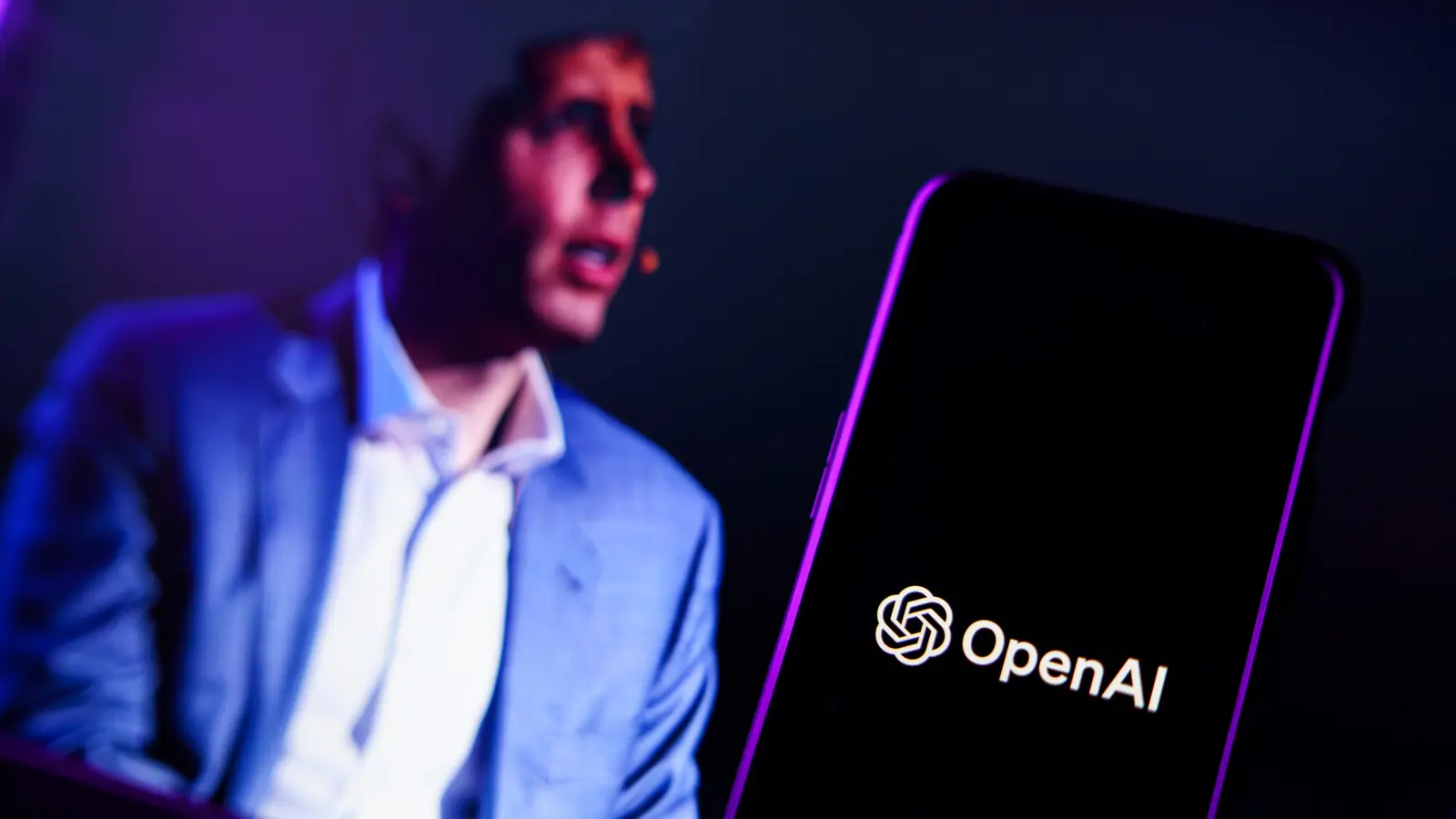
Sam Altman is trying to cool one of the hottest fears in tech: that artificial intelligence is being built to erase human work. In a series of posts on X, the OpenAI chief said the company’s real aim is not to replace people with digital stand-ins, but to create tools that expand what people can do.
His wording was deliberate. OpenAI, he said, wants to “augment and elevate” humans, not build systems meant to take their place. That message lands at a tense moment, because the labor market has been rattled by layoffs across tech, media, gaming, and recruitment, with AI increasingly cited as part of the reason.
The anxiety is not abstract anymore. At King, the studio behind Candy Crush, staff who helped build internal AI tools to speed up level creation were reportedly let go after the system was ready. Last year, Indeed and Glassdoor also cut roughly 1,300 jobs as AI became more capable of handling candidate matching and hiring workflows. For workers watching these shifts unfold, promises about “augmentation” can sound painfully disconnected from reality.
That is exactly why Altman’s comments matter. He is pushing back against the growing belief that AI will consume whole professions, one after another, until little is left. According to him, that long term view is probably wrong. His argument is that technology has always changed the shape of work, and that people eventually move into new roles, often ones that are more rewarding than the jobs left behind.
He went even further, sketching out a future in which prosperity is less tightly chained to relentless labor. In his telling, advanced AI could help create a world where people are freer to choose how hard they want to work and still enjoy a high quality of life. It is an optimistic vision. Maybe too optimistic for people who have already seen automation hit their own teams.
The split inside AI’s leadership class
Altman’s remarks also land in the middle of a longer running philosophical clash in the AI industry. Anthropic CEO Dario Amodei has taken a far darker public line, warning repeatedly that AI could soon write most code and reshape white collar work far faster than many people expect. His timeline has been blunt: six to twelve months for major disruption in software development.
That contrast is not just about messaging. It reflects a deeper divide over how AI should be built, how fast it should be deployed, and how honest executives should be about the fallout. Amodei, a former OpenAI researcher, left the company around 2020 and helped found Anthropic alongside his sister and several colleagues after growing uneasy with OpenAI’s direction on safety and commercialization.
The relationship between the two camps has been strained for years, and recent events have only sharpened it. After the Pentagon reportedly dropped a contract with Anthropic, OpenAI moved in and secured the opportunity. That kind of rivalry has turned increasingly public, and industry watchers noticed another icy moment during the 2026 AI Summit in India, where Altman and Amodei reportedly refused to join hands during a staged unity photo with other tech leaders.
Altman, for his part, has faced criticism before when discussing the value of modern office work. In earlier remarks, he suggested many white collar roles being phased out were not “real work” in the same way as physically demanding jobs like farming. The backlash was immediate. To many listeners, it sounded less like historical perspective and more like Silicon Valley shrugging at the livelihoods of millions.
That is the challenge now facing every AI company, not just OpenAI. The public hears two competing stories at once. One says AI will be a co-pilot, a productivity engine, a tool that makes human talent more powerful. The other says the software is learning fast enough to become the worker itself. Both stories contain some truth, and that is what makes this moment so unsettling.
Altman wants people to believe AI can lift human potential rather than flatten it. The problem is that the layoffs are real, the corporate incentives are obvious, and workers have seen enough to know that efficiency often comes with a human cost. Until the industry can prove that augmentation creates more opportunity than displacement, skepticism will remain not just reasonable, but inevitable.

“I love exploring gadgets, apps, and trends that redefine how we connect, work, and play in a digital world.”

Discussion
Leave a Comment