
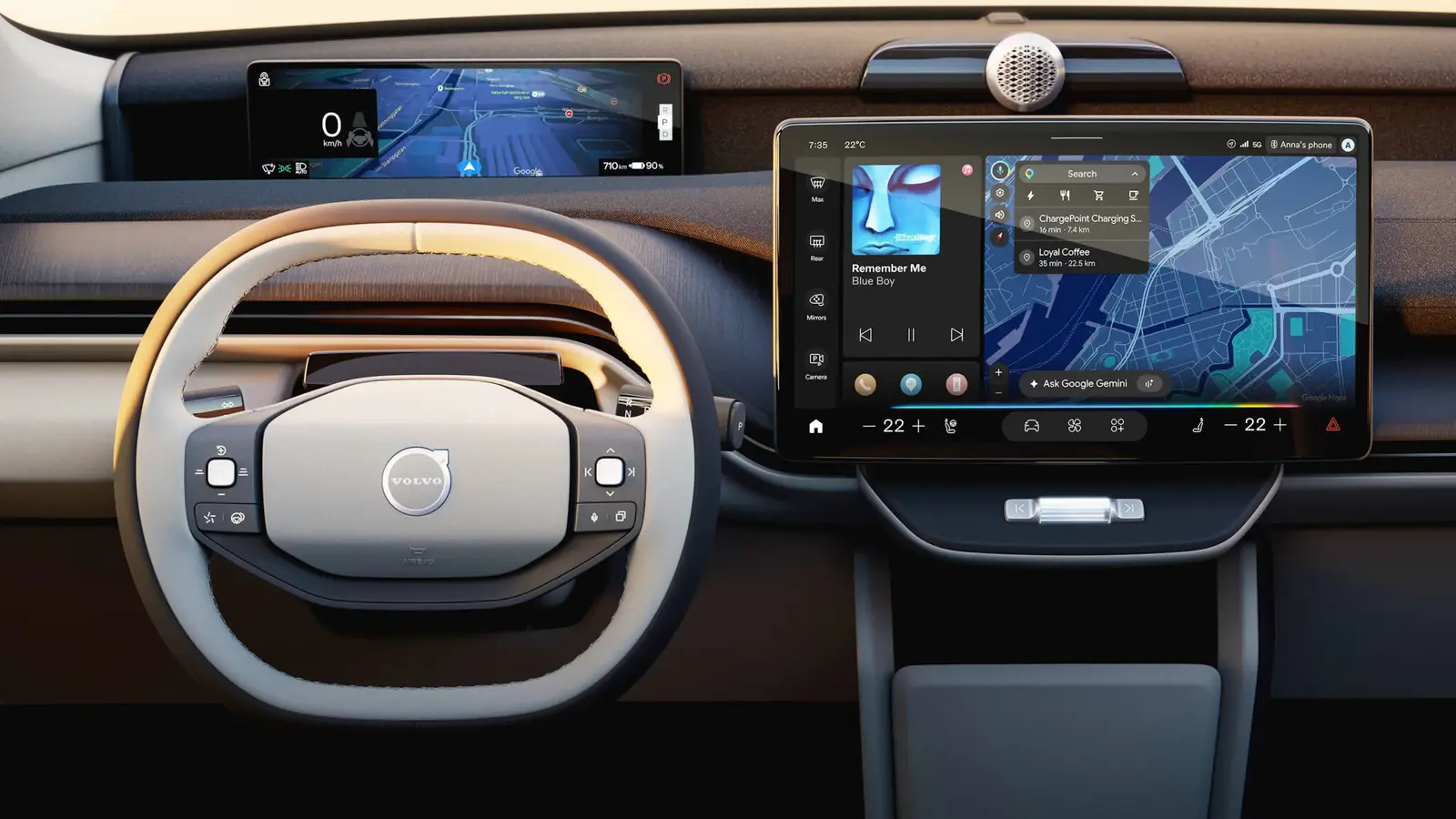
Anyone who has ever barked the same command at a car three times knows how bad in-car voice assistants used to be. They were slow, rigid, and strangely talented at misunderstanding the simplest request. That era is starting to fade fast.
Google Gemini is now moving into millions of vehicles, giving drivers something car tech has promised for years but rarely delivered: a voice assistant that feels less like a broken menu system and more like an actual conversation. General Motors says it will begin rolling out Gemini to around 4 million vehicles in the United States equipped with Google built-in, the Android Automotive-based platform integrated directly into the car.
The update covers 2022 and newer models from Cadillac, Chevrolet, Buick, and GMC. In practice, that means a huge number of drivers are about to swap the older Google Assistant for something far more capable. And this is not just a minor software refresh. It changes the way drivers can interact with navigation, media, search, and everyday planning while on the move.
Instead of memorizing stiff, robotic commands, users can speak naturally. Ask Gemini to build a road trip playlist. Have it pull up restaurant reviews along your route. Use it to brainstorm holiday ideas for the family, or even rehearse a difficult conversation before an important meeting. That is the real shift here: the car is no longer just waiting for commands. It is starting to understand context.

Not just for GM drivers
GM is not alone. Polestar is also bringing Gemini across its full model lineup in the US, while Volvo has already added the new assistant to a long list of vehicles. That includes the C40, EC40, EX40, XC40, S60, V60, XC60, V90, S90, XC90, EX90, ES90, EX30, and EX60. Taken together, it marks one of the biggest upgrades yet for cars running Google built-in.
Gemini already appeared in Android Auto last year through smartphone mirroring, so some drivers have had an early taste of what it can do. But having it built directly into the vehicle matters more. Native integration tends to feel smoother, quicker, and better tied into the car's own systems, which is exactly where voice tech has often fallen apart in the past.
That difference matters because bad voice control has never just been annoying. It has been distracting. When a system fails to understand a basic request, drivers end up repeating themselves, poking at screens, or giving up entirely. A smarter assistant has the potential to reduce that friction. Ironically, it also introduces a new challenge.
Gemini is good enough to encourage longer, more complex exchanges. That can be useful. It might help you learn a language during a commute or sort through plans on a long drive. But there is a fine line between helpful and distracting. A deep conversation with an AI assistant can pull attention away from the road just as easily as chatting with a passenger.
So yes, this is a big step forward for connected cars, and for drivers tired of outdated infotainment systems that seem stuck in 2014. But the real test will not be whether Gemini can talk more naturally. It will be whether it makes life behind the wheel easier without demanding too much of the driver's focus.
For now, though, one thing is clear. The age of painfully dumb car voice assistants is finally coming to an end, and for GM, Polestar, and Volvo owners, that future is arriving sooner than expected.

“I cover automotive innovation, electric vehicles, and the future of mobility — where technology meets sustainability.”

Discussion
Leave a Comment