
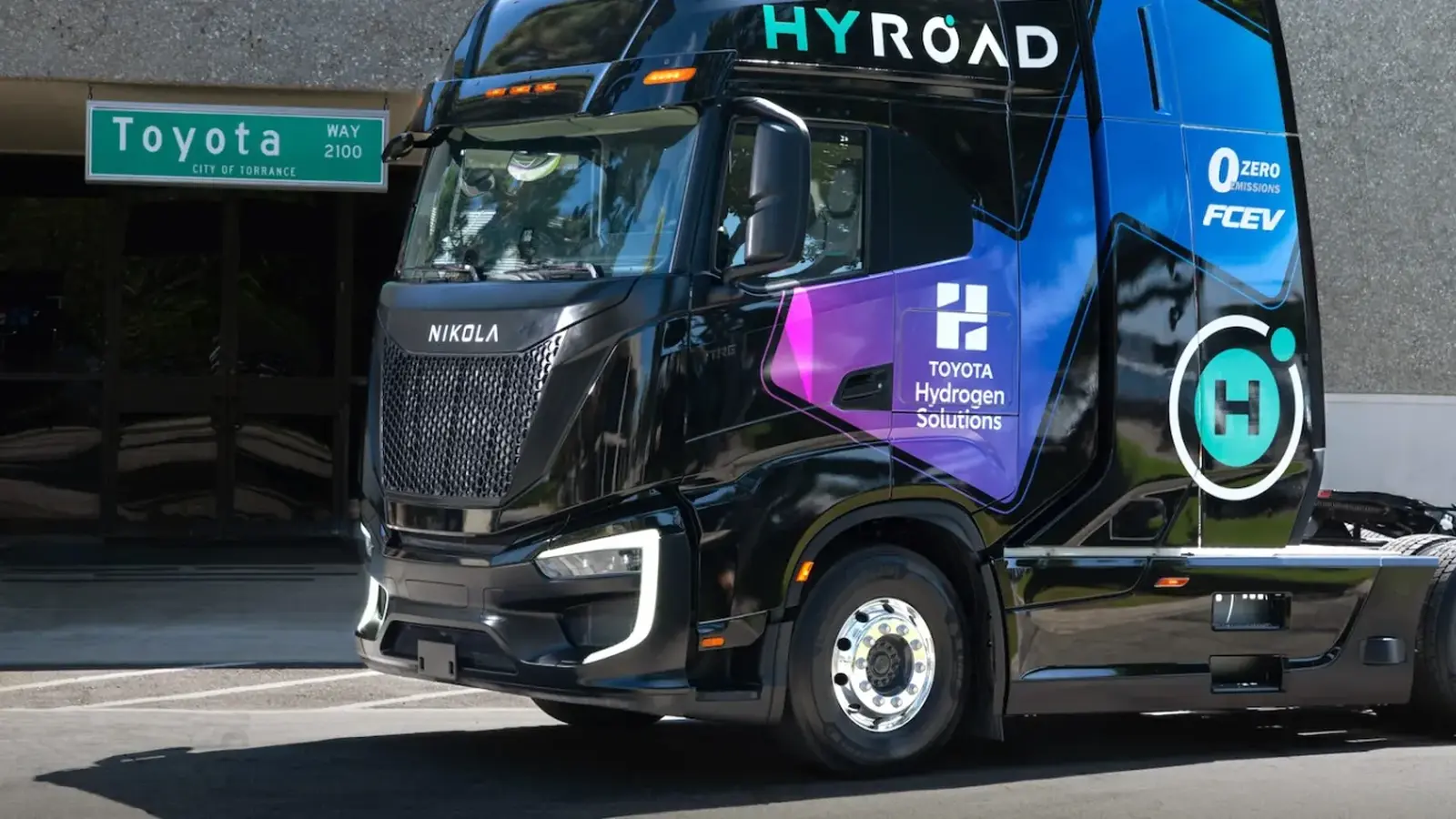
Toyota is back in the hydrogen trucking conversation, this time with a fresh Southern California alliance that says as much about persistence as it does about strategy.
The company has teamed up with Hyroad Energy, a fueling venture linked to Nikola, to push hydrogen-powered freight operations forward with a bundled approach: trucks, refueling access, maintenance, software, and logistics support all under the same umbrella. The plan starts with 40 new hydrogen fuel cell Class 8 trucks for use in Southern California, a region that remains one of the few serious testing grounds for zero-emission freight at scale.
Toyota framed the move as a practical step toward building a functioning hydrogen ecosystem rather than simply adding vehicles to a fleet. Jason Zahorik, general manager of Toyota Hydrogen Solutions, said the heavy-duty segment will only move faster if multiple pieces of the puzzle come together at once. In Toyota’s view, fuel cell trucks are not meant to stand alone. They need infrastructure, operational backing, and a business case that works in the real world.
The announcement was made at ACT Expo in Las Vegas, where Hyroad displayed a wrapped hydrogen truck at Toyota’s exhibit. That staging was no accident. It sent a clear signal: Toyota wants to be seen not just as a vehicle manufacturer, but as an active player in the broader hydrogen supply chain.
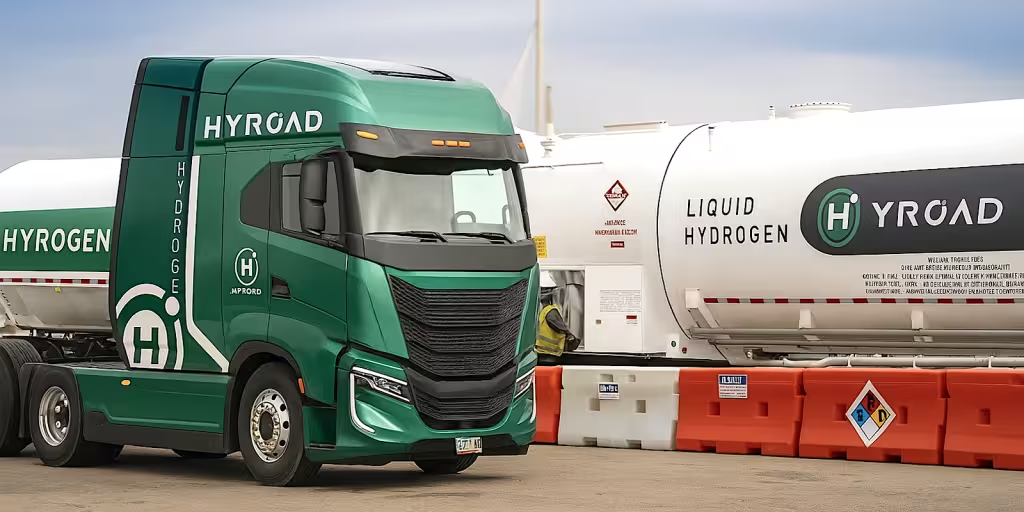
There is a bigger piece to the deal. Under the agreement, Hyroad will give Toyota access to 117 hydrogen-powered Class 8 semi trucks acquired during Nikola’s bankruptcy auction, along with the maintenance, telematics, and software tools needed to keep those vehicles operating within Toyota’s freight network. That detail matters, because it shifts the story from a simple pilot project to something more ambitious. Toyota is not merely testing a concept. It is trying to assemble a working commercial model around hydrogen logistics.
Dmitry Serov, founder and CEO of Hyroad Energy, described Toyota as a company willing to invest directly in the hard parts of the hydrogen business instead of waiting for someone else to build the market first. His argument is familiar to anyone who has followed fuel cell transport over the past decade: hydrogen trucking only begins to make sense when vehicles, fueling, digital tools, and day-to-day fleet operations are developed together.
Why Toyota still believes
Toyota says its hydrogen Class 8 trucks can refuel in roughly the same window as a diesel semi, with about 805 kilometres of range added in 15 to 20 minutes. On paper, that remains one of hydrogen’s strongest selling points. Fleet operators care deeply about uptime, and long charging sessions are still seen by some logistics firms as a hurdle for battery electric trucks on demanding routes.
Still, that argument lands differently in 2026 than it did a few years ago. Battery electric truck technology is advancing quickly, charging speeds are improving, and China in particular is pushing ultra-fast charging systems that continue to narrow one of hydrogen’s headline advantages. Add ongoing gains in battery density, powertrain efficiency, and route optimization, and the competitive case for fuel cell freight becomes harder to make without heavy infrastructure support.
That is exactly why this partnership is interesting. It is not just about 40 trucks. It is about Toyota refusing to step away from a technology it has backed for more than 30 years. The company has spent decades developing fuel cell systems and investing in hydrogen infrastructure, and commercial trucking appears to be the sector where it still sees a chance to prove the concept at meaningful scale.
Critics will read this as a company defending a long and expensive bet. Supporters will call it strategic patience. Either way, Toyota is clearly not ready to concede the zero-emission freight market to battery electric rivals.
And that may be the real story here. Not whether hydrogen has already won or lost, but whether one of the world’s biggest automakers can keep the technology alive long enough for the market to decide. Southern California, with its freight density, air-quality pressure, and clean transport incentives, is one of the few places where that question can still be tested seriously.
More consolidation and cooperation across the heavy-duty sector would not be surprising from here. As hydrogen projects become more expensive and timelines grow longer, major players will likely keep looking for partners that can spread the cost, share the risk, and preserve at least a fighting chance for fuel cell trucking.

“I cover automotive innovation, electric vehicles, and the future of mobility — where technology meets sustainability.”

Discussion
Leave a Comment