
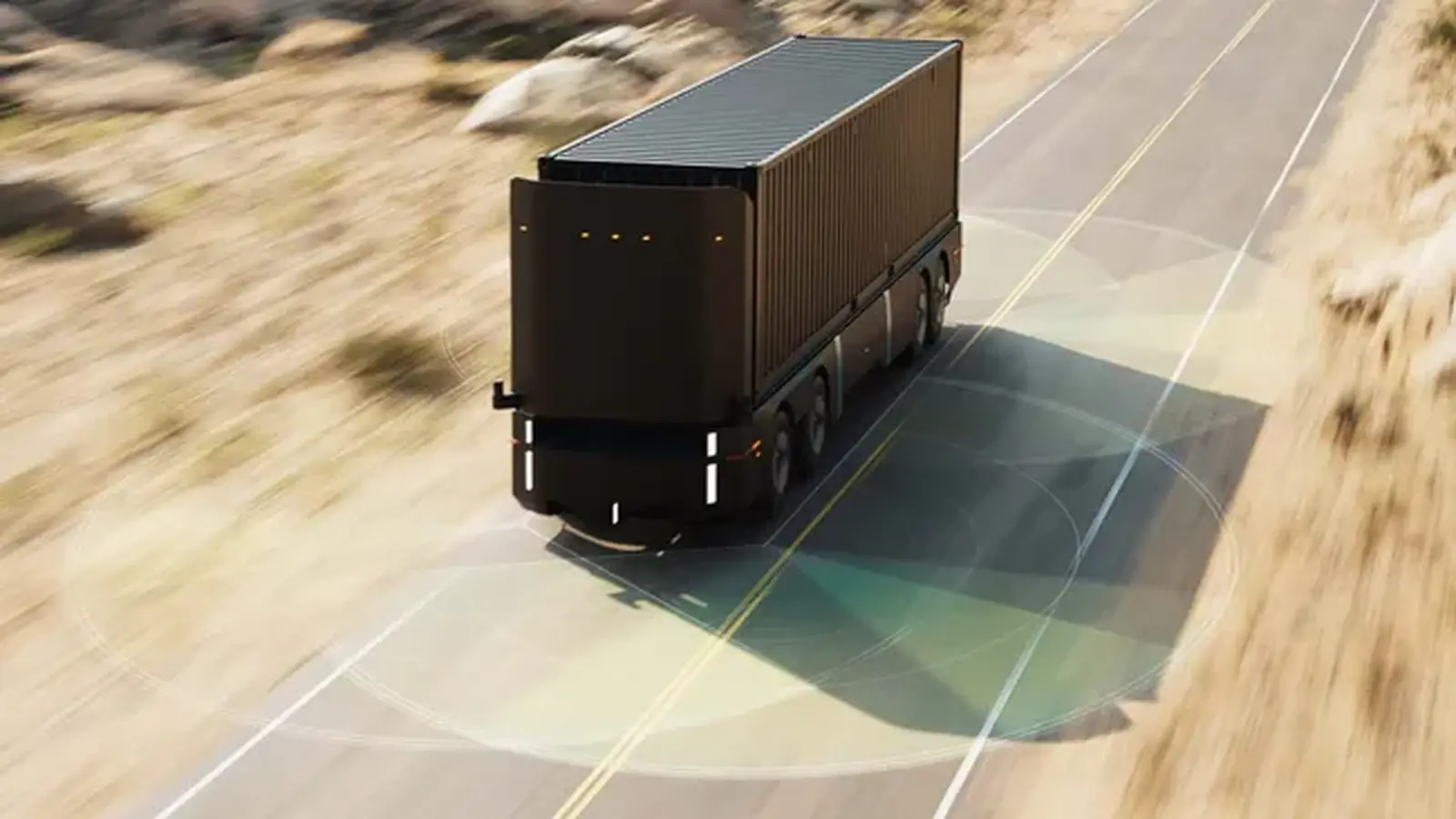
It looks less like a truck and more like something that rolled out of a science fiction sketchbook. No cab. No driver. No familiar shape to reassure anyone who has spent years around freight yards and loading docks. Yet that is exactly why Humble Robotics is getting so much attention right now.
The California start-up has unveiled the Humble Hauler, an autonomous electric freight vehicle that strips the idea of a truck down to its most utilitarian form. Instead of building around a human driver, the company has designed a machine that treats cargo movement as a software problem, with sensors, onboard computing, and AI taking the place of the person behind the wheel.
Humble says the vehicle is built to think more like a human operator when it faces messy, real-world situations. That claim is doing a lot of work, of course, but the ambition is clear. The company is not pitching another driver-assist tool or a conventional electric lorry with automation layered on top. It is trying to rethink freight handling from the ground up.
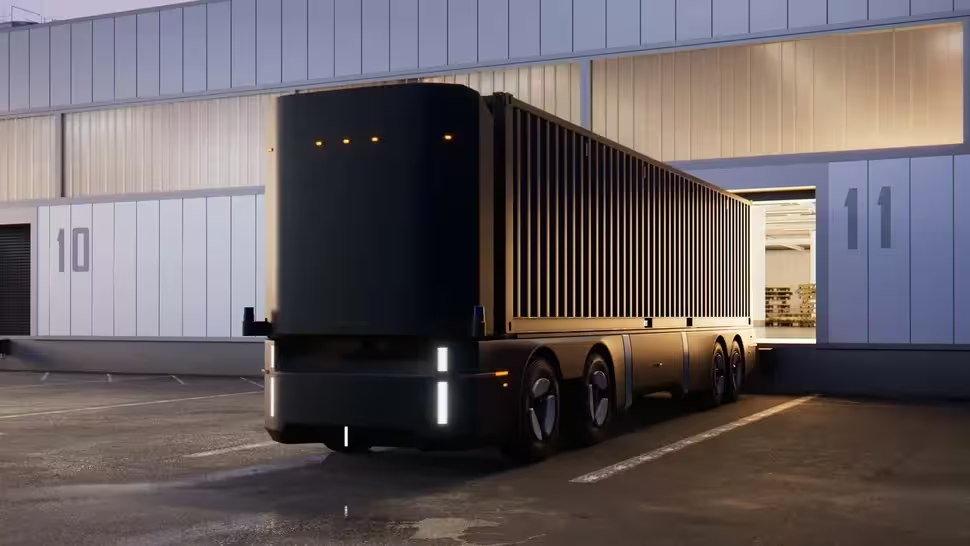
The Humble Hauler is essentially a powered electric platform that can carry both domestic and international shipping containers in its load area. The design allows it to act as tractor, trailer, and operator in a single package. That could make it especially attractive in places where efficiency matters more than tradition, such as ports, rail terminals, distribution hubs, and large warehouse campuses.
On paper, the numbers are practical enough to make logistics firms pay attention. The vehicle supports DC fast charging and offers a maximum range of around 322 kilometres on a full charge. Humble also suggests the platform can be adapted for different jobs, with concept versions ranging from a six-wheeled concrete mixer to a larger eight-wheeled freight hauler.
Where the real disruption could begin
For now, the first prototype appears to be aimed at controlled industrial environments rather than open-road freight routes. That makes sense. Warehouses, ports, and rail facilities are easier places to deploy autonomous systems because traffic patterns are more predictable, routes are repetitive, and safety controls can be managed more tightly. Even so, the machine's reported top speed of 89 km/h and Level 4 autonomous capability hint at a much bigger endgame.
That is where the technology story gets more interesting. Humble Robotics is leaning on vision-language-action models, a fast-rising AI approach that helps machines interpret surroundings, understand instructions, and respond intelligently to changing conditions. Similar model architectures are already being explored in robotaxis and advanced mobility systems, because they promise something older automation stacks often struggled with: flexibility.
In freight, flexibility is everything. A loading zone is blocked. A container is misaligned. A worker crosses unexpectedly. Weather shifts. Traditional automated systems can be brittle when reality stops following the script. Humble's bet is that newer AI models can handle those edge cases with far more confidence, bringing autonomous cargo transport closer to everyday use.
The company also has leadership with serious industry credentials. CEO Eyal Cohen has held roles at Apple, Uber, and autonomous trucking specialist Waabi, a background that helps explain why investors have already backed the start-up with about €22.1 million in funding, based on current exchange rates.
Cohen has framed the mission in blunt terms: make freight safer, cleaner, and more efficient in ways the industry once thought unrealistic. It is a bold promise, but not an empty one. Logistics operators are under pressure from every direction, from labour shortages and rising operating costs to emissions targets and tighter delivery expectations. A machine that can move cargo without a cab, without breaks, and eventually without human intervention is bound to turn heads.
That does not mean the road ahead will be smooth. Autonomous freight still faces hard questions around regulation, liability, public trust, and job disruption. Even if vehicles like the Humble Hauler begin in closed industrial zones, success there could quickly spark debate about what happens when the same systems expand onto public roads.
Still, pilot-stage or not, Humble Robotics has managed something many transport start-ups fail to do. It has made the freight industry look at a radically different machine and ask a very uncomfortable question. If this works, what exactly is a truck supposed to look like in ten years?

“The cosmos has always fascinated me. I write about space missions, astronomy, and the technologies pushing humanity beyond Earth.”

Discussion
Leave a Comment