
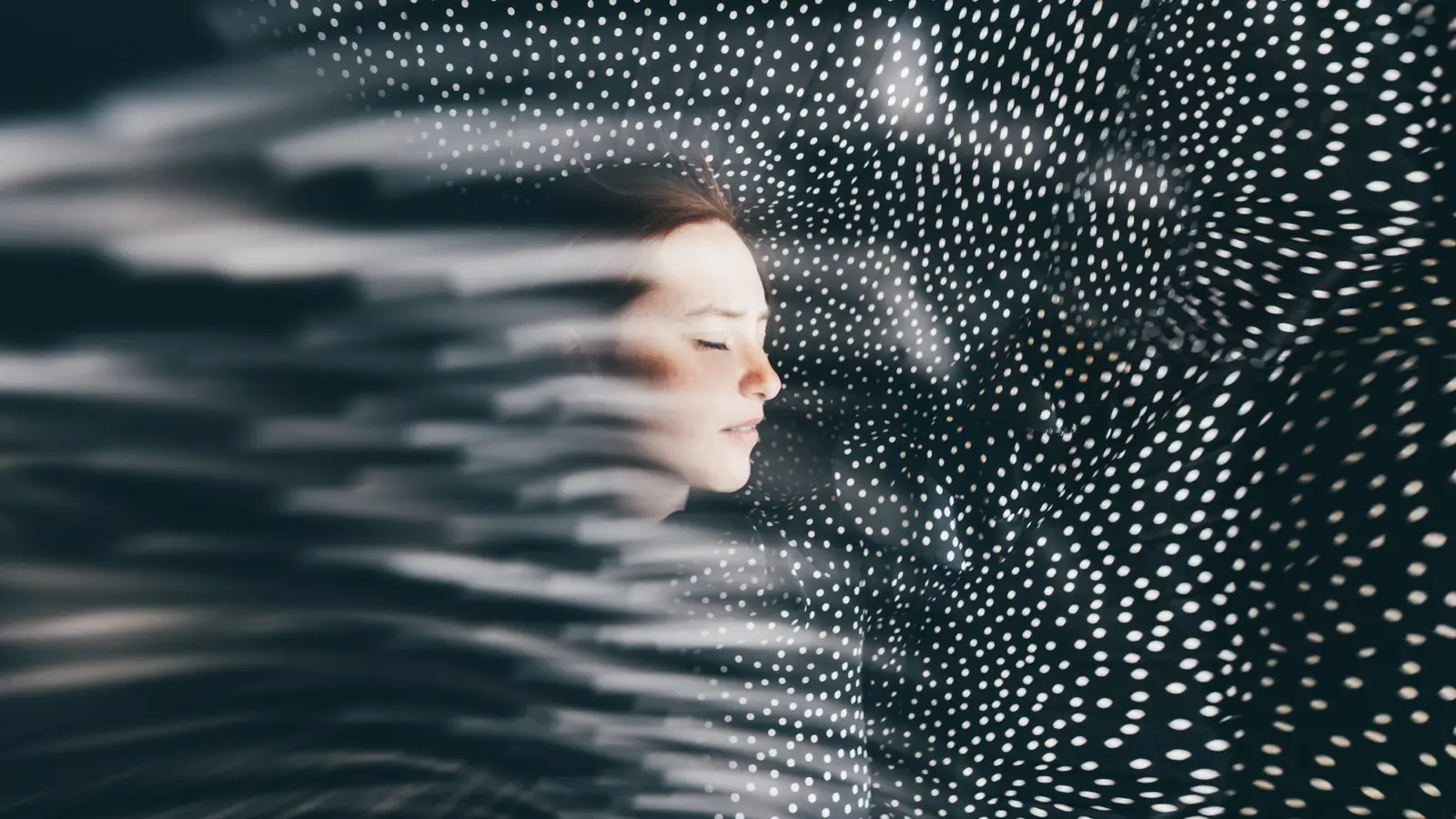
Your brain is not throwing random sparks in the dark. Those unsettling, cinematic, impossible dreams, the ones that mash together old memories, strange locations, and people who should never be in the same room, appear to say something real about you.
A new study led by neuroscientist Valentina Else at the IMT School for Advanced Studies Lucca in Italy suggests that dreams are shaped by far more than chance. They pull from daily life, yes, but they also carry the fingerprints of personality, sleep quality, mental habits, and even the way a person drifts into daydreams while awake.
That helps explain why some dreams feel intensely vivid while others dissolve in seconds, and why certain people seem to live through wildly surreal night stories that still somehow feel emotionally familiar by morning.
What the sleeping mind is really doing
The research, published in Communications Psychology, examined dream reports alongside detailed data on personality traits, psychological profiles, cognitive abilities, and sleep patterns. To make sense of such a slippery subject, the team used natural language processing tools to analyze how people described both their dreams and their waking experiences.
What emerged was not a picture of the brain replaying the day like a security camera. Dreams looked more like active reconstructions. They transformed waking life into perceptual scenes rich in visual detail, social interactions, shifting settings, and bizarre twists that would make no sense in daylight.
Else and her colleagues found that, compared with waking reports, dreams were less centered on deliberate thought and more dominated by imagery, movement, other characters, and unusual events. In other words, the mind does not simply remember while sleeping. It remixes.
The study involved 217 participants between 18 and 70 years old, all with regular sleep habits and no diagnosed neurological, psychiatric, or sleep disorders. The team also looked at a separate set of dreams collected during the COVID-19 lockdown from 100 volunteers recruited through social media. These reports were recorded daily between April 28 and May 11, 2020, spanning one week of strict restrictions and another with slightly fewer limits.
That timing mattered. Dreams recorded during lockdown were more likely to reflect confinement, distress, and trauma linked to the wider social moment. Even in sleep, the outside world clearly leaves a mark.
The researchers built participant profiles based on questionnaires and cognitive tests tied to factors already suspected of influencing dreams. One of the strongest variables was a person's attitude toward dreaming itself. People who are highly interested in dreams, or especially worried about nightmares, seem more likely to notice, remember, and emotionally engage with what they dream.
Memory and executive function also played a role, which makes sense. These systems help encode experience during the day and may influence how those experiences get reshaped at night. Visual imagery ability mattered too. People who can generate vivid mental pictures while awake often report richer, more immersive dream scenes.
Then there is mind wandering. That quiet drift of spontaneous thought during the day turns out to be a major clue. Participants who were more prone to mental wandering tended to report stranger dreams, suggesting that free floating thought patterns may feed the surreal logic of sleep.
To test how waking life feeds into dreams, participants were prompted at random moments to record their most recent waking experience. The AI tools then compared those reports with dream narratives, classifying elements such as emotions, social encounters, physical spaces, bodily sensations, movement, distorted chronology, abstract reasoning, and moments that were simply odd or impossible.
The results point in one direction. Dreams are deeply tied to waking life, but they are filtered through the architecture of the individual mind. Two people can live through similar days and still dream in completely different ways because personality, imagination, stress levels, and sleep experience change the final script.
That may be the most compelling part of the study. Dreams are not meaningless noise, and they are not straightforward recordings either. They sit somewhere in between, built from real experience but bent by emotion, cognition, and the private style of each mind.
Else says the findings help close an old gap between classic dream research and modern cognitive neuroscience. With computational tools now able to detect patterns across large sets of dream reports, scientists are getting closer to a more reliable picture of what the sleeping brain is generating and why it feels so personal.
Your weirdest dreams may be strange on the surface, but beneath the chaos, they are often reflections of how you think, feel, remember, and move through the world.

“My work centers on sustainability, energy, and environmental science — examining how innovation can lead to a greener future.”

Discussion
Leave a Comment